From early experiences in India to fellowship training at Wills Eye Hospital, Dr. Ansari discusses how ophthalmologists can make a lasting impact worldwide.

From early experiences in India to fellowship training at Wills Eye Hospital, Dr. Ansari discusses how ophthalmologists can make a lasting impact worldwide.
A panelist discusses how a 76-year-old patient with neovascular age-related macular degeneration (nAMD) initially stable on bevacizumab developed recurrent subretinal fluid requiring a switch to aflibercept 2 mg, but after experiencing sterile inflammatory responses to both aflibercept 2 and 8 mg doses, was successfully treated with faricimab every 6 weeks, demonstrating the value of having structurally different anti-VEGF agents to minimize cross-antigenicity when immune responses occur.
A panelist discusses how a 62-year-old patient with age-related macular degeneration (AMD) who could never be extended beyond 4-week intervals with aflibercept 2 mg achieved complete macular drying and improved vision with aflibercept 8 mg, though temporary vision loss from acute IOP elevation required dose modification to 0.06 mL (6.86 mg) to maintain efficacy while avoiding pressure-related complications.
A panelist discusses how an 83-year-old patient with diabetic macular edema (DME) who showed suboptimal response to standard anti-VEGF therapies, including aflibercept 2 mg and faricimab, ultimately achieved significant visual and anatomic improvement when switched to high-dose aflibercept (8 mg), demonstrating the enhanced efficacy of the higher molar dose formulation.

Smith highlights advances in interventional glaucoma, including first-line SLT, emerging surgical options, and co-management strategies, during the Ophthalmology Times and Optometry Times EyeCon 2025 conference.
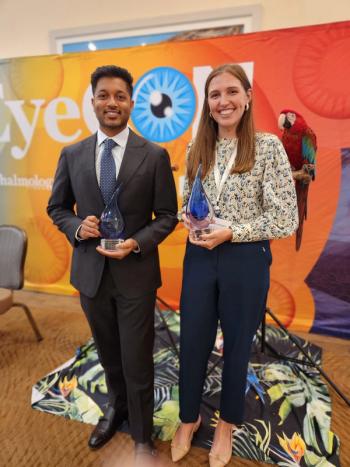
Residents across ophthalmology, optometry, and retina care were recognized for leadership, research, and dedication to advancing patient care.

We ask leading experts in the field what eye disease they would cure and why.

We ask leading experts in the field what eye disease they would cure and why.
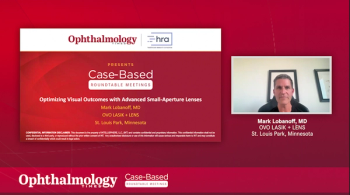
A panelist discusses how a 50-year-old male patient with stabilized keratoconus achieved excellent visual outcomes with an IC-8 small aperture IOL by targeting slight myopia to optimize the defocus curve, followed by adjunctive PRK to address central corneal astigmatism that was causing ghosting despite good uncorrected acuity, emphasizing the critical importance of controlling irregularities in the central 3-mm zone and ensuring nighttime pupil size remains under 5 mm for optimal results.
A panelist discusses how a 40-year-old female patient seeking freedom from glasses experienced a complicated course with a light adjustable lens that resulted in poor visual quality and 22 clinic visits, but was successfully salvaged through lens exchange to an IC-8 small aperture IOL after demonstrating the benefits with a simple pinhole occluder test.
A panelist discusses how the IC-8 Apthera small aperture IOL functions as a pinhole-based optical system that blocks distorted peripheral light while allowing focused light from both distance and near targets to travel through the same pathway, creating an extended depth of focus that ophthalmologists have long awaited in the United States.
We ask leading experts in the field what eye disease they would cure and why.

We ask leading experts in the field what eye disease they would cure and why.

An expert discusses how she managed an unusual case of a patient with high myopia with angle closure and elevated intraocular pressure (IOP) through cataract extraction with toric lens implantation, combined with canaloplasty and endocyclophotocoagulation (ECP) to address both the refractive needs and anatomical causes of the condition.
A panelist discusses how the iDose implant is surgically placed into the scleral wall with precision, can be repositioned if needed, and remains stable even after procedures like goniotomy, making it a versatile option in glaucoma care.
An expert discusses how she treated a 70-year-old patient with high myopia with mild glaucoma and cataracts using a light adjustable lens combined with an iDose travoprost sustained-release implant to achieve spectacle-free and drop-free outcomes while maintaining excellent pressure control.
A panelist discusses how procedural pharmaceuticals like Durysta and iDose offer sustained drug delivery solutions tailored to patient needs, providing long-term efficacy and reducing dependence on daily eye drops.
A panelist discusses how interventional glaucoma emphasizes early, proactive treatment strategies to reduce IOP and medication burden while addressing patient adherence and long-term disease control.
An expert discusses how modern glaucoma treatment has evolved from a reactive one-size-fits-all approach of multiple drops followed by major surgery to a proactive, individualized strategy that emphasizes early procedural interventions to minimize medication burden and vision loss.
From lids to retina, the 2-day event on September 26 and 27, 2025, at the Margaritaville Hollywood Beach Resort, Florida, offers a collaborative and comprehensive experience with actionable takeaways.

We ask leading experts in the field what eye disease they would cure and why.


The start of the series that asks leading experts in the field what eye disease they would cure and why.

Identifeye HEALTh is taking on retinal imaging, enhancing accessibility and integrating AI to improve patient care and streamline healthcare workflows.
Ahead of the September 8 meeting in Paris, the program co-chair of the event and current president of the American Academy of Ophthalmology discusses how the workshop aims to shape consensus on guidelines, research priorities, and emerging therapies in myopia control.
In episode 1, Bill Trattler, MD, shares practical advice on documentation, patient communication, keratoconus management, and advanced lens technology.