
HG202, by HuidaGene Therapeutics, is formulated for clinical use in treating neovascular age-related macular degeneration
HG202, by HuidaGene Therapeutics, is formulated for clinical use in treating neovascular age-related macular degeneration

This drug is the world’s first-ever CRISPR/Cas13 RNA-editing therapy for clinical use in treating neovascular age-related macular degeneration (nAMD).

News
Harrow announced that starting in January 2025, Vevye will be covered under key Medicare Part D formularies and across major insurance programs, expanding access to the dry eye disease treatment for millions of patients, particularly older adults.

Analysis highlights discrepancies between adult, pediatric cataract procedures.
News
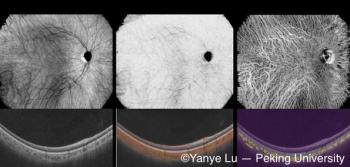
Peking University researchers have developed a deep learning-based, noninvasive choroidal angiography method that enables detailed 3D visualization of choroidal vessels from OCT scans. This technique could improve diagnostics for retinal diseases like macular degeneration, offering a safer alternative to traditional methods.

New analysis brings disease progression and therapeutics into focus

Katherine Talcott, MD, discussed other potential therapies and their mechanisms of action being evaluated in clinical trials at the OSN New York 2024 conference.

Dr. Mammo discussed this evolution and how to choose patients who would best benefit from GA therapy.
News
This Week in Ophthalmology is a weekly video series highlighting some of the top articles featured on the Ophthalmology Times website.

The company noted that its GalOmic pipeline includes ETX-407 for the treatment of dry age-related macular degeneration (AMD).

A $6.4 million grant over 5 years from the National Institutes of Health’s National Eye Institute was awarded conduct drug development work and investigational new drug (IND)-enabling toxicology studies.
Ferhina S. Ali, MD, discussed the real-world efficacy and durability of next-generation anti-VEGF agents like faricimab and aflibercept 8 mg, emphasizing how large-scale data offers insights into their performance and safety beyond clinical trials.

News
A Johns Hopkins study reveals that anti-VEGF treatments for wet AMD may unintentionally elevate ANGPTL4, a protein that promotes blood vessel growth. Combining anti-VEGF with an experimental drug targeting HIF-1 could enhance vision outcomes and prevent vision loss.

Following oculoplastic surgery, patients who underwent aromatherapy had shorter stays in the post-anesthesia care unit

The Eye Care Network team was on site to share key data and interview presenters at the annual meeting held in Chicago, Illinois.

The meeting is set to take place from November 8 to 10, 2024 at the Sheraton Times Square Hotel in New York City.

News
Omar Salamanca, MD, staff ophthalmologist, Orbis Flying Eye Hospital, discusses Orbis's tailored glaucoma training programs, which focus on hands-on surgical skills, early detection, telemedicine, and personalized follow-up care, helping underserved regions improve glaucoma management and blindness prevention.

Scientists at Scripps Research and its nonprofit drug development arm, the Calibr-Skaggs Institute for Innovative Medicines, are working to advance regenerative medicines capable of repairing tissues damaged by age-related disease

Collaboration and outside-the-box thinking present significant opportunities for science and industry

The phase 3 trial was conducted by licensee, Grand Pharma in Chinese cataract surgery patients.

FELIQS plans to conduct a Phase 1b/2 study of FLQ-101 (tROPhy-1 study) both in the US and Japan in the first quarter of 2025.

The Valeda Light Delivery System is for the treatment of patients with dry age-related macular degeneration (AMD).

The investigators conducted a randomized controlled trial of 60 patients who underwent monitored anesthesia care sedation for oculoplastic procedures from August 2018 to November 2020.

Scientists have identified several small molecule drugs that selectively expand RPEs to regenerate a functional RPE layer.

News
In an interview with David Hutton of Ophthalmology Times, Ash Abbey, MD, discusses the Phase 3 LUGANO trial for EYP-1901 in treating wet age-related macular degeneration. Abbey discusses the trial’s non-inferiority objectives, treatment schedule, patient outcomes like reduced treatment burden, and anatomical stability. Patient interest is high, particularly among those wanting fewer injections, though recruiting treatment-naive patients may be challenging. If results are favorable, potential FDA approval could occur within 3 to 4 years.

He also had previously served as the Chief Financial Officer for several companies in the biotechnology and pharmaceuticals space.

This year’s Barcelona meeting brought together award-winning research data and leaders in the retina field

The candidate, FLQ-101, is a once-daily oral/intravenous solution.
This article by Liem Trinh, MD highlights his experiences with the AT ELANA® 841P hydrophobic trifocal IOL and the ARTEVO® 750 and ARTEVO® 850 microscopes from ZEISS. Dr. Trinh discusses the benefits of the trifocal design of the AT ELANA 841P IOL and its ability to provide spectacle independence at all distances after cataract surgery. He also shares his positive experiences with the ARTEVO 850 microscope, which offers improved surgical visualization with RGB LED illumination and 3D viewing on a high dynamic range monitor. Additionally, Dr. Trinh discusses the potential benefits of integrated intraoperative optical coherence tomography (OCT) and the redesigned CALLISTO eye user interface.

At the Tear Film and Ocular Surface meeting in Venice, Melissa Toyos shares findings on the mechanism of action of brimonidine tartrate.