

New SOL-X extension follows AXPAXLI implant in wet AMD for 3 years, probing 24-week dosing durability, safety and vision protection.
New SOL-X extension follows AXPAXLI implant in wet AMD for 3 years, probing 24-week dosing durability, safety and vision protection.

Professor Alió reflects on a new comprehensive volume dedicated to aging in ophthalmology


According to the company, the NDA submission is supported by data from the phase 3 DRAGON trial.

SOL-1 data show AXPAXLI extends wet AMD control, delaying fluid rebound and reducing rescue injections while sustaining vision through 52 weeks.

Melding ophthalmology and neurology

Temporal optical coherence tomography modelling may improve longitudinal disease tracking.

New expert‑led series explores how ophthalmic innovations move from early development to market‑ready therapies through cross‑functional collaboration.

Phase 3 data show brolucizumab outperforms laser for PDR vision preservation, with fewer adverse events—while monitoring inflammation risk.

From role models to open doors, Christina Y. Weng, MD, MBA, FASRS, shares insights on career development, women in ophthalmology, evolving training models, and her work as protocol chair for the DRCR Retina Network’s Protocol AO study.

Christopher E. Starr, MD, FACS, highlights diagnostic gaps in dry eye, emphasizing neuropathic corneal pain and reviewing emerging therapies and pipeline treatments in ocular surface disease.

The dual-function phaco-vitrectomy platform is cleared for European commercialization, with launch targeted for Q3 2026.
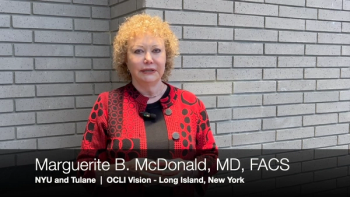
A tissue-sparing technique using a triple-layer decellularized basement membrane is associated with shorter OR time, rapid recovery, and no reported recurrences in a retrospective series.

The company noted it expects topline results in June 2026.



Understanding thyroid eye disease and its often-missed diagnosis.

CMS assigns billing code to support reimbursement for the keratoconus therapy.
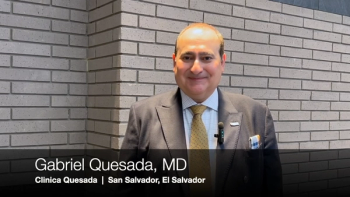
Quesada discusses a robotic femtosecond laser platform for LASIK, focusing on flap accuracy, stromal bed precision, and the role of integrated OCT imaging.

A closer look at the science powering next-generation retinal treatments.

Zaman discusses the positive topline results from a phase 1/2 study of the BIM-IOL system, during which it successfully reduced IOP in patients with OAG or OHT.
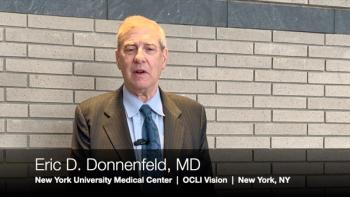
An analysis of lifitegrast trial subgroups showed that earlier treatment and milder baseline disease were associated with faster and greater symptom improvement.

In the latest episode of The Retina TL;DR with Dr. Weng, host Christina Y. Weng, MD, MBA, FASRS, talks with Drs. Do, Lad, and Munk about the LIGHTSITE III trial data behind photobiomodulation and what it means for retina practice.

Data from a recent trial of the OmniVu Lens System was presented at ASCRS 2026, featuring positive and sustained vision endpoints.

SOL-1 data show AXPAXLI extends wet AMD control, delaying fluid rebound and reducing rescue injections while sustaining vision through 52 weeks.
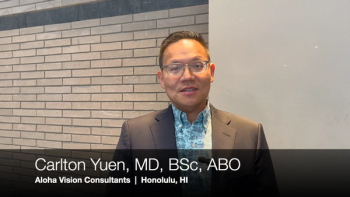
Combining peristaltic and Venturi pump technology during phacoemulsification may reduce ultrasound time and support endothelial preservation.


An ophthalmology resident shares insights from experiences across Mexico, Europe, and the US.