

The approval follows a refiling after the FDA issued a Complete Response Letter due to language on the amended label.
The approval follows a refiling after the FDA issued a Complete Response Letter due to language on the amended label.

Researchers from the University of Bristol recorded increased instances of inflammation in particular demographic groups

Researchers used data from the UK Biobank to investigate the associations between a healthy lifestyle score and retinal neurovascular health.

Mariya Moosajee, MBBS, BSc, PhD, FRCOphth, discusses how Gene Vision is improving patients' lives on a global scale

Routine evaluation of meibomian glands, starting in childhood, is crucial for identifying and managing this progressive disease before it leads to long-term ocular surface issues.
Martin Friedlander, MD, PhD, discusses phase 3 macular telangiectasia findings, highlighting the potential for a decade-long alternative to intravitreal injections.

According to the company, the suffix “-mod” in urcosimod denotes its classification as a modulator of key inflammatory and neuropathic pathways.
The interventional glaucoma mindset can maximise quality of life, but requires clinicians to act fast

The study’s main outcome measures were the changes in those 2 parameters following treatment with teprotumumab.


The rationale for the study was anecdotal reports of the effects of breast milk used by mothers to treat blocked tear ducts, rashes, and a chemical corneal burn in babies.

The trial will feature the company’s product candidate, AXV101, focused on combating childhood blindness due to retinitis pigmentosa (RP) caused by Bardet-Biedl Syndrome 1 (BBS1).
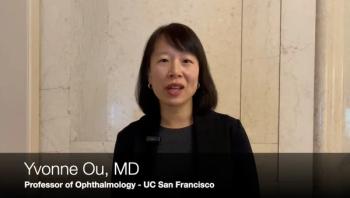
Yvonne Ou, MD, a professor of ophthalmology at the University of California San Francisco, spoke about lifestyle modifications for glaucoma at this year's Glaucoma 360 meeting.

Nathan Congdon, MD, highlights a recent study showing how virtual mentor-mentee relationships through Orbis' free telemedicine and e-learning platform can significantly enhance care.

The 2 phase II trials, Osprey and Apteryx successfully met all primary and secondary endpoints.

The 36-week trial was a randomized, double-masked, parallel-group, active-controlled, multicenter evaluating CLS-AX (axitinib injectable suspension) in participants with neovascular age-related macular degeneration.
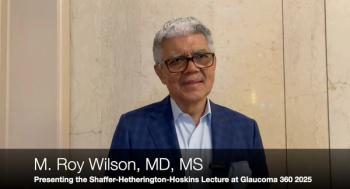
M. Roy Wilson, presented the Shaffer-Hetherington-Hoskins Lecture at the Glaucoma 360 meeting held in San Francisco, California. This lecture was entitled, "Rethinking Race as a Risk Factor for Glaucoma: What Really Matters?"
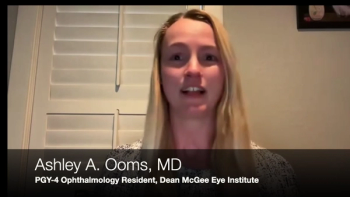
Ooms' poster at the Association of University Professors of Ophthalmology annual meeting highlighted a study on gray area complications in strabismus surgery, showing that trainees are more likely than attendings to disclose these complications despite having similar baseline anxiety levels. Ooms is a PGY-4 ophthalmology resident at the Dean McGee Eye Institute.

Results were published from the phase 3 QUASAR trial and the extension study of the phase 3 PULSAR trial.

The announcement comes after a request was made by the Canadian Investment Regulatory Organization (CIRO) to explore the possibility of a sale.

PRISM evaluates 4D-150, a potential backbone therapy designed to provide multi-year sustained delivery of anti-VEGF (aflibercept and anti-VEGF-C) from the retina with a single, safe, intravitreal injection.

The link between eye health and mental health may be deeper than previously believed
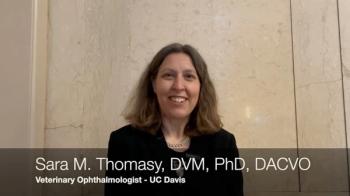
Ophthalmology Times spoke with Sarah M. Thomasy, DVM, PhD, DACVO, a veterinary ophthalmologist at UC Davis about how her research can align with human glaucoma research to move the entire field

The pandemic caused an overall decrease in the rates of the 10 most common ophthalmic procedures performed in 2020 when compared to the year prior.
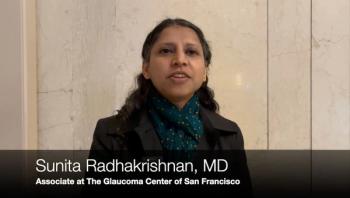
Sunita Radhakrishnan, MD, shares insights on the use of electric neurostimulation and its potential use in the treatment of glaucoma, as evidenced by its current use in Europe and the upcoming trials for use in the US.
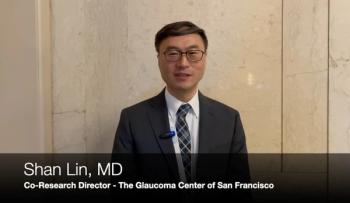
Shan Lin, MD, speaks to the new MIGS entering the glaucoma space and providing additional options for patients and providers as they work to preserve vision and work towards a better future for glaucoma treatment options.
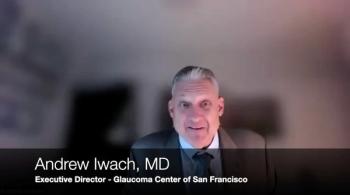
Andrew Iwach, MD, co-founder of the Glaucoma 360 meeting shares that value this meeting has for residents and fellows as they embark on their careers and the future additions to the meeting that will include retina discussions.
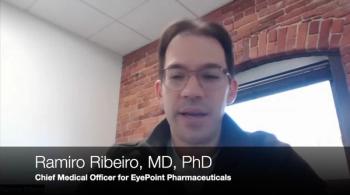
Ramiro Ribeiro, MD, PhD, shares insights from the ongoing research tyrosine kinase inhibitors for AMD and DME.