

Both trials failed to meet their primary endpoints for treatment of age-related macular degeneration
Both trials failed to meet their primary endpoints for treatment of age-related macular degeneration
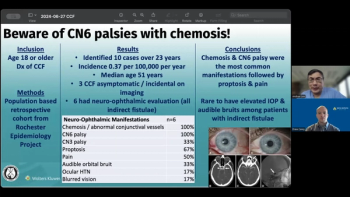
Andrew G. Lee, MD, and Drew Carey, MD, return for this episode of 'NeuroOp Guru' to discuss how sixth nerve palsy with chemosis warrants suspicion for a cavernous carotid fistula, emphasizing careful examination for dilated conjunctival vessels and the need for imaging for accurate diagnosis and timely intervention.

How studies into myopia management can increase access to vision care
In celebration of Ophthalmology Times 50th anniversary, we asked leading experts in the field what they see as the biggest innovation in ophthalmology in the last 5 decades.

A study on the effects of methylphenidate in children with ADHD found that treated children had lower corneal endothelial cell counts compared to untreated children and a control group.

Accelerated changes in the spherical equivalent refraction (SER) and axial length were seen but no changes in the lens power and thickness were seen in pediatric patients.

Multiple myeloma is a rare cancer that originates in white blood cells (plasma cells) that produce antibodies.

A pivotal phase 3 clinical trial found that SYD-101 met its 3-year primary endpoint for slowing paediatric myopia progression
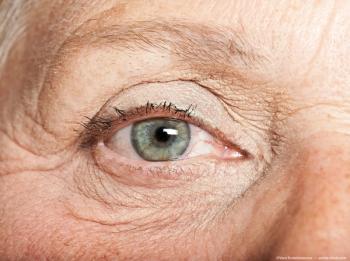
Ocular signs may be early indicators of multiple myeloma or relapse, and early recognition and collaboration between hematologists and ophthalmologists can improve outcomes.

Hematologists and ophthalmologists could work together for earlier diagnoses, research findings indicate

Dr. Arnaldo Espaillat decided to undergo ZEISS PRESBYOND and shares how his own experience led him to expand his refractive portfolio with this corneal-based approach for patients without cataracts.
The May 4 event, themed around Star Wars, will feature the latest innovations, foster open discussions, and provide a collaborative environment for networking and learning, with sessions covering IOLs, oculoplastics, glaucoma, retina therapy, and refractive surgical options.

The study considered the economic disease burden on both the patient and the caregivers, the first such study of its kind.
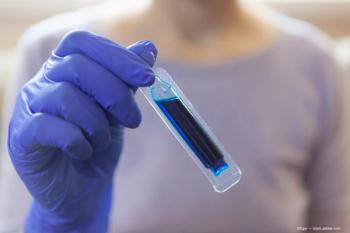
The approval makes ILM-Blue the first DORC posterior dye product available in China, according to a press release from Zeiss.


Researchers assessed the costs to patients and caregivers in Germany, Bulgaria and the US

This year, the COPHy meeting moves beyond retina, addressing uveitis, neuro-ophthalmology and glaucoma in Seville, Spain

Urcosimod (formerly known as OK-101) has been shown to be stable for over 2 and a half years in single-use ampoules used for administration of the drug to patients.

The decision to discontinue the trials comes shortly after the announcement that COAST missed its primary endpoint.

In celebration of Ophthalmology Times 50th anniversary, we asked leading experts in the field what they see as the biggest innovation in ophthalmology in the last 5 decades.
In celebration of Ophthalmology Times 50th anniversary, we asked leading experts in the field what they see as the biggest innovation in ophthalmology in the last 5 decades.

Lab TRIACTIV is powered by “advanced cationic liposomal technology” for dry eye relief.
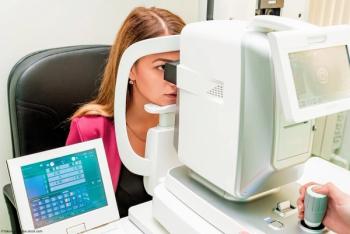
The authors examined vascular and neural structures in the eye, assessing the foveal avascular zone and choroidal thickness
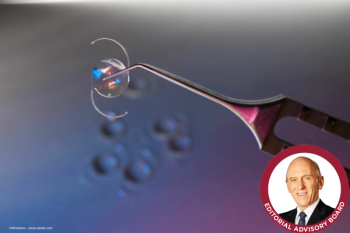
A resurgence in this IOL technology could create new possibilities in refractive correction

The study assessed a large paediatric cohort for changes in spherical equivalent refraction, axial length, lens power and lens thickness

The approval makes ILM-Blue the first DORC posterior dye product available in China, according to a press release from Zeiss

Pantheon Vision’s bioengineered corneal implant aims to tackle issues with the success rate of human donated tissue.
Epi-on corneal crosslinking is advancing through innovations like supplemental oxygen, chemical oxygenation, and laser-assisted techniques.

AURN001 is Aurion Biotech's clinical-stage allogeneic cell therapy asset for corneal oedema secondary to corneal endothelial disease