
Jennifer Lim, MD, FARVO, FASRS, discusses her ARVO presentation on sickle cell retinopathy, highlighting improvements in retinal surgery techniques and instrumentation.
Jennifer Lim, MD, FARVO, FASRS, discusses her ARVO presentation on sickle cell retinopathy, highlighting improvements in retinal surgery techniques and instrumentation.
Katherine Talcott, MD, a retina specialist at Cleveland Clinic, presented findings on EYP-1901 in the phase 2 DAVIO study.
The trial will assess allogeneic retinal pigment epithelium cells in the treatment of geographic atrophy.
In this Q&A, Luke Lindsell, OD, MD, shares his insights on emerging therapies in retina, the evolving role of optometrists in retinal disease management, and the importance of comanagement in patient care.
The first SightLine meeting, held pre-ASCRS, reveals insights on physician-industry relationships, mentorship opportunities, and the practical applications of AI in healthcare.

Opus Genetics reveals promising 1-year results from OPGx-LCA5 gene therapy, showing sustained vision improvements in adults with LCA5 retinal degeneration.
Research findings compare the rotational stability of a monofocal plus toric IOL with traditional toric lenses
Outcomes from high myopia LASIK using the Teneo laser platform demonstrate strong visual stability and patient satisfaction, with reduced dysphotopsias and minimal reliance on cycloplegia or nomograms.

New research reveals subretinal drusenoid deposits as potential indicators of serious heart disease, highlighting the need for ophthalmologists to screen patients effectively.

The preclinical data was presented during the 2025 ARVO meeting.
Prof Loewenstein and a cohort of colleagues assessed the current treatment outlook for patients with diabetic retinopathy
The PRISM clinical trial assesses 4D-150 (4D Molecular Therapeutics) in adults with neovascular age-related macular degeneration, also known as wet AMD.
In an analysis of the IRIS database, investigators assessed almost 1,200 eyes that had been treated with faricimab.

KIO-104 is a therapeutic candidate shown to significantly reduce retinal scar formation.


Members of the Ophthalmology Times Europe, Ophthalmology Times and Modern Retina editorial advisory boards are present and presenting at the 2025 ARVO meeting

Wendy Lee, MD, MS, shares how she integrates aesthetic and functional care in oculoplastics.
At the ARVO 2025 Annual Meeting in Salt Lake City, Utah, Nimesh Patel, MD, presented on the LUCIA and LUGANO phase 3 pivotal trials for EYP-1901 against aflibercept for the treatment of wet macular degeneration.
At the ARVO 2025 meeting in Salt Lake City, Utah, Cameron Cummings presented a poster on how retinal microvascular imaging metrics may show sex-specific biomarkers for Parkinson's disease.
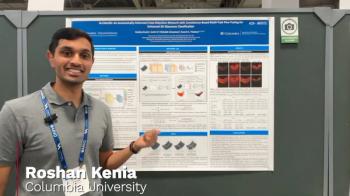
Roshan Kenia presented a poster on how AI-CNet3D enhances glaucoma classification using cross-attention networks while improving interpretability and performance in OCT scan analysis.

Lukas Scheibler, PhD, and Graham Cooper join Tavo Biotherapeutics and chief research and development officer and chief financial officer.

Verana Health’s newly launched Qdata Cataract offers a comprehensive dataset to improve outcomes, reduce complications and enhance IOL technology.

In the weeks to come, the European Commission will issue a decision on the first severe thyroid eye disease treatment.

Carl Zeiss Meditec plans to launch the ZEISS RDP in select countries throughout 2025
A machine learning model using treated astigmatism and other nuanced inputs can significantly improve the accuracy and personalization of arcuate keratotomy planning
The Virtual Eye Simulation Analyzer is an AI-driven digital twin of the human eye designed to model aging and personalize presbyopia treatment across the lifecycle.

New research links genetic risk for schizophrenia to retinal thinning, suggesting early indicators of the disorder may be found in retinal morphology.

The research team from the University of Cincinnati surveyed 42 patients 50 years of age and older at Hoxworth Eye Clinic

ZEISS Research Data Platform is a cloud-based, AI-driven solution designed to transform ophthalmic research workflows.