

Sharon Fekrat, MD, FACS, FASRS, discusses how retinal imaging fits into the diagnostic picture for CVI, TBI, and neurodegenerative disease.
Sharon Fekrat, MD, FACS, FASRS, discusses how retinal imaging fits into the diagnostic picture for CVI, TBI, and neurodegenerative disease.

An industry symposium on intravitreal 4D-150 and a course on subretinal delivery lead gene therapy content at EURETINA 2026, alongside IRD courses and trial readouts.
Nimesh Patel, MD, urges the FDA to reconsider SYD-101 as pediatric myopia drives earlier retinal damage in US children.
Sequencing IOL choice by eye can ease patient decision paralysis.

R. Ross Lakhanpal, MD, FACS, outlines how he counsels newly diagnosed patients, uses FAF imaging, and weighs long-term GA treatment data.
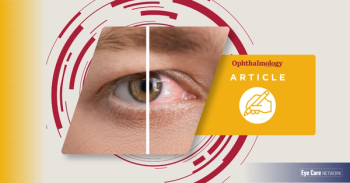
Aldeyra Therapeutics will submit a FDRR to the FDA for reproxalap, an investigational drug or dry eye disease.

For CVI Awareness Day, 3 experts explain why CVI can hide behind a normal eye exam and why early referral matters.

Coats, OD, FAAO, explains how neurotrophic keratitis, demodex, cosmetic habits and mucus fishing complicate dry eye disease.

Veeral S. Sheth, MD, MBA, FACS, FASRS, on how the avacincaptad pegol label update, earlier treatment, and patient counseling shape long-term GA care.

Tarcocimab, tabirafusp-ted were noninferior to aflibercept in DAYBREAK wet AMD trial; 54% on tarcocimab reached 24-week dosing.
Cathleen McCabe, MD, presents real-world data from a 57-site US study of the enVista Aspire IOL at ESCRS 2026, reporting over 90% patient satisfaction and 20/32 uncorrected intermediate vision in more than 70% of patients.
Nimesh A. Patel, MD, explains why myopia-related retinal detachments are appearing earlier and how routine exams can catch them.
Alessandro Arrigo, MD, describes an early-stage method that uses blue light autofluorescence imaging to grade cataracts objectively. He explains why a reproducible score could help with surgeon selection, IOL power calculation, and retinal image quantification.

A multimodal OCT and ultra-widefield imaging model detected retinal inflammation in uveitis without fluorescein dye.
Uday Devgan, MD, FACS, co-chair of EyeCon 2026, highlights what makes cataract surgery challenging, when to add MIGS, and why no patient is routine.

Study found anti-VEGF therapy was linked to kidney function decline in patients with diabetic retinopathy or retinal vein occlusion.
Nimesh A. Patel, MD, discusses compounded low-dose atropine and SYD-101 ahead of an October 30 FDA advisory committee meeting.

Christina Y. Weng, MD, MBA, FASRS, highlights findings showing statin use reduced PVR risk by 25% in a propensity-matched cohort of nearly 10,000 patients.

At Retina Society 2026, Emily Eton, MD, discusses a 10-center study finding similar exudate control in Coats disease and Coats-like disease in inherited retinal diseases, with more injections needed in the IRD group.

Non-invasive electrical stimulation delivered through closed eyelids improved retinal structure and photoreceptor function.

Jesse L. Berry, MD, discusses prospective data on aqueous humor liquid biopsy in retinoblastoma and explains how molecular markers from the aqueous are beginning to guide recurrence risk, treatment intensity, and the workup of otherwise diagnostically inaccessible intraocular lesions.

In the latest episode of The Retina TL;DR with Dr. Weng—part 1 of a special two-part series—host Christina Y. Weng, MD, MBA, FASRS, sits down with two of her former residents, now second-year surgical retina fellows, for candid advice on matching, transitioning, and thriving in fellowship.

At Retina Society 2026, Eileen Hwang, MD, PhD, discusses a meta-analysis finding a 1.78 times higher retinal detachment rate in COL2A1 vs COL11A1 Stickler syndrome and the case for prophylactic laser.

At Retina Society 2026, Nimesh Patel, MD, discusses how stage 2 ROP before 34 weeks raises the treatment rate and why he urges early referral and a risk-tailored approach to care.
Concurrent exudative disease, early intervention, and a rare masquerader complicate the classic picture of geographic atrophy.

Charles Wykoff, MD, PhD, reviews LUGANO safety and treatment burden data, including a 42% injection reduction with vorolanib insert vs aflibercept, despite a missed primary end point.

Three residents were honored for their leadership, education and research, and patient care contributions in ophthalmology, optometry, and retina.

Patient enrollment is complete in the the ASTRA phase 3 study AURN001 to treat corneal edema associated with corneal endothelial dysfunction.

Subretinal deposits are linked to worse surgical risks in patients with severe aortic stenosis and reduced systemic blood flow.
Mark P. Breazzano, MD, FACS, shares findings from a TriNetX real-world database analysis on how HIV co-infection influences RPR titers in patients with ocular syphilis.