
In addition to Prevent Blindness' usual free resources, the organization is providing a dedicated web page, fact sheets, and graphics in English and Spanish.
In addition to Prevent Blindness' usual free resources, the organization is providing a dedicated web page, fact sheets, and graphics in English and Spanish.

Remaining questions about DED pertain to geographic considerations, prevalence measures for DED in children and the design of future studies to determine risk factors in patients under 40

A new study demonstrates that handheld nanopore sequencers can rapidly identify eye infection pathogens using only a patient’s tears.

Yesafili is the first biosimilar to Eylea to be approved by Health Canada.

RGN-259 is a thymosin beta-4–based eye drop designed to rival Dompé’s Oxervate, the only FDA-approved prescription eye drop to treat people with neurotrophic keratitis.

Cell and gene therapies in development for unmet needs.

Investigators obtained data from genome‐wide association studies to examine the effects of instant coffee consumption

A new functional classification can help achieve precise vision goals

With fewer injections and sustained vision gains, the updated Eylea regimen offers new hope for patients with age-related macular degeneration and diabetic macular edema.

All 696 patients in the trial have completed their treatment and follow-up visits.

Patients express mixed feelings about AI in health care, favoring its use for documentation and administrative tasks while demanding transparency and safety standards.

Patients are highly motivated to slow disease progression with GA drugs and healthy lifestyle.

The VAC will be a strategic team informing Nanoscope’s scientific, clinical, and community-facing efforts.

Nanoscope Therapeutics establishes a Vision Advisory Committee to enhance retinal care and drive innovative therapies for vision restoration.

Perfuse Therapeutics is conducting trials for the treatment for glaucoma and diabetic retinopathy, aiming to restore vision and combat global blindness.

Catch up on this week's highlights in retina.
PYC Therapeutics advances VP-001 for retinitis pigmentosa, gaining FDA insights for its upcoming registrational trial.

The study will be led by principal investigator professor Noemi Lois, MD, PhD, FRCS(Ed), FRCOphth, at Queen’s University Belfast, in over 20 clinical sites, and plans to enroll 264 patients across the UK with severe DME.

Through the program, gene therapies are developed to treat patients with retinitis pigmentosa caused by pathogenic variants in the MERTK gene.
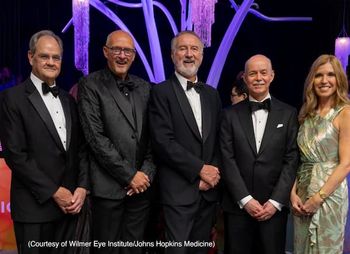
From Nobel laureates to AI-driven research, the Wilmer Eye Institute honors a century of transforming vision science and care.
Phase 1/2 interim results highlight real-world functional enhancements in patients with severe LCA5-related Leber congenital amaurosis.
Christine A. Curcio, PhD, shares an update on histology and its critical role in advancing <3 μm optical coherence tomography interpretation

Insights on injection technique and the future potential of SCS treatments.
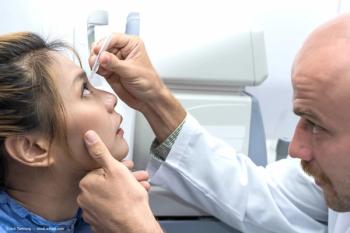
The trial is evaluating KB803 for the treatment and prevention of corneal abrasions in dystrophic epidermolysis bullosa

ADX-2191 is an investigational drug candidate from Aldeyra, for the treatment of primary vitreoretinal lymphoma (PVRL), a rare and potentially fatal cancer currently with no current FDA-approved therapy

New findings reveal RG6501 cell therapy shows promising long-term visual improvements for geographic atrophy patients

Phentolamine Ophthalmic Solution 0.75% is a non-selective alpha-1 and alpha-2 adrenergic antagonist to reduce pupil size, administered as an eye drop for the treatment of presbyopia.

FYB203 has been approved by the US FDA and UK Medicines and Healthcare products Regulatory Agency for the treatment of neovascular age-related macular degeneration (nAMD), diabetic macular edema, macular edema following retinal vein occlusion, and visual impairment due to myopic choroidal neovascularization.
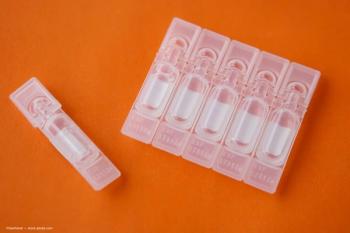
ST-100 shows promise as a fast-acting treatment for dry eye disease, offering rapid relief and unique collagen repair mechanisms.

Johann Krüger, MD, shares insights from 26 years of experience