

Data suggests the candidate can reduce the number of injections and treatment burden for patients
Data suggests the candidate can reduce the number of injections and treatment burden for patients

As ophthalmic technologies move at supersonic speed, AI and gene therapy take center stage.

This year, 18 presenters will deliver named lectures during the American Academy of Ophthalmology meeting.

An easy reference guide for this year's award lectures and subspecialty day keynotes.

NYU Grossman School of Medicine’s Galen Hu, MD, and Andrea Blitzer, MD, sit down with Eduardo C. Alfonso, MD, of Bascom Palmer Eye Institute, to discuss how ophthalmologists are leveraging social media not just to promote practices, but to educate patients.

Explore groundbreaking advancements in eye care from the 2000s, including LASIK innovations, anti-VEGF treatments, and enhanced imaging technologies.

DURAVYU is being developed as a potential sustained-delivery treatment for patients suffering from serious retinal diseases.

The video-driven platform will improve workflow, education and engagement, said Inder Paul Singh, MD.

The VisiPlate aqueous shunt is made of a patented metamaterial that has been designed to be non-fibrotic and is many times thinner than a human hair, according to the company.

The approval follows the successful completion of a pivotal Investigational Device Exemption (IDE) study.
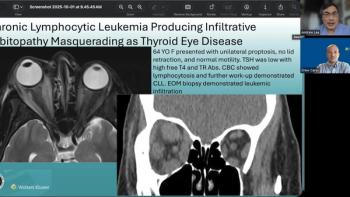
Andrew G. Lee, MD, and Drew Carey, MD, highlight how chronic lymphocytic leukemia can mimic Graves’ orbitopathy, underscoring the importance of a thorough evaluation.
Explore the groundbreaking advancements in ophthalmic technology from the 1980s and 1990s, including excimer lasers, LASIK, and innovative imaging techniques.

The video-driven platform will improve workflow, education and engagement, said Inder Paul Singh, MD
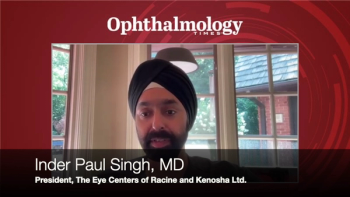
Attendees of the AAO 2025 annual meeting will have a chance to preview the virtual technician training platform on October 19, at 10:30 am in the Academy Theater, Hall WB1, Booth 2761.

The full range of vision lens debuted at the 2025 ESCRS meeting in Copenhagen

The approval of the third-generation trifocal intraocular lens broadens the range of advanced lens options available for patients in the US.

From lasers to lenses, the 1970s redefined vision care through breakthroughs in surgery, imaging, and therapeutics.

In the latest episode of The Retina TL;DR, host Christina Y. Weng, MD, MBA, FASRS, talks with Dr. Duker about a sustained-release tyrosine kinase inhibitor that could redefine the durability and convenience of anti-VEGF therapy.

The epithelium-on cross-linking modality is designed to enable simultaneous, bilateral keratoconus treatment, according to Epion Therapeutics.
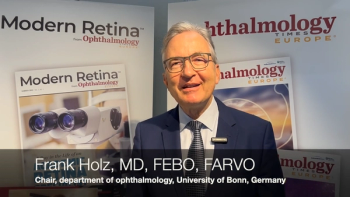
The EURETINA meeting featured new treatments in gene therapy and innovative implants to enhance patient quality of life.

Patients with proliferative diabetic retinopathy, central retinal vein occlusion and branch retinal vein occlusion experienced fluctuating retinal perfusion, investigators reported

The FDA describes the RDEA pilot program as a program to support novel endpoint efficacy development for drugs that treat rare diseases.

Emerging pharmacological and optical strategies are shaping a new era.
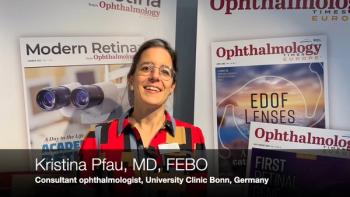
Dr. Kristina Pfau discusses her research on pseudoxanthoma elasticum and the initiatives of EURETINA's Young Ophthalmologist and Retina Specialists Committee.

Catch up on this week's highlights in retina.

The Polaris platform is the world’s first AI-supported and robotics-enabled surgical system developed specifically for ophthalmology, according to the company.
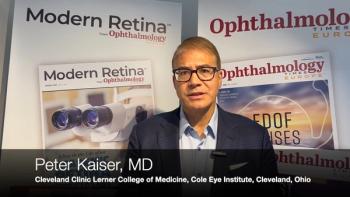

KOLs in the retina world reflect on advice they would share with fellows beginning their journey into retina, including the vast opportunities in healthcare and the importance of curiosity and collaboration for revolutionary advancements in retina medicine.

EYDENZELT is Celltrion's first FDA-approved biologic product in ophthalmology.

Singh highlights how understanding the “why” behind diagnostics and procedures boosts technician confidence, fosters pride, and strengthens their role in patient care.