

Each year, ARVO presents several annual achievement awards, and the recipients are invited to give lectures. Here are this year’s winners.
Each year, ARVO presents several annual achievement awards, and the recipients are invited to give lectures. Here are this year’s winners.
As a vital part of securing public support for vision research, the Association for Research in Vision and Ophthalmology (ARVO) posed a challenge to members of the eye and vision research community. Can you explain your research to a 12-year-old child in one or two sentences?
Perioperative intracameral antibiotics should be standard practice during cataract surgery to prevent postoperative endophthalmitis.
CheckedUp, a mobile health platform being tested at a number of sites nationwide, is designed to supplement cataract patients’ office visits by providing ongoing customized education and communication throughout the care process.
In a multicenter phase II study of cataract surgery patients, recipients of a dexamethasone-releasing punctum plug (Ocular Therapeutix) were significantly more likely than their vehicle-treated counterparts to be free of pain and anterior chamber cells at various postoperative follow-up visits.
A retrospective analysis including data from a consecutive series of 1575 eyes shows that intravitreal placement of triamcinolone/moxifloxacin during cataract surgery is a safe and effective method for preventing inflammation, endophthalmitis, and cystoid macular edema.
Understanding why ophthalmologists should be using intracameral antibiotics to lower the risk of postoperative endophthalmitis after cataract surgery.
The implementation of an electronic health record system at the Wilmer Eye Institute has shed light on its use, adoption, satisfaction, and productivity.
Collagen crosslinking (CXL) is currently used to treat keratoconus, pellucid marginal degeneration, and post-LASIK ectasia, although it has not yet received FDA approval. Thomas John, MD, discussed the potential of the technology to treat corneal infections.
Collagen crosslinking (CXL) provides good results in young patients with keratoconus, but the key to success in these young patients is rapid treatment upon presentation without waiting for disease progression, said Paolo Vinciguerra, MD.
Combination therapy of collage crosslinking (CXL) and intacs (Addition Technology, Inc.) may be a good treatment for mild-to-moderate keratoconus, according to David Rootman, MD.
The benefit-to-risk ratio of phakic IOLs is well-balanced, and while there is a risk of decreased endothelial cell counts in some eyes with certain phakic IOLs, the optical quality achieved is very good, said Thomas Kohnen, MD, PhD.
Femtosecond laser-assisted cataract surgery in children with cataract was uneventful, safe, and resulted in good outcomes, despite being an off-label use of the technology, said Burkhard Dick, MD.
Femtosecond laser lenticule extraction (small-incision lenticule extraction) performed to treat spherical myopia resulted in rapid and significant improvements in visual acuity. John Doane, MD, reported the preliminary data from the U.S. clinical trial.
During its “OWL Monday” reception and program, Ophthalmic Women Leaders honored the winners of its 2014 awards. The event also included a panel discussion about developing productive partnerships.
Two new pachymeters-Pachmate 2 and Pachette 4-were introduced by DGH Technology. Both devices feature an exclusive memory system that stores multiple patient records for automatic report generation using wireless technology.
The preliminary results of the FDA multicenter trial of the Refocus Scleral Implant (Refocus Group) for presbyopia indicated that patients had a significant increase in the near visual acuity, and that the visual acuity improved over time, according to David Schanzlin, MD.
The hydrophobic, acrylic, anterior chamber phakic IOL (AcrySof Cachet, Alcon Laboratories) performed well in a 5-year study of its safety and efficacy, according to Thomas Kohnen, MD, PhD. Most importantly, he said, the decrease in the corneal endothelial cell count was low and there were low rates of serious adverse events.
The efficacy and safety of femtosecond laser for cataract surgery has been questioned-the presumption being that the technology will not be able to penetrate the opaque lens cataractous material, said Sudhank Bharti, MS.
Three-dimensional (3D) visualization and guidance may be the future of lens IOL implantation. Douglas Koch, MD, posed two questions: Can surgeons eliminate marking for toric IOLs and eliminate the oculars on the microscope as well?
TearScience announced that it will make the LipiView interferometer and LipiFlow thermal pulsation system available for individual purchase, allowing premium surgical practices to implement the innovative technology with the flexibility best suited to their individual operational strategy.
Sony Electronics introduced its new recording and viewing system designed to capture and record full high-definition surgical video.
Nothing was off limits as Sen. Rand Paul, MD, (R-KY) put the Affordable Care Act (ACA), the International Classification of Diseases (ICD)-10, and the U.S. government on blast for creating a gigantic headache for American patients and physicians alike.
Interventional glaucoma is the new horizon for patients. Microinvasive glaucoma surgery (MIGS)-a term coined by Iqbal Ike K. Ahmed, MD-will allow for early intervention in patients with glaucoma and be safe and more effective than the medications and laser procedures used for so long with less efficacy.
Bio-Tissue Inc. introduced a new procedure for conjunctivochalasis-the reservoir restoration procedure for conjunctivochalasis (CCH) dry eye.
Alphaeon Corp. launches an innovative ophthalmology practice development platform (TouchMD) that helps specialty physicians engage patients in the education process before, during, and after the consultation.
The 2013 ASCRS Clinical Survey Results on Astigmatism-covering 168 data points with more than 1,000 physicians responding-showed that 57% of physicians saw benefits associated with femtosecond laser arcuate incisions compared with conventional manual incisions, according to John A. Vukich, MD.
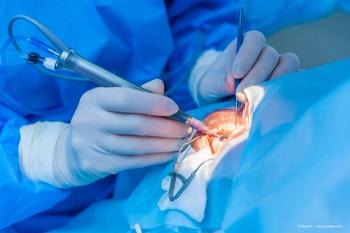
Following cataract surgery, patients can present with a variety of visual complaints that interfere with vision after IOL implantation. Negative dysphotopsias are relative and absolute scotomas, according toJack T. Holladay, MD.
Glaucoma specialists can be advocates for their patients on a number of levels. On a daily basis, ophthalmologists help overcome barriers to treatment and offer solutions to patients for instilling medications, involving family members in their care, organizing services for patients, and providing educational materials, said Cynthia Mattox, MD, New England Eye Center, Tufts University School of Medicine, Boston.
Patients have high expectations regarding cataract surgery outcomes, and anything less than perfect may be considered a failure, said Kendall E. Donaldson, MD, MS.