

The FDA has granted priority review to satralizumab for thyroid eye disease, with a PDUFA date of October 15, 2026, based on phase 3 SatraGO trial data.
The FDA has granted priority review to satralizumab for thyroid eye disease, with a PDUFA date of October 15, 2026, based on phase 3 SatraGO trial data.

Three real-world cases illustrate strategies to identify and manage GA across a range of scenarios, from coexisting wet age-related macular degeneration to functionally monocular patients.
Three cases illustrate how next-generation anti-VEGF agents are extending treatment intervals and improving durability across retinal vascular disease.

The trial over-enrolled and finished approximately 4 months ahead of initial projections, with 52-week topline data now expected in the second half of 2027.

Ectoine eye drops boost tear stability and ease redness and tired eyes, along with burning, foreign body and dryness sensations, offering fast, irritation-free relief for patients with dry eye disease.

Ultra-widefield imaging reveals early retinal risk in pediatric patients.

SOL-1 results show intravitreal axitinib hydrogel delivered superior vision maintenance and anatomic outcomes through 52 weeks.

New IGF-1R antibody Lumvoa receives FDA nod for active and chronic thyroid eye disease, offering rapid proptosis relief and diplopia improvement.

The US FDA approves Lumvoa for TED in active or chronic stages, showing rapid proptosis and diplopia improvements; safety monitoring includes hearing, hyperglycemia and infusion reactions.

The agency clears Lumvoa for thyroid eye disease across active and chronic stages, delivering rapid proptosis and diplopia gains with a 12-week IV regimen.

In a preference study, Csaky and colleagues found that lesion growth rate reduction was the primary driver of GA treatment decisions among US retina specialists, with greater risk tolerance for foveal-threatening lesions.

A randomized trial found that 8 weeks of daily use of the Calm Health app significantly improved mental health outcomes in adults with non-infectious uveitis.

Study finds ChatGPT-5 overpredicts success after macular hole surgery—beating specialists on paper but missing failures.

Real-world data show dexamethasone intravitreal implant improves vision and thickness in RVO macular edema, with earlier anti-VEGF switching yielding better gains.
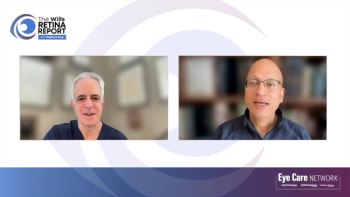
Not every question in the management of patients with GA has a clear answer—the two retina specialists work through the ones clinicians face most often in practice.

A prospective pilot study finds focal photopic microperimetry may detect cone-mediated losses that lesion size and visual acuity do not reflect.

Charlie Zhang, MD, reflects on the rising incidence, diagnostic challenges and multidisciplinary management of immune checkpoint inhibitor–associated uveitis

Diana Canto-Sims, OD, owner of Buena Vista Optical, discusses how Meta's donation of free AI glasses to blind veterans could close longstanding access gaps in low vision care—and where voice-command wearables fit alongside traditional rehabilitation tools.
Piotr Woźniak, MD, PhD, shares real-world evidence on Artelac Complete in dry eye disease from EuDEC 2026 in Milan, Italy, including improvements in tear break-up time and Schirmer scores, perioperative and contact lens use patterns, and high eye care practitioner satisfaction.

A large real-world cohort study finds OSA is associated with elevated glaucoma risk, though whether positive airway pressure therapy itself plays a role remains unclear.

Bayer acquired Perfuse Therapeutics and its experimental endothelin-blocking eye implant PER-001, and partnered with AI firm Iambic Therapeutics to accelerate small molecule drug discovery.

Researchers assessed accommodative changes after foldable iris-fixated phakic IOL implantation for myopic astigmatism

Their conversation covers a holistic, cross-specialty approach to ocular surface disease and the unmet need driving a new model of dry eye care in Ireland.

ARPA-H funds OCULAB to build tear-duct sensors that track biomarkers in real time and microdose drugs, transforming dry-eye and systemic care.

The newly formed biotech will use the financing to push MMT-205, a bispecific antibody that directly activates Tie2 while inhibiting VEGF, toward IND-enabling studies, with first-in-human trials slated for 2027.

AI models predicting retinal function from OCT could transform geographic atrophy assessment in clinical care and trials

Atsena reported that, since enrollment opened in May 2026, it has already accrued approximately 10% of the pivotal cohort and expects the pace to accelerate as additional sites across North America and Europe are activated.
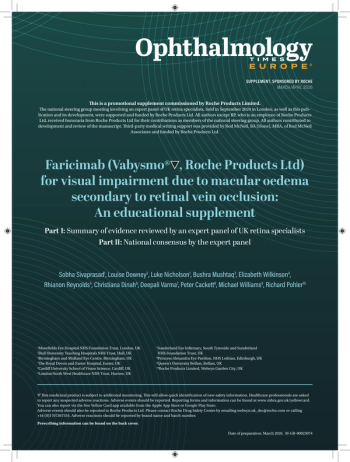
This is a promotional supplement commissioned by Roche Products Limited.

Two cases highlight the diagnostic challenges of Demodex blepharitis and underscore the unmet need for approved targeted therapies in the United Kingdom.

Utilize oral agents, diet and glucose monitoring systems when acting to preserve vision