

News
Advertisement
Advertisement

According to the company, the grant funding from the Choroideremia Research Foundation is in support of validating functional vision assessments for patients with profound blindness.

The company’s AI technology uses retinal imaging to assess potential health risks in patients.

William F. Wiley, MD, shares key takeaways from his presentation on binocularity and stereoacuity

The molecule is being evaluated in 2 phase 3 clinical trials for wet AMD and is administered via intravitreal injection in combination with standard-of-care anti–VEGF-A therapy.
Advertisement

The LYNX-2 Phase 3 study is evaluating phentolamine ophthalmic solution 0.75% for the treatment of decreased visual acuity under low light conditions following keratorefractive surgery

The company created this new role as they see continued growth and room for more expansion.

Scientists at the National Institutes of Health use artificial intelligence called ‘P-GAN’ to improve next-generation imaging of cells in the back of the eye.

VG901 is designed to deliver a functional CNGA1 gene to retinal photoceptor target cells in patients diagnosed with retinitis pigmentosa.
Advertisement

According to the company, VG901 is designed to deliver a functional CNGA1 gene to retinal photoceptor target cells in patients diagnosed with retinitis pigmentosa. It has been granted Orphan Drug Designation by FDA.

The switch may produce an additional 25% IOP reduction in mild to moderate forms of disease

Oculogenex founder talks about collaboration with NASA and ISS on experiment in macular degeneration
Hema Ramkumar, an ophthalmologist and founder of Oculogenex, sat down with David Hutton of Ophthalmology Times to discuss their connection with NASA and their experiment on macular degeneration-treated mice in space.

The SAB additions include Usha Chakravarthy, MBBS, PhD; Allen Ho, MD, FACS, FASRS, and Frank Holz, MD, FEBO, FAVO.

Authors explained that Nfe2l gene family members -1, -2, and -3 mediate the cellular response to oxidative stress, including in the CNS


Neda Nikpoor, MD, shares highlights from her presentation on the Light Adjustable Lens during an ASCRS symposia on IOL calculations.



Elizabeth Yeu, MD, discusses a case report for how the triple procedure can be beneficial for different patient populations in her ASCRS presentation, 'Human corneal endothelial cell transplantation combined with cataract extraction and PCIOL in subject with corneal edema.'


Jascha Wendelstein, MD, discusses the outcomes of a study comparing K and TK measurements
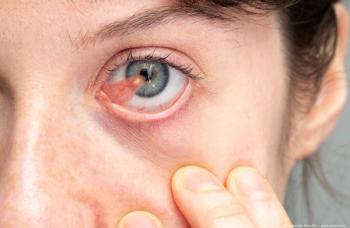
Pterygium is an ocular disease commonly referred to as “surfer’s eye,” which can result from exposure to high levels of UV radiation.
Paul Harasymowycz, MD, details his presentation "Decade-Long Outcomes of Two First-Generation Trabecular Micro-Bypass Stents with Cataract Surgery in Primary Open-Angle Glaucoma" from this year's ASCRS meeting in Boston, Massachusetts.
Results showed LNZ100 (1.75% aceclidine) achieved the primary endpoints and key secondary endpoints, while LNZ101 showed similar results but ultimately failed to show superiority to LNZ100.
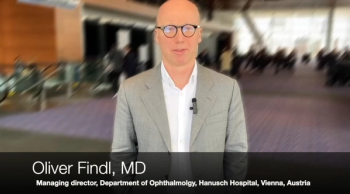
At ASCRS 2024, Oliver Findl, MD, provides an update on the ESCRS IOL calculator and new tools to come this year
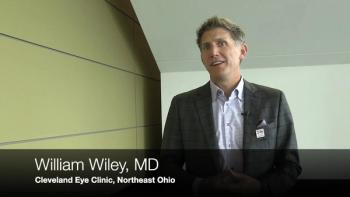
William F. Wiley, MD, shares some key takeaways from his ASCRS presentation on binocularity and aperture optics.

The Phase 1/2 study includes a dose-escalation phase of the study featuring 3 cohorts each one receiving either a low, medium, or high dose of OCU410.
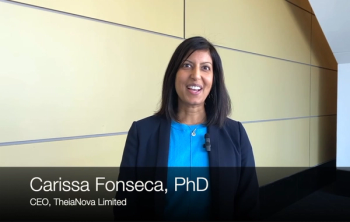
Ahead of the ASCRS 2024 meeting, TheiaNova CEO Carissa Fonseca, PhD, pitched a novel keratoconus treatment
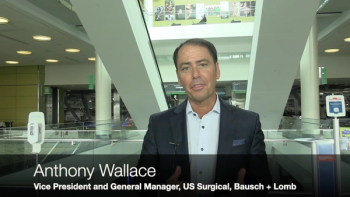
At the 2024 ASCRS meeting, Anthony Wallace details the presentations and educational programmes from Bausch + Lomb
Advertisement
Advertisement