

The formulation combines 2 pharmacologic agents: carbachol, a direct-acting cholinergic agonist, and brimonidine tartrate, an alpha-2 adrenergic receptor agonist.
The formulation combines 2 pharmacologic agents: carbachol, a direct-acting cholinergic agonist, and brimonidine tartrate, an alpha-2 adrenergic receptor agonist.


The University of Rochester’s Flaum Eye Institute is embedding behavioral health into ophthalmology to improve patient care and clinician support.

In the JADE trial, OLN324 demonstrated numerically greater visual acuity gains and evidence of sustained retinal drying with fewer retreatments during a treatment-free follow-up period, compared with faricimab.

Kodiak Sciences has indicated plans to submit a biologics license application (BLA) to the US Food and Drug Administration.

Immediate flushing of the eye can significantly reduce long-term damage after chemical exposure.

Q1 2026 eye-care roundup: first dual-agent presbyopia drop, new EDOF IOL, wet AMD phase 3 win, and gene-therapy advances.


Phase 3 shows epi-on oxygen CXL flattens pediatric keratoconus, improves vision, and stays well tolerated—now commercially available.

Luminopia, formerly cleared by the FDA for amblyopia in children, has begun its foray into IXT with positive data from a preliminary investigation.

An off-the-shelf corneal cell injection targets FECD and bullous keratopathy, aiming to restore vision and ease donor shortages.

Key regulatory filings, phase 3 readouts, and trial enrollments to watch through June 30.

Phase 2 ArMaDa data show statistically significant 31% reduction in GA lesion growth with OCU410 at 12 months, with a favorable safety profile supporting phase 3 development.

New MLSDT functional vision test tracks advanced retinitis pigmentosa better than acuity, supporting future gene and optogenetic therapy endpoints.

The prospective, multicenter study enrolled 318 patients across 20 US sites.
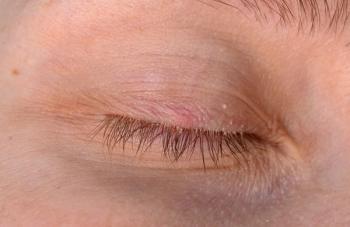
China clears first mite-targeting drop for Demodex blepharitis, bringing XDEMVY-style relief and new options beyond lid scrubs and tea tree oil.

Their discussion touches upon EyeSustain’s global efforts to reduce waste in ophthalmology, strategies for greener cataract surgery, and collaborations with industry and professional societies to promote sustainability.

DSP-3077 is being evaluated by Sumitomo Pharma in an ongoing phase 1/2 study (NCT06891885), designed to assess safety, tolerability, and preliminary efficacy in patients with RP.

New STAR trial subgroup data show SYD-101 low-dose atropine slows pediatric myopia, especially ages 3–12 and fast progressors, with good tolerability.

In the latest episode of The Retina TL;DR with Dr. Weng, host Christina Y. Weng, MD, MBA, FASRS, talks with Dr. Dugel about the novel hydrogel-based tyrosine kinase inhibitor platform designed to extend durability and improve long-term outcomes in neovascular AMD.

Prof. Sobha Sivaprasad discusses why GA's multistage nature demands a broader therapeutic approach—and what evidence will shape clinical decision-making.

Caution advised by doctors and aviation safety experts

Prof. Anat Loewenstein questioned whether treat-and-extend will remain the preferred strategy as longer-acting therapies emerge.

Meta-analysis finds refraction change better than axial length thresholds for tracking childhood myopia, urging growth-curve AL monitoring to flag retinal risk.

The merger, originally announced in March 2025, included the ALLY Robotic Cataract Laser Treatment System.


QoL areas measured included enjoying relationships/life, overall mood, and time spent thinking of eye pain.

Andrew G. Lee, MD, presents the “no” perspective on whether GLP-1 agonists cause non-arteritic anterior ischemic optic neuropathy, arguing that current evidence shows association but not proven causation.

The 17th annual Congress on Controversies in Ophthalmology takes place on 20–21 March 2026 in Kraków, Poland, bringing together an international faculty for two days of structured debate on the most pressing questions in the field.

Ian Pitha, MD, PhD, argues that leveraging large-scale utilization data to identify the highest-impact medications could help the field get ahead of supply disruptions before they reach patients.