
News
Acknowledging complex dynamics is an important part of traveling abroad as a doctor, according to University of Colorado ophthalmologist Michael Chen, MD, who helped develop an exercise to prepare trainees for the work overseas.

News
Acknowledging complex dynamics is an important part of traveling abroad as a doctor, according to University of Colorado ophthalmologist Michael Chen, MD, who helped develop an exercise to prepare trainees for the work overseas.

News
According to the company, its data replicate and expand upon the potential of ER-100 to improve retinal ganglion cell function and restore visual function in a nonhuman primate model of nonarteritic anterior ischemic optic neuropathy.
George O. Waring, IV, MD, provides insights from an on-demand poster as part of the annual American Academy of Ophthalmology taking place in Chicago, Illinois. This poster was titled, "Two-Year Clinical Feasibility Trial Outcomes for a Dual-Optic IOL System for the Treatment of Presbyopia and Cataract."
Alexander Fein, MD, spoke with the Eye Care Network to share how to approach a patient presenting with transient vision loss, what this type of vision loss can mean, and what additional testing might be needed to determine the best plan for care.

The retina is a key proving ground for long-held theories of genetics.

News
According to a study presented at the American Academy of Ophthalmology’s annual meeting in Chicago, investigational treatment reduced vision loss and protected key structures in the eye essential for vision.
Nathan Radcliffe, MD, shared insights from his presentation at the annual meeting of the American Academy of Ophthalmology entitled, "Early cataract extraction for angle closure glaucoma."
Meghan Berkenstock, MD, an associate professor of ophthalmology at the Wilmer Eye Institute, provides insights on paper from the uveitis free paper section of AAO 2024, about the use of TriNetX database to assess for the incidence and prevalence of both uveitis and its complications.
At this year's American Academy of Ophthalmology (AAO) meeting, John Berdahl, MD, spoke about the recent clinical trials of travoprost and its use in patients with prior SLT.

Custom-designed, lens-based surgery is a less interventional surgical option.
Christine Kay, MD sat down to discuss her presentation on gildeuretinol and its slowing of progression of Stargardt disease, studied in the TEASE program at this year's American Academy of Ophthalmology meeting held in Chicago, Illinois.

News
According to a presentation at the American Academy of Ophthalmology’s annual meeting in Chicago, a new study shows customized eyeglasses successfully addressed children’s complex eye needs.
Dr. Arepalli discussed a course focused on ocular conditions related to pregnancy and postpartum care, presented at the American Academy of Ophthalmology (AAO) meeting.
Christina Y Weng, MD, MBA sat down to discuss the Retina Ophthalmic Technology Assessment Symposium and her journal on teleretinal screening for diabetic eye disease at this year's American Academy of Ophthalmology meeting held in Chicago, Illinois.
George O. Waring, IV, MD provides insights from an on-demand poster as part of the annual American Academy of Ophthalmology taking place in Chicago, Illinois. This poster shared data on the the 9-month FDA data of the recently approved excimer laser, the TENEO laser, by Bausch + Lomb.
SLT superior to glaucoma drops as first-line treatment.
Adam Muzychuck, MD, FRCSC, sat down to discuss his presentation on the defocus curve performance of trifocal IOLs and the outcomes of the near activity vision questionnaire given to patients implanted with the Envy full range of vision IOL at this year's American Academy of Ophthalmology meeting held in Chicago, Illinois.

News
In data presented at the 128th annual meeting of the American Academy of Ophthalmology in Chicago, the two-year study finds patients with advanced disease can recover some vision.
News
Fatemeh Rajaii, MD, PhD, an associate professor at Wilmer Eye Institute, Johns Hopkins, discusses emerging therapies in thyroid eye disease (TED) from her presentation at the American Academy of Ophthalmology’s annual meeting in Chicago.
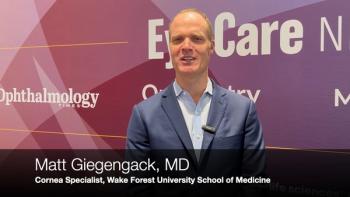
Matt Giegengack, MD, explains how injectable corneal endothelial cell therapy can enhance visual acuity and alleviate glare, offering a versatile alternative to current treatments like DMEK.
In an interview with Ophthalmology Times, Quan Dong Nugyen, MD, MSc, discusses ongoing research into Tinlarebant, an investigational drug being studied as a treatment for Stargardt disease in adolescents.

The investigators conducted a study in which they evaluated the retinal structure in patients with ametropic amblyopia and then correlated it with the final visual acuities achieved after 6 months of follow-up using a multimodal imaging approach.
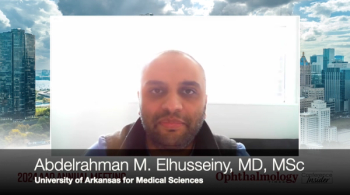
Abdelrahman Elhusseiny, MD, MSc, sat down with David Hutton of Ophthalmology Times to discuss his presentation on the risk of posterior capsular rupture in fellow eyes of cataract surgery at this year's American Academy of Ophthalmology meeting being held in Chicago, Illinois.
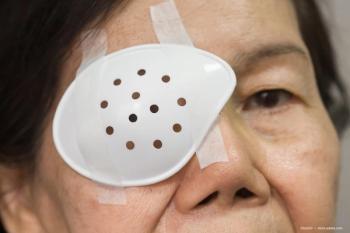
Investigators conducted a retrospective clinical database study that covered 12 years to quantify the risk of PCR in the second eye after PCR developed in the first eye during cataract surgery.

News
According to data presented in a late-breaking oral presentation at the American Academy of Ophthalmology 2024 Annual Meeting in Chicago.1 efficacy and safety from this phase IV study were consistent with data from the Vabysmo phase III DME studies.
News
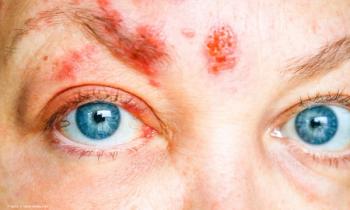
New research presented at the American Academy of Ophthalmology’s Cornea Subspecialty Day is part of the part of the 8-year Zoster Eye Disease Study.

How cell phone use can affect student retention and attention in the classroom.

A home self-imaging device can provide ophthalmologists with actionable insight between office visits for AMD

This initiative is supported by a $5 million grant from the Knights Templar Eye Foundation.