

Look back on some of the top stories on Modern Retina from 2024 as we gear up for an incredible 2025.

Look back on some of the top stories on Modern Retina from 2024 as we gear up for an incredible 2025.

This series features experts in ophthalmology sharing their thoughts on the one unsolved challenge they wish there was a solution for.

A team of researchers in China detail a case of Thelazia callipaeda infection in the right eye of a 41-year-old woman working in an office. The patient presented with persistent foreign body sensation, pruritus, and redness despite initial treatment with polyethylene glycol and levofloxacin eye drops.
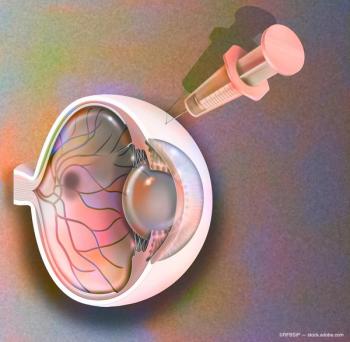

A look at the biggest news and advancements in ophthalmology in 2024.

Deepinder Dhaliwal, MD, LAc, explores advancements in managing Fuchs endothelial corneal dystrophy, highlighting Descemet stripping only (DSO). Long-term outcomes show promising results, supporting DSO as a viable alternative to traditional donor-tissue-based keratoplasty procedures.

Alon Kahana, MD, PhD, discusses the role of interleukin-6 in thyroid eye disease and the potential of tourmaline Bio's IL-6 inhibitor therapy.

Options empower patients and providers to decrease treatment burden.

Electrical stimulation therapy is being explored as a potential treatment to enhance neuroplasticity and improve visual function in optic neuropathy patients. Clinical trials show promising results in visual field improvements, though further research is needed on long-term efficacy and quality of life.
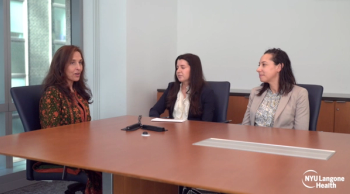
Deepinder Dhaliwal, MD, LAc, discusses longterm outcomes of Descemet Stripping Only (DSO) for Fuchs dystrophy at NYU's Journal Club, highlighting a 77% success rate at 5 years and evolving techniques.

A Helsinki University Hospital study found diabetes, glycemic control, or insulin therapy did not significantly affect anatomical or functional outcomes after epiretinal membrane surgery.

The NYU Grossman School of Medicine launches a Journal Club series with Ophthalmology Times, featuring expert faculty discussions on ophthalmology research to enhance clinical practice and trainee education.
This series features experts in ophthalmology sharing their thoughts on the one unsolved challenge they wish there was a solution for.

This series features experts in ophthalmology sharing their thoughts on the one unsolved challenge they wish there was a solution for.

Epioxa is a next-generation corneal cross-linking iLink therapy for the treatment of keratoconus.
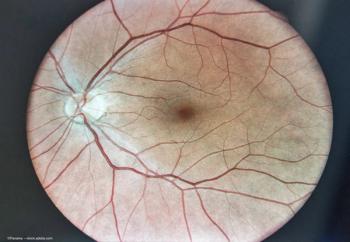
Enhancing durability and reducing treatment burden.

Investigators conducted a retrospective clinical audit to determine why patients do not adhere to the guidelines among about 9,000 patients in a practice.

This series features experts in ophthalmology sharing their thoughts on the one unsolved challenge they wish there was a solution for.

The report details the results of preclinical discovery, engineering and characterization studies evaluating the safety, retinal cell transduction, transgene expression and clinical activity of proprietary evolved intravitreal vector R100 and 4D-150.

This series features experts in ophthalmology sharing their thoughts on the one unsolved challenge they wish there was a solution for.

According to Iridex Corp., the study confirms MicroPulse TLT's sustained safety and efficacy in managing glaucoma, reducing intraocular pressure and medication reliance with minimal complications over 5 years.

Event in San Francisco features a lineup of speakers, latest in glaucoma research and technology.
At the FLORetina Conference in Florence, Italy, John W. Kitchens, of Retina Associates of Kentucky, highlighted strategies to enhance efficiency in retina practices, addressing challenges like staff shortages and rising patient volumes. He emphasized streamlined workflows, advanced diagnostic tools, and enhanced patient communication to optimize care and improve outcomes.
In an interview with Ophthalmology Times, clinical trial investigator Zaina Al-Mohtaseb MD, noted the CLARA Phase 1/2 trial demonstrated the safety, efficacy, and simplicity of corneal endothelial cell injection therapy with a rho kinase inhibitor, offering a less invasive alternative to traditional corneal transplantation for treating corneal edema.

THRIVE-2 met all primary and secondary endpoints at the 15-week primary analysis timepoint after 5 infusions of veligrotug.

According to the company, its Phase 1/2 CLARA trial of AURN001 for corneal edema demonstrated significant dose-dependent efficacy, especially in the high-dose group, with favorable safety and tolerability profiles.

QUASAR is a global, double-masked, active-controlled phase 3 trial evaluating the efficacy and safety of EYLEA HD, compared to EYLEA, in patients with RVO, including those with central, branch and hemiretinal vein occlusions.

This series features experts in ophthalmology sharing their thoughts on the one unsolved challenge they wish there was a solution for.