

Topline data results are expected in February 2025.

Topline data results are expected in February 2025.

Changes can result in bacterial contamination, loss of drug activity, and inflammation

Following the switch from multifocal to single-vision contact lenses, axial elongation increased by 0.03 mm/year, and myopia progressed at a rate of −0.17 D annually after switching to single-vision lenses.

Linsitinib is being evaluated in patients with active, moderate to severe thyroid eye disease (TED).

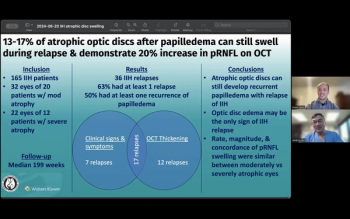
Andrew G. Lee, MD, and Drew Carey, MD, return for this latest episode of the NeuroOp Guru to discuss whether a dead nerve can swell, focusing on the condition of papilledema caused by elevated intracranial pressure.

The iDose platform is designed to address ubiquitous patient non-adherence and chronic side effects associated with topical medications by providing 24/7 release of medication.

RayTrace has been utilized globally by surgeons since 2008.


The phase 1 clinical trial is a multicenter, open-label, dose-escalation study to assess drug safety via intravitreal injection in 3 cohorts.

Cost among other factors may deter patients from screening, especially in rural and low-resource settings.

The trial evaluated ONS-5010 in wet age-related macular degeneration patients, and the company plans to resubmit a Biologics License Application in the first quarter of 2025.

Study sees a positive association between the dietary inflammatory index (DII) and non-refractive visual impairment among US populations

The funding will support activities like formal pharmacology and toxicology testing.

The new funding will allow the company to complete its ongoing Phase 2 trial of proprietary nanomedicine, migaldendranib, in patients with wet AMD and DME

Dr. Frenkel highlights a comprehensive program that covers the latest breakthroughs in glaucoma and cataract surgery to in-depth discussions on AI, retinal treatments, and new drug-delivery platforms, all set against the backdrop of Snowmass, Colorado.

The launch follows a CE Mark received late last year.


The company will prioritize its cash in funding its ongoing Phase 1/2 PRISM clinical trial and Phase 3 4FRONT program.

With this addition, Zeiss completes the Corneal Refractive Workflow, which already includes Visumax 800 and SMILE pro.

Previously, Teva was established as the European commercialisation partner of FYB201, Formycon's biosimilar to ranibizumab (Lucentis).

Whitecap is currently developing 2 therapies for potential use in glaucoma and geographic atrophy.
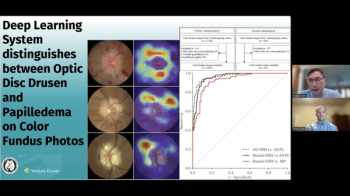
Andrew Lee, MD, and Andrew Carey, MD, sit down on another episode of the NeuroOp Guru to discuss deep learning systems and whether they can distinguish between optic disc drusen and true papilledema


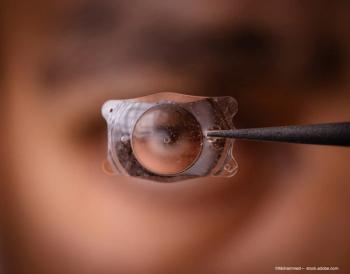
The Loong Crystal PR IOL is designed for the treatment of myopia in adults ranging from -3.25D to -18.00D.

Wendy Lee, MD, an oculoplastics specialist and member of the program committee at EnVision Summit, shares an agenda that will include a mix of functional oculoplastics, aesthetics, and live facial rejuvenation demonstrations at the upcoming event, which will be held from February 14 to 17, 2025, at the Caribe Hilton San Juan in Puerto Rico.
The clinical trial successfully met pre-specified visual acuity primary endpoints in both the US and European Union (EU)/United Kingdom (UK) with statistically significant near vision improvements recorded at all time points over 8 hours

The additions to the ANTERION Cornea App will be commercially available in February 2025

ViGeneron also received approval for dose escalation in the ongoing phase 1b clinical trial.