
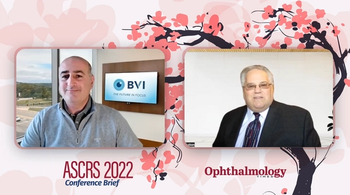
Shervin Korangy, CEO of BVI, shares about the company's new technology, Beyeonics One, on display during ASCRS 2022.

Shervin Korangy, CEO of BVI, shares about the company's new technology, Beyeonics One, on display during ASCRS 2022.
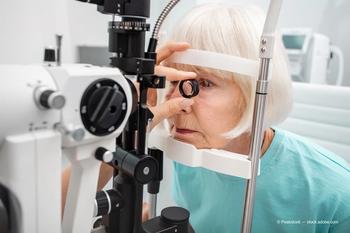
About 65% of patients sought follow-up care for glaucoma after presentation to the Wills Eye Hospital emergency room (ER), according to Elliot G. Cherkas, BSc, the lead author of the study.

Over the past 2 years, retina specialists and their patients have learned how AI may be a tool physicians can use to monitor patients for disease progression, how telemedicine might mean more than a mere video chat between patient and clinician, and how the tools of the 21st century were closer to real-world practice than anticipated.

In patients with amblyopia, minuscule fixation eye movements play a major role with treatment, according to Fatema Ghasia, MD, associate professor of ophthalmology and director of the Vision Neuroscience and Ocular Motility Laboratory at the Cole Eye Institute at Cleveland Clinic in Ohio.

Ophthalmologists have several options at their disposal for the treatment of presbyopia, according to Elizabeth Yeu, MD, a partner at Virginia Eye Consultants and an assistant professor at Eastern Virginia Med¬ical School in Norfolk. Speaking recently at the virtual 2022 Toronto Cataract Course, Yeu noted that innovation is advancing in presbyopia correction.

Researchers at the University of Southern California have stimulated the retinas of blind mice using focused ultrasound technology.

One of the most stressful aspects of retirement can be transitioning from earning income to relying upon investments and other possible income sources to meet income needs.

According to the company, post-hoc analyses from Illuminate trial of sepofarsen demonstrate an encouraging efficacy signal when comparing active treatment and sham eyes to their corresponding contralateral eyes across multiple endpoints. The company plans to discuss findings with regulators in Q3.

Here's an overview of what the current world economic issues mean for today's investors.

This advancement reinforces Alcon’s commitment to surgeon training and education, as part of the Alcon Experience Academy. The new device will be introduced at the upcoming ASCRS meeting and surgeons will be able to experience the new technology firsthand.

The award recipients were chosen by an all-volunteer selection committee. The committee consists of leaders and professionals in the ophthalmology, optometry, advocacy, public health and scientific communities.

According to review, patients with mild DR at baseline fare better

Impact of native lipids on rhodopsin signaling and regeneration opens door to GPCR drug discovery in native membrane environments

The trial marks the first-ever in vivo delivery of an experimental CRISPR gene editing medicine to a pediatric patient, with the company on track to complete dosing of the pediatric mid-dose cohort in the first half of 2022.

The challenge has been in early detection of inflammation. Matrix metalloproteinase-9 (MMP-9), an inflammatory biomarker consistently elevated in the tears of dry eye patients, may accelerate early diagnosis when detected.

NCX 470 is currently enrolling patients in two multi-regional Phase 3 glaucoma clinical trials, Mont Blanc and Denali. The objective of these two trials is to demonstrate statistically superior IOP lowering of once daily dosed NCX 470

Severe ocular involvement demands inflammation control

Three prestigious lectures are featured, including Ehud Assia, MD, from Israel who gave the ESCRS Binkhorst Lecture; Richard Packard, MD, from England who gave the Choyce Lecture to the UKISCRS; and Michael Snyder, of the Cincinnati Eye Institute in Cincinnati, Ohio, USA, who delivered the Kelman Lecture at the 2021 American Academy of Ophthalmology meeting.

According to the company, the trial will study the effect of the drug in treatment-naïve patients with diabetic macular edema (DME) who are members of underrepresented patient populations.

Andrew Lee, MD, and Elizabeth Fortin, MD, briefly discuss whether all patients with NAION should receive a sleep study.

A team of investigators from Pohang University of Science and Technology has found that conjunctival goblet cell examination is important for the precise diagnosis and effective treatment of ocular surface diseases; however, CGC examination has not been possible until now due to lack of non-invasive devices.

According to researchers at the University of California, Irvine, base editing may provide long-lasting retinal protection and prevent vision deterioration in patients with inherited retinal degeneration, specifically in Leber congenital amaurosis patients.

Investigators find technology aids instruction of medical students
The data support the ongoing development of KPI-012, a novel investigational secretome therapy, to address the complex wound healing process in persistent corneal epithelial defect (PCED).

Orbis International celebrates 40 years of innovation this year, beginning in 1982 with their iconic flying eye hospital. Since their start, Orbis has continued their innovation, working to achieve sustainable and scalable impact in the countries where they work. Doris Macharia, MD, senior vice president of global programs with Orbis, talks with Ophthalmology Times' Sheryl Stevenson, reflecting on the last 40 years and what's to come.
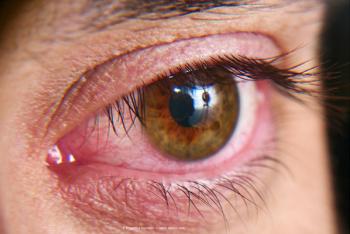
Top-line results are expected during second quarter for the therapeutic to treat patients with dry eye disease.

The company’s Systane iLux2 Meibomian Gland Dysfunction Thermal Pulsation System is a handheld device that allows patients to see the need for treatment and visualize their procedure.

According to the company, the VIRGO trial evaluated the safety and efficacy of the investigational twice-daily administration of pilocarpine HCl ophthalmic solution 1.25% in adults with presbyopia. The trial met its primary efficacy endpoint, the company noted.

According to the company, the modifier gene therapy candidate is for the treatment of retinitis pigmentosa resulting from mutations in the nuclear receptor subfamily 2 group E member 3 and Rhodopsin genes.

Device demonstrates potential as a durable, sustained-release glaucoma therapy