
A team of researchers have successfully transplanted human microglia into a mouse retina to create a model for studying eye disease treatments, such as diabetic retinopathy, glaucoma and age-related macular degeneration.

A team of researchers have successfully transplanted human microglia into a mouse retina to create a model for studying eye disease treatments, such as diabetic retinopathy, glaucoma and age-related macular degeneration.
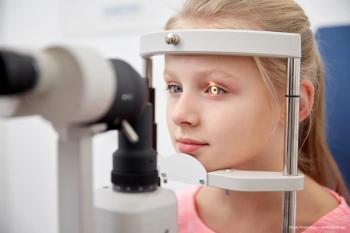
According to researchers from University of Michigan and Duke University, children with Medicaid or other public insurance are far less likely than those with private insurance to have had a vision check in the last year at a primary care office.

Researchers have identified markers that indicate the presence of Parkinson’s disease in patients an average of 7 years before the disease presents clinically.

Clinicians' expertise can help assess inconclusive findings about the benefits of blue-light filtering glasses. This enables them to offer informed guidance to patients concerned about eye strain and sleep quality.

The company noted that its Phase Ib dose-escalation clinical trial will evaluate safety, tolerability and efficacy of VG901 in patients with RP due to biallelic CNGA1 mutations.

Cultivated autologous limbal epithelial cells (CALEC) procedure shown to be safe and feasible with early positive results of restored cornea surfaces or vision gains in four patients with severe chemical burns.


According to the company, the primary endpoint for the NEXPEDE-1 study of lufepirsen ophthalmic gel will be complete corneal healing as determined by corneal fluorescein staining.

Data may inform clinical associations, mechanistic research, trial design.
According to Regeneron, the approval was based on data in the PULSAR and PHOTON trials, in which the drug demonstrated clinically equivalent vision gains to aflibercept Injection 2 mg that were maintained with fewer injections.

Clinicians should be alert to the fact that while artificial intelligence (AI) is capable of generating ideas and references, it is crucial to thoroughly vet and fact-check any medical research content that AI produces.
Take a look at a review of the highlights and hottest stories from Ophthalmology Times during the week of August 13, 2023.

An area that attracts tourists and Christian pilgrims from around the world, has been found to contain microsporidium, which can cause corneal infections.
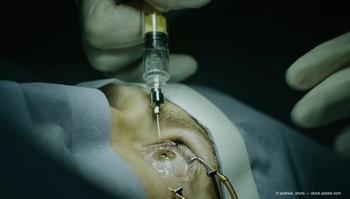
According to the company, the MAA submission is based on data from the GATHER1 and GATHER2 Phase III clinical trials.

Treatment requires a systematic, multifaceted approach to improve outcomes.

Without treatment, severe visual impairment can occur; the first-line treatment for these cases is anti-vascular endothelial growth factor therapy (VEGF).


Researchers combine blue reflectance, red/green 200° ultrawidefield images

APP13007, if approved, may have an advantageous profile in dosing frequency and side effects while reducing the inflammation and pain associated with ocular surgery.

Physicians ask the right questions and take an aggressive approach to treatment.

It is important that patients know cataract surgery is a routine, safe procedure that will improve their quality of life.

Carl Regillo, MD, FACS, FASRS, spoke with our team following the annual ASRS meeting in Seattle, Washington to share insights from his presentation titled, "Modulation of Macrophages and Complement Dysfunction in Non-exudative AMD utilizing novel, sialic-acid coated nanoparticles." Aviceda Therapeutics is unlocking the proteogenomic code of AMD to target proteins and pathways linked to macular degeneration.

The study met its primary efficacy endpoint for the neovascular age-related macular degeneration (nAMD) treatment.

A team of researchers from the Netherlands Institute for Neuroscience, one of the causes is the spontaneous back-and-forth movement of the eye is pendular nystagmus. The researchers have demonstrated that the nucleus of the optic tract might be the source of the problem.


Oluwatosin U. Smith, MD, shares why she is excited for the conference and why it is relevant for today’s ophthalmologists and optometrists.

Staging AMD accurately and identifying clinical features that are linked with disease progression are key.

Theodore Leng, MD, sat down with David Hutton of Ophthalmology Times®, to discuss his ASRS presentation on how the real-world use of faricimab.

Take a look at a review of the highlights and hottest stories from Ophthalmology Times during the week of August 6, 2023.