

Patients can get real-time disease monitoring with self-operated device.

Patients can get real-time disease monitoring with self-operated device.
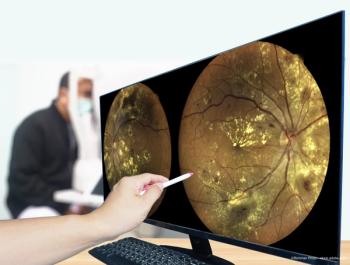
SD-OCT is providing reproducible, high-quality, registered images to assess the treatment response in macular disease.

The FDA has given its approval to Byooviz (ranibizumab-nuna, SB11, Samsung Bioepis Co Inc and Biogen Inc), a biosimilar referencing Lucentis (ranibizumab, Genentech).

Improvements are seen after gene therapy for Leber congenital amaurosis.

Jay Duker, MD, discusses EYP-1901, EyePoint Pharmaceuticals’ sustained-release anti-VEGF drug for the treatment of wet AMD.

Options facilitate increased durability for patients with retinal degeneration.

According to a team of French investigators, every patient hospitalized with severe COVID-19 cases in their study had retinal and choroidal anomalies on indocyanine green angiography and optical coherence tomography images that were possibly related to the virus.

At AAO 2021, Aerie Pharmaceuticals presented the results of their phase 2b clinical trial of AR-15512, a TRPM8 antagonist, for the treatment of dry eye.

The Children’s Vision Equity Alliance was created to improve access in children’s vision and eye health, working to advance equity in children’s vision and eye health through education, policies and partnerships.

Bausch + Lomb's Yolande Barnard shares an update on the FDA approval of XIPERE for the treatment of macular edema associated with uveitis.

A brief overview of the plethora of findings presented at the 2021 American Academy of Ophthalmology meeting held November 12-15 in New Orleans, LA.
In a poster presented at the American Academy of Ophthalmology 2021 annual meeting in New Orleans, Mark Wieland, MD, noted that the Port Delivery System with ranibizumab provides drug delivery over an extended period.

Sunir J. Garg, MD, speaks on the influence of COVID-19 universal face masking on the risk of endophthalmitis following intravitreal anti-VEGF injections.

During a presentation at the American Academy of Ophthalmology 2021 annual meeting in New Orleans, Veeral Sheth, MD, presented research that found faricimab, a bispecific monoclonal antibody, provided sustained retinal stability in patients with diabetic macular edema (DME) compared with other retinal treatments.

Speaking at the American Academy of Ophthalmology 2021 annual meeting in New Orleans, Ines Lains, MD, PhD, explained that the mechanisms of AMD progression currently remain poorly understood and the tools to predict and halt progression are limited.

VUITY, the first and only approved eye drop to treat age-related blurry near vision, provides opportunities for patients looking for spectacle independence.

Ajay Kuriyan, MD, discusses his poster at AAO, "Fluctuations in central subfield thickness associated with worse visual outcomes in patients with diabetic macular edema in clinical trial setting."
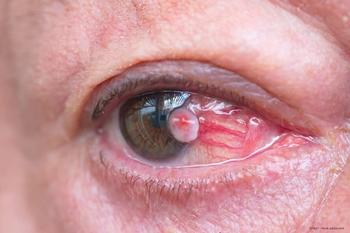
In a presentation at the American Academy of Ophthalmology’s 2021 annual meeting in New Orleans, Nathan Hall, BS, MS, pointed out that an epidemiologic analysis of malignant ocular surface tumors found significant differences in geographic prevalence rates in the United States.

During a presentation at the American Academy of Ophthalmology 2021 annual meeting, Denise Freitas, MD, reported that the ocular findings in infants with congenital Zika virus syndrome were similar among the affected infants and occurred frequently. The most prevalent of the findings was optic nerve pallor.
Roger A. Goldberg, MD, MBA, speaking at the American Academy of Ophthalmology 2021 annual meeting in New Orleans, noted that small misalignments in the plunger can lead to possible overdosing.
Felipe Medeiros, MD, in a presentation at the American Academy of Ophthalmology 2021 annual meeting in New Orleans, noted that a phase 3 clinical extension study of the bimatoprost implant found that patients’ IOP was lowered and stayed low with no additional treatment or changes in their visual fields.

Shady Awwad, MD, in a presentation at the American Academy of Ophthalmology’s 2021 annual meeting in New Orleans, pointed out that the application of mitomycin C after corneal crosslinking does not prevent development of corneal haze after the procedure and actually contributes to development of more corneal haze.

tPA treatment could provide benefits for patients with central retinal artery occlusion.

ImprimisRx President John Saharek shares an update on a few of the company's latest products during AAO 2021.

During the American Academy of Ophthalmology 2021 annual meeting in New Orleans, Dilsher Dhoot, MD, reported the results of the KESTREL and KITE in which brolucizumab was compared with aflibercept for treating diabetic macular edema.

John B. Miller, MD, discusses widefield swept-source OCTA and its use in monitoring biomarkers in diabetic retinopathy.
Ash Abbey, MD, discusses the COED trial, testing the efficacy of combining steroid and anti-VEGF therapy in patients with diabetic macular edema.
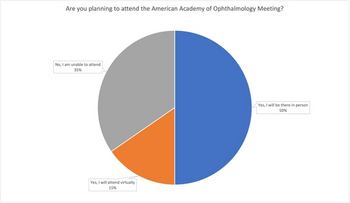
Results from our recent poll regarding AAO 2021 attendance indicate that most ophthalmologists and retina specialists plan to participate in the Annual Meeting in-person.
At ASRS, David Brown, MD, reported positive results at the head-to-head endpoints of KESTREL and KITE, but with continuing concerns about inflammation.

Organizations are urging consumers to be aware of insurance policies that can limit their access to sight-saving procedures and treatments.