

The white noise and classical music listened to by the preterm infants during ROP examinations showed positive effects on pain and heart rate and oxygen saturation values.

The white noise and classical music listened to by the preterm infants during ROP examinations showed positive effects on pain and heart rate and oxygen saturation values.

At the 1-month evaluation, the full-field stimulus threshold had median decrease of -33.2 decibels (dB) (-33.7; -19.8) dB, which remained stable until the last assessment. Visual fields and visual acuity did not change significantly.

They advised that clinicians should be aware of this spectrum of retinal involvement after COVID-19 infections and emphasized the importance of a fundus evaluation.
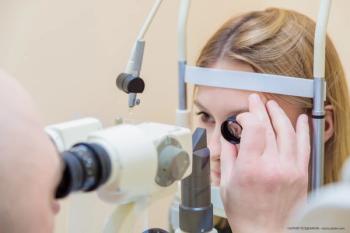
The investigators explained that elevated angle-closure-related intraocular pressure may aggregate the visual impairment in patients with retinitis pigmentosa.

The Phase 2 Altitude study is an open-label, randomized, controlled, dose-escalation evaluation of RGX-314, evaluating the efficacy, safety, and tolerability of suprachoroidal delivery of RGX-314 in patients with moderately severe/severe non-proliferative diabetic retinopathy or mild proliferative diabetic retinopathy.
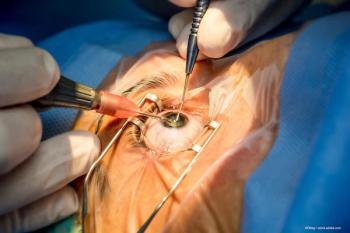
European investigators describe how they address complications associated with silicone oil endotamponade in vitreoretinal surgery.
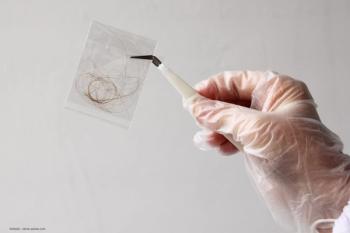
Patients with RP experience greater levels of stress and anxiety than individuals in the general population and that the level of stress can be measured easily and non-invasively in hair.
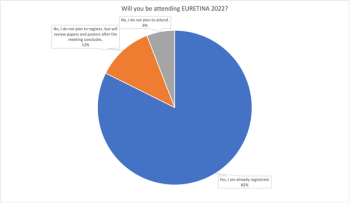
Results from our recent poll regarding EURETINA 2022 attendance indicate that most ophthalmologists and retina specialists plan to participate in the annual Congress in person in Hamburg, Germany.
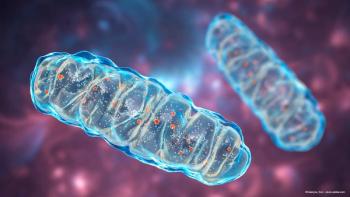
Researchers in Trinity’s School of Genetics and Microbiology developed a new gene therapy, ophNdi1, that shows promise for treating the dry form of age-related macular degeneration (AMD).

Gene therapy has partly restored the function of the retina’s cone receptors in two children who were born completely colorblind, reports a new study led by UCL researchers.

Researchers have suggested numerous theories about the etiology of myopia that include accommodative-lag, peripheral hyperopic defocus, light environment, lifestyle, and environment, but the cause remains unknown.

According to the company, results showed increased effects over time with pegcetacoplan, with treatment effect accelerated between months 18 and 24.
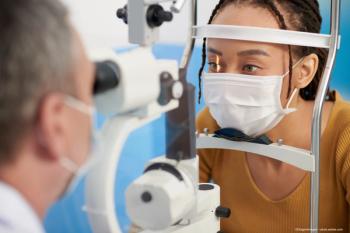
This affordable device allows the view through a slit lamp to be shared in real time or recorded, for teaching and reference purposes.

The deal will expand Alcon's footprint in the ophthalmic pharmaceutical space and is expected to add broader pharmaceutical R&D capabilities to existing commercial efforts.

The contest will take place as part of World Retina Day, Saturday, September 3, from 8:30-9:30 CEST in Hall X2/Channel 7.

The stated core foundation of the Women in Retina program is that “the best innovations happen when diverse people with different perspectives collaborate.” The program will help ESRS harness these perspectives and challenge the way things are done and allow for them to be done better.

APOE4 gene associated with Alzheimer’s disease risk was found to protect mice from glaucoma. Research team also prevented retinal ganglion cell death by blocking the APOE signaling pathway, pointing to a potential treatment strategy for glaucoma.
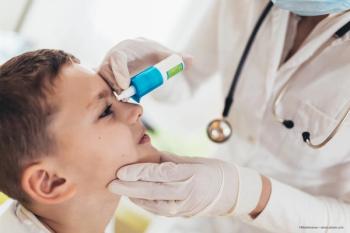

The investigators retrospectively analyzed treatment-naive eyes with DME which received intravitreal treatment with either ranibizumab 0.5 mg or aflibercept 2 mg. All data were collected in the Fight Retinal Blindness! registry.

Researchers at the Medical University of Vienna are focusing on how the retina can be used as a prognostic marker. Analyses revealed that retinal layer thinning as a result of an MS relapse predicts the severity of future relapses and the likelihood of disability.

This discovery provides potential for treatment strategy to prevent blindness from glaucoma.

With the support of Harrington Discovery Institute at University Hospitals, an ophthalmic therapeutic dubbed KIO-301, initially developed by Richard Kramer, PhD, at the University of California, Berkeley (UCB), has successfully been granted approval to start a Phase 1b, first-in-human clinical trial.

Combined, the companies say they will create the largest eye bank, tissue recovery and ocular research center in the world.
The U.S. Food and Drug Administration has approved Coherus’ ranibizumab-eqrn (Cimerli) as an interchangeable biosimilar for all five indications of Lucentis.

This year’s hybrid meeting will allow attendees to participate in person or virtually. Either way, this congress will offer a wealth of information to specialists covering all aspects of retinal diseases.

Kodiak Sciences Inc. announced that its BEACON Phase 3 study of tarcocimab, its novel antibody biopolymer conjugate, met the primary endpoint of non-inferior change from baseline in visual acuity at week 24 compared to aflibercept in patients with macular edema due to retinal vein occlusion.

Investigators concluded that patients who are cognitively healthy with a high genetic risk of Alzheimer disease may exhibit changes in retinal tissue that correlate with brain changes.
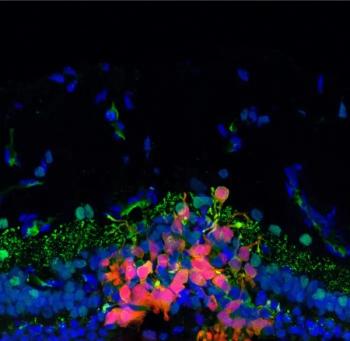
A multi-institutional effort led by researchers at the University of Pennsylvania is taking steps to develop an effective technique to regenerate photoreceptors cells and restore sight in patients with vision disorders.
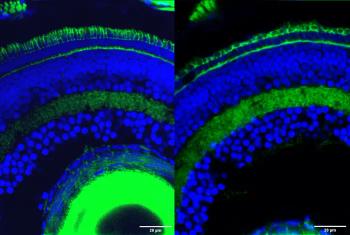
The findings could lead to a new understanding of unexplained causes of inherited retinal diseases.

A novel computational platform identifies top-performing viral vectors that could deliver gene therapies to the retina with maximum efficiency and precision.