
Mohammed Genead, MD, CEO of Aviceda spoke with the Ophthalmology Times team about the company's Phase II/III SIGLEC trial part 1 results, which were shared at this year's American Academy of Ophthalmology meeting.

Mohammed Genead, MD, CEO of Aviceda spoke with the Ophthalmology Times team about the company's Phase II/III SIGLEC trial part 1 results, which were shared at this year's American Academy of Ophthalmology meeting.
Rob Thornhill, CEO of Centricity Vision spoke with the Ophthalmology Times team about the company's newest developments at this year's American Academy of Ophthalmology meeting.

This was a 52-week, double-masked, phase 3 randomized clinical trial in which treatment-naive adults and adults who had previously received anti-VEGF therapy for DME were included.

Marco A. Zarbin, MD, spoke with the Ophthalmology Times team about conducting a post-hoc analysis of the YOSEMITE and RHINE clinical trials and presenting the results at this year's American Academy of Ophthalmology meeting.

As ophthalmology continues to advance, there is still room for more ocular cancer understanding and research.

In the study, researchers changed the microenvironment in the eye in a way that enabled them to take stem cells from blood and turn them into retinal ganglion cells that were capable of migrating and surviving into the eye’s retina.

Mathew MacCumber, MD, PhD, FASRS, spoke with Modern Retina about his presentation at the recent Retina Society meeting in New York City titled, "0.19 mg Fluocinolone Acetonide (FAc) Implant Improves Vision and Treatment Burden in Patients with Diabetic Macular Edema: The PALADIN Study."

Diana Do, MD, spoke with the Ophthalmology Times team about her presentation of the results for the 96-week PHOTON study of aflibercept at this year's American Academy of Ophthalmology meeting.

The investigators use mindfulness-based cognitive therapy (MBCT) on patients who have never previously practiced the technique, with the aim of possibly re-training their brains to remove their static-type images.

The company also completes enrollment of the multiple ascending dose phase of AMARONE, the first clinical trial of EyeBio’s lead investigational asset Restoret, with favorable initial safety and tolerability at all dose levels.
Michael Rivers, MD, Senior Director of Ophthalmology at ModMed spoke with Modern Retina about their new single-screen initiative and the benefits it could have for saving time and simplifying communication within practices.

In the clinical trial, Oxurion’s novel PKal Inhibitor, THR-149, did not meet its primary endpoint.

The recall is “due to potential safety concerns after FDA investigators found insanitary conditions.”

At first glance, these patients can appear to have normal or near-normal visual acuity levels. However, in reality, many have perceptual visual deficits, which are not typically tested during a standard ophthalmology office evaluation.

Loretta Alborghetti, from Redditch, UK, a medical secretary within the ophthalmology department at Worcestershire Acute Hospitals NHS Trust, illegally accessed the records of more than 150 patients.

This is just one of many times the FDA has issued a warning to companies for the sale of unapproved ophthalmic products in 2023.
Mark Blecher, MD, spoke with the Ophthalmology Times team about his poster addressing retinal visualization and patients who've had small aperture IOL implantation at this year's American Academy of Ophthalmology meeting.
Charles Wykoff, MD, PhD, spoke with the Ophthalmology Times team about the GALE study looking at pegcetacoplan for the management of geographic atrophy at this year's American Academy of Ophthalmology meeting.
Penny Asbell, MD, FACS, spoke with Ophthalmology Times about her poster on results from the ARMOR Study and latest diagnostic and therapeutic advancements in ocular infections at this year's American Academy of Ophthalmology meeting.

TRS01 has the potential to be the first-line treatment option for non-infectious uveitis, according to the company.

Researchers found reduced iron concentration in the clear gel part of the eye of human patients and iron accumulation in the retina of mice.

Biocon’s YESAFILI is intended for treatment of a number of ocular conditions, including neovascular AMD, visual impairment due to myopic choroidal neovascularisation, visual impairment due to DME and visual impairment due to macular edema secondary to retinal vein occlusion.
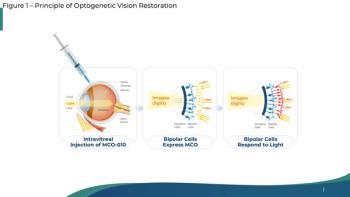
A mutation-agnostic optogenetic gene therapy is in development using multi-characteristic opsin (MCO) to sensitize the retinal bipolar cells to detect light.

ATSN-101, a gene therapy for GUCY2D-associated Leber congenital amaurosis, has demonstrated clinically meaningful improvements in vision at the highest dose with no drug-related serious adverse events 6 months post-treatment in ongoing Phase I/II clinical trial.
Oliver Hvidt, CEO and co-founder of Norlase, spoke with Ophthalmology Times about the company's 4-year journey from AAO 2019 to present at this year's American Academy of Ophthalmology meeting.

An anchored matching-adjusted indirect comparison may aid therapeutic decision-making.

EURETINA 2023 highlighted important DME and DR research and data from across the globe.
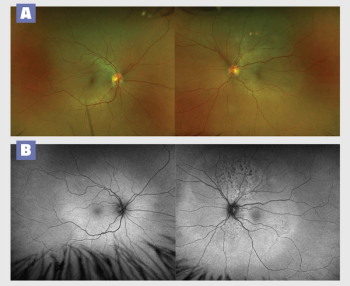
Nonetheless,BDUMP remains a rare condition with fewer than 60 cases documented in literature.

The endorsement follows FDA approval in the United States this summer.
These companies will be among those sharing information and data in Boston, Massachusetts November 14-16, 2023.