

Ophthalmology community continues to rally against efforts to expand the scope of optometrists in multiple states.

Ophthalmology community continues to rally against efforts to expand the scope of optometrists in multiple states.

A new case-control study found that older people ages 70 and older living in South Korea’s urban areas were at a significantly higher risk for developing incident exudative age-related macular degeneration.

TRS01 ophthalmic solution is targeted for the treatment of non-infectious uveitis, including uveitic glaucoma.

According to the Advanced Research Projects Agency for Health, its program aims to transplant human eyes and reestablish visual connection to the brain.

NIDEK Co. Ltd. has made a financial donation to Orbis International to support Orbis’s artificial intelligence (AI)-based screening services in Vietnam.

Principle findings showed that aflibercept 8 mg demonstrated similar improvements in BCVA and CST when compared to the 2 mg dose of aflibercept.
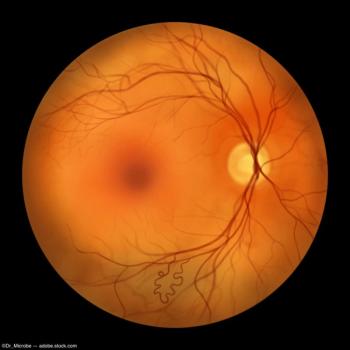
Varun Chaudhary, MD, FRCSC, addressed the big questions in treating patients with retinal vascular diseases: who will and will not respond to treatment and what clues are predictive on imaging, at the Retina 2024 meeting in Maui.

In his presentation, Eichenbaum defined gene therapy and described its use in common retinal disease.

The FDA previously granted Regenerative Medicine Advanced Therapy (RMAT) designation and orphan drug designation to ATSN-101 for the treatment of LCA1.

The commercial release of OcuLenz is planned for the first half of 2024. Ocutrx is collaborating with Medicare and insurance providers to ensure the headset's affordability and accessibility.
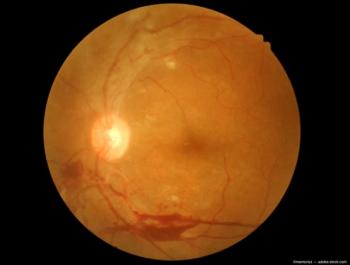
The kiosk is the first to offer self-service retinal imaging, empowering individuals to capture their own images.

According to an American Academy of Ophthalmology news release, Edmond’s priorities during her term include addressing physician and staff shortages and protecting patient safety at a time when nonphysicians are trying to expand their scope of practice into eye surgery.

Company presenting data from the Phase II AAVIATE trial of suprachoroidal ABBV-RGX-314 for the treatment of wet age-related macular degeneration January 16 at the Hawaiian Eye and Retina 2024 Meeting.

According to a study by Johns Hopkins Children’s Center researchers, AI-driven cameras that take images of the back of the eye and require no eye drops can be used to close care gaps.

This trial is a multi-center, open-label safety and tolerability study enrolling 30 patients to evaluate a low and high dose of AVD-104 with 3-month follow-up.

According to the company, EYP-1901 is an investigational sustained delivery therapy containing vorolanib, a selective tyrosine kinase inhibitor formulated in bioerodible Durasert E.

According to the company, all three patients treated for two years or more have remained free of symptoms and disease progression while taking gildeuretinol.

eSight’s medical equipment enhances vision for individuals with over 20 distinct ocular disorders, frequently enabling users to attain 20/20 vision. The Consumer Electronics Show runs January 9-12 in Las Vegas.

The data indicated that patients with Alzheimer’s disease who were treated with acetylcholinesterase inhibitors had a slightly lower hazard of developing AMD compared with untreated patients.

The company’s ANX007 global pivotal program in geographic atrophy is expected to start in mid-2024. It is the first pivotal trial to use vision preservation as a primary outcome measure in GA.

The European Union approval applies to aflibercept 8 mg for treatment of nAMD and DME.

Updates include expected timelines for trials for the treatment of wet AMD, DME, GA, and inherited retinal diseases.

In a letter to shareholders, Ricciardi provided updates on Cognition’s 2024 pipeline and expected advances for several diseases.

The company announced more advancements of its RASP modulator platform, including plans for ADX-629 and ADX-246.

The Retina Program 2024 will convene during the Hawaiian Eye meeting in Maui from January 14 through January 19

Hawaiian Eye and Retina 2024 meetings will take place from January 13 to 19 at the Grand Wailea Maui, 3850 Wailea Alanui Drive, Wailea, HI.

This partnership will provide Greater Tampa Bay community with services for the treatment of uveitis and retina care.

The study will evaluate the safety and efficacy of fluocinolone acetonide intravitreal implant 0.18mg, (YUTIQ) in the treatment of chronic non-infectious uveitis and related intraocular inflammation.

The revision is in response to multiple recalls for eye drops and instances of consumer injury and death in 2023.

If granted, this device would be assigned an official classification as a Class II device with special controls.