

OK-101 is the first IND clearance granted by the FDA for a drug to begin clinical studies specifically to treat patients suffering with neuropathic corneal pain.

OK-101 is the first IND clearance granted by the FDA for a drug to begin clinical studies specifically to treat patients suffering with neuropathic corneal pain.
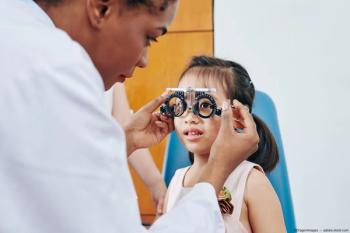
A new study found that only a little over half of school-aged children participants underwent vision screening within the past two years, highlighting gaps in eye care access.

Researchers noted a study by Ruhr-University Bochum researchers provides crucial evidence that the ECM influences visual sensory motor behavior already at the retina level, without intervention of disease and/or experimental manipulation.

Sir Jules Thorn Charitable Trust's investment will support a state-of-the-art, eye health research facility, opening in 2027.

Clearside noted in a news release it intends to use the net proceeds from this offering for working capital and general corporate purposes.

Toku’s AI technology, CLAiR, has obtained CE and UKCA Marks. CLAiR provides fast, accurate, non-invasive cardiovascular disease (CVD) risk assessments using standard retinal images.

According to the company, AGTC-501 was generally safe and well-tolerated and showed improvements in visual function at the 12-month analysis. The Phase 2/3 VISTA trial for AGTC-501 in XLRP expected to begin in in the first half of 2024.
According to the company, 4D-150 was well tolerated with a favorable safety profile when evaluated through up to 48 weeks of follow-up, with no significant inflammation observed.

A team of neuroscientists at Johns Hopkins show how specialized cells signal the presence of light simultaneously in two distinct ways.

The agreement settles Zeiss’s lawsuit against Topcon’s US-based subsidiaries that had been set to start this month in US federal court for the Northern District of California.

Trial will analyze efficacy, safety of AVD-104 versus avacincaptad pegol to treat GA

Under the terms of the agreement, Kiora Pharmaceuticals and Théa Open Innovation will develop and commercialize KIO-301 for the treatment of inherited retinal diseases in a deal valued at up to $301 million.

In a news release, the FDA noted these are copycat eye drop products that consumers can easily mistake for Bausch + Lomb’s Lumify brand eye drops, an over-the-counter product approved for redness relief.
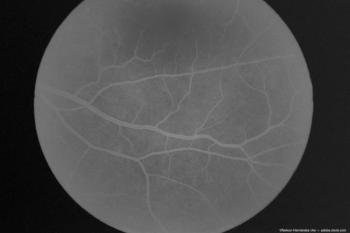
According to the company, the deals from two global Phase III RVO studies will be presented at Angiogenesis, Exudation, and Degeneration 2024.
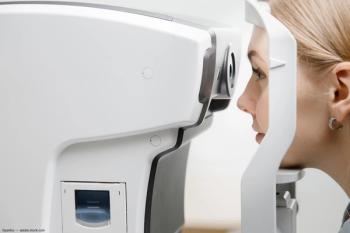
Elodie Bousquet, MD, PhD, and international researchers studied type 3 macular neovascularization (T3 MNV) using optical coherence tomography. In 64.5% of 31 eyes with T3 MNV, it developed over soft drusen, showing drusen growth and outer layer thinning before T3 MNV.

Glenn Yiu, MD, PhD, was chosen for this grant. Yiu is a retinal specialist and clinician-scientist currently a professor of ophthalmology at the University of California, Davis.

Massachusetts Eye and Ear researchers came up with a mobile app called All_Aboard, designed to be used along with mainstream GPS systems and focuses on improving micro-navigation.

Baruch Kuppermann, MD, PhD, discusses interim results from the first in-human Phase 2 RIPPLE-1 Trial of a dexamethasone implant for diabetic macular edema and retinal vein occlusion.

Ramin Tadayoni, MD, PhD, highlights data from the BALATON and COMINO Phase 3 studies about faricimab, respectively, in branch retinal vein occlusion and central retinal vein occlusion.


Dr. Jennifer Lim reveals new data on Angiopoietin-2 inhibition as a target for addressing nAMD and DME.
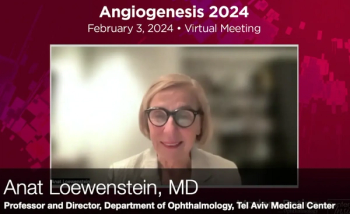
In conversation with Ophthalmology Times Europe, Anat Loewenstein, MD, illuminates the outcomes of using an AI-based fluid quantification for remote retina monitoring and analysis.

Dr. Carl Regillo provided an overview of topline results and a deep dive into subgroup analyses of DAVIO 2 trial data.

Sydney M Crago, the editor of Modern Retina, talks with Arshad M Khanani, MD, MA, FASRS, about the expanded efficacy data from the GATHER 2 trial for geographic atrophy (GA).

EODM may be an ideal candidate for development of complement gene therapy due to the high-impact genetic variants.
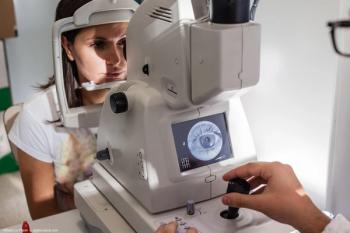
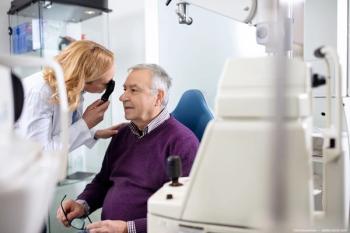

A University of Houston professor found that the excitement over the results of LLR as a treatment option for patients with myopia may have come too soon, before its efficacy was confirmed.

This presentation will outline the safety and bioactivity of KSI-501ABC in patients with diabetic macular edema (DME).

The licensing deal includes upfront, development milestones, and sales royalties, with additional considerations throughout the term of the agreement.