

Rising costs of metabolic agents, particularly those used in the treatment of diabetes, impacts patients and the medical systems, such as Medicare and Medicaid.

Rising costs of metabolic agents, particularly those used in the treatment of diabetes, impacts patients and the medical systems, such as Medicare and Medicaid.

Through free, virtual webinars, the companies are working to bring clinical education to eye care professionals around the world.
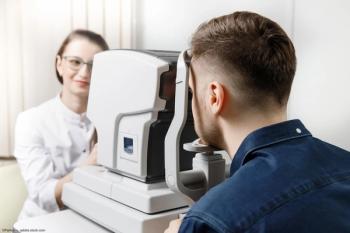
The program will use OCT images to identify and monitor AMD in its early stages.

The prosthesis bypasses the optic nerve and sends images directly to the patient's brain to create artificial sight.

The molecule is being evaluated in 2 phase 3 clinical trials for wet AMD and is administered via intravitreal injection in combination with standard-of-care anti–VEGF-A therapy.

According to the company, the grant funding from the Choroideremia Research Foundation is in support of validating functional vision assessments for patients with profound blindness.



The company’s AI technology uses retinal imaging to assess potential health risks in patients.

Scientists at the National Institutes of Health use artificial intelligence called ‘P-GAN’ to improve next-generation imaging of cells in the back of the eye.

The company created this new role as they see continued growth and room for more expansion.

According to the company, VG901 is designed to deliver a functional CNGA1 gene to retinal photoceptor target cells in patients diagnosed with retinitis pigmentosa. It has been granted Orphan Drug Designation by FDA.

The SAB additions include Usha Chakravarthy, MBBS, PhD; Allen Ho, MD, FACS, FASRS, and Frank Holz, MD, FEBO, FAVO.




The Phase 1/2 study includes a dose-escalation phase of the study featuring 3 cohorts each one receiving either a low, medium, or high dose of OCU410.

According to the company, the Phase 3 study will have a sample size of 150 participants—one arm of 75 participants with the RHO gene mutation and the other arm with 75 participants that are gene agnostic.


Extended treatment intervals with bevacizumab preserved vision of many patients with high baseline vision.

The 2 organizations to receive initial gifts will be Sight for Life and Eye Corps.

Patients can experience solar retinopathy after viewing the eclipse without protection, but it also can occur from outdoor activities, including those mentioned. It can lead to symptoms that include blurry vision, vision loss at the center of a patient’s sight and eye pain.

NEPTUNE represents the seventh positive Phase 2 study for brepocitinib with more than 1400 subjects and patients treated with brepocitinib in clinical trials. Brepocitinib was generally safe and well-tolerated in the study; no new safety and tolerability signals were identified.

Modern Retina’s interview with Aracelis Torres, PhD, MPH sheds light on how real-world insights empower researchers to see trends and develop new strategies, sometimes even new products, to meet the treatment needs of patients.

Researchers have linked ZIKV to ocular deformities in infants that include retinal lesions, microphthalmia, hemorrhagic retinopathy, retinal pigmented epithelium mottling, optic neuritis and hypoplasia of the optic nerve.

According to the company, EXN407 is the first topical SRPK1 inhibitor to demonstrate both safety and signals of biological response as monotherapy for these indications.

Age-related macular degeneration continues to be a key development area for many pharmaceutical companies as the work to develop new treatment options and present data in the first few months of the year.

The Bascom Palmer Eye Institute at the University of Miami Miller School of Medicine recently received a $1 million donation to drive its efforts to successfully transplant a whole eye.

The effort led to the creation of an artificial vitreous body for treating retinal detachment. This solution is based on a natural carbohydrate derived from algae.

The company announced it has entered into a global licensing agreement with ForSeeCon Eye Corp. for the company's ophthalmology pipeline, which includes the medical device Vitargus.