


News
Advertisement
Sunir Garg, MD, FACS, shares strategies to minimize pain with intravitreal injections.
Advertisement
Modern Retina spoke with Veeral Sheth, MD, MBA, FASRS, FACS, at the 2024 Retina World Congress meeting about the PRISM study, 4DMT's gene therapy trial for wet AMD.
Michael A. Singer, MD, shares details about the an IRIS database look at Triamcinolone Acetonide.
Elias Kahan speaks about his ARVO poster, "Contact specular microscopy reliably images the same location of the corneal epithelium."
At this year's ARVO meeting, Paul Kayne, PhD, gave insight on his paper titled "Mapping the melanocortin receptors in the human eye."
Advertisement
At this year's ARVO meeting, Deborah A Ferrington, MD, PhD, presented "Genotype-specific differences in mitochondrial function specific to the CFH Y402H risk allele associated with AMD."

In a retrospective interventional cohort study, the investigators analyzed the outcomes of 80 patients with submacular hemorrhages who were treated with subretinal aflibercept or intravitreal aflibercept.
At this year's ARVO meeting, Allen Ho, MD, presented a paper on presenting a paper on the 12 month results of a mutation agnostic optogenetic program for patients with severe vision loss from retinitis pigmentosa.
At this year's ARVO meeting, Dolly Chang, MD, PhD, presented data on the early fluid reduction in patients with diabetic macular edema, and how that correlates with 1-year outcome with a deep learning-based retina segmentation tool using the Phase 2 BOULEVARD study.
Advertisement

Several presentations at Retina World Congress 2024 highlight the importance of diversity equity and inclusion in the retina field.

Several companies working in the retina space have shared that they plan to release data at this year’s meeting in Fort Lauderdale, Florida.
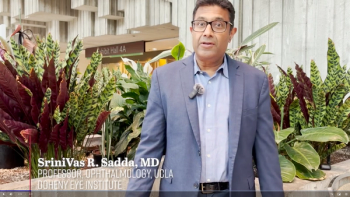
At this year's ARVO meeting, SriniVas R Sadda, MD, presented "Post Hoc Analysis of a Phase 3 Trial on SB15 (Proposed Aflibercept Biosimilar): Assessment on Pre-to-Post Switching Efficacy and Safety in Neovascular Age-related Macular Degeneration."

An analysis showed an association between patients who previously had undergone intravitreal injections and cataract surgery and a higher risk of the development of a non-clearing vitreous hemorrhage, retinal detachment, retinal tear, and glaucoma surgery.

Voretigene neparvovec (Luxturna, Spark Therapeutics, Inc.) was shown to be safe and effective in real-world settings.

Huntington's disease (HD) is an autosomal-dominant, fully-penetrant, neurodegenerative disease that most commonly affects adults during middle age.

Tylectomy indicates surgical resection of retinoblastomas via pars plana vitrectomy with intraoperative chemotherapy infusion.
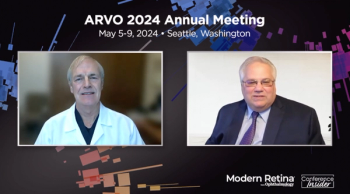
John Sheppard, MD, MSc, FACs, sat down to discuss post-hoc analysis of 2 FDA registration trials for perfluorohexyloctane, GOBI and MOJAVE, at this year's ARVO meeting held in Seattle, Washington, from May 5 to May 9.

A quartet of studies presented at the Association for Research in Vision and Ophthalmology’s 2024 Annual Meeting addressed diverse retina-related challenges and unveiled findings with the potential to revolutionize vision science.
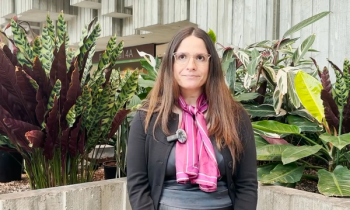
At the ARVO meeting in Seattle, Washington, the Eye Care Network spoke with Giulia Corradetti, MD about AMD.

In a presentation at the Association for Research in Vision and Ophthalmology’s 2024 Annual Meeting in Seattle, Washington, researchers used Google’s recommended top 8 uveitis patient educational websites in the study to determine whether ChatGPT 4.0 could be used as a uveitis patient online resource.

Investigators recruited children with CVI and normal controls who were between the ages of 12 months and 12 years. The children with CVI underwent a complete pediatric neuro-ophthalmologic examination.
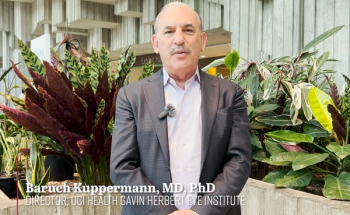
Barry Kuppermann, MD, PhD, director of the Gavin Herbert Eye Institute at the University of California Irvine, speaks about his ARVO poster presentation
Cynthia Roberts, PhD, sat down to discuss a 5-year prospective study to compare ocular stiffness parameters in, diabetes with retinopathy, diabetes without retinopathy, and normal subjects at this year's ARVO meeting held in Seattle, Washington, from May 5 to May 9.

Researchers conducted a retrospective chart review to identify the clinical characteristics of the injured eyes that may be associated with visual recovery in this patient population.
At this year's ARVO meeting, Qinqin Zhang, PhD, presented a poster titled "A unified deep learning model for geographic atrophy segmentation: Adaptable to SS-OCT and SD-OCT data with multiple scan patterns." At the conference she gave Ophthalmology Times an overview.
Amitha Domalpally, MD, PhD, discusses how disorganization of retinal inner layers affects OCT outcomes in cases of uveitic macular edema.
At this year's ARVO meeting, Paolo Silva, MD, presented data on Protocol AA on behalf of the DRCR Retina Network and the effect of diabetic retinopathy lesion location and severity on the risk for progression in the long term.

At this year's ARVO meeting, Ash Abbey, MD, Director of clinical research at Texas Retina Associates, presented 36-month data from the GALE study of pegcetacoplan for the treatment of dry age-related macular degeneration specifically geographic atrophy.

The investigators conducted a retrospective chart review of patients’ demographic and clinical data from 2005 to 2020.
Advertisement
Advertisement