

Clinical associations, imaging strategies and establishing a differential diagnosis from pseudopapilledema.

Clinical associations, imaging strategies and establishing a differential diagnosis from pseudopapilledema.

PST-611 is a first in class non-viral vectorized therapy for the treatment of dry AMD/GA coding for human transferrin.

The Healthcare Private Equity team has advised Retina Consultants of America (RCA) and Webster Equity Partners in the sale of RCA to Cencora.

"The De Novo authorization established Valeda as the first device for treatment of dry AMD patients with vision loss and creates a threshold for this novel class of photobiomodulation (PBM) devices..."

This drug is the world’s first-ever CRISPR/Cas13 RNA-editing therapy for clinical use in treating neovascular age-related macular degeneration (nAMD).
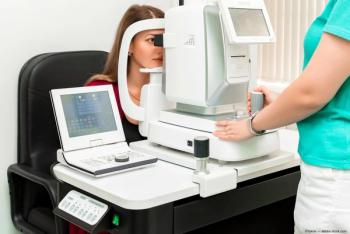
Peking University researchers have developed a deep learning-based, noninvasive choroidal angiography method that enables detailed 3D visualization of choroidal vessels from OCT scans. This technique could improve diagnostics for retinal diseases like macular degeneration, offering a safer alternative to traditional methods.

A recent cohort study revealed low adoption of FDA-approved AI-based diabetic retinopathy detection, with less than 5% of diabetic patients receiving ophthalmic imaging. Researchers emphasize the need for improved awareness, cost-effectiveness, and integration to increase diabetic retinopathy screening rates.

Katherine Talcott, MD, discussed other potential therapies and their mechanisms of action being evaluated in clinical trials at the OSN New York 2024 conference.

Dr. Mammo discussed this evolution and how to choose patients who would best benefit from GA therapy.

The company noted that its GalOmic pipeline includes ETX-407 for the treatment of dry age-related macular degeneration (AMD).

A $6.4 million grant over 5 years from the National Institutes of Health’s National Eye Institute was awarded conduct drug development work and investigational new drug (IND)-enabling toxicology studies.

A Johns Hopkins study reveals that anti-VEGF treatments for wet AMD may unintentionally elevate ANGPTL4, a protein that promotes blood vessel growth. Combining anti-VEGF with an experimental drug targeting HIF-1 could enhance vision outcomes and prevent vision loss.
Ferhina S. Ali, MD, discussed the real-world efficacy and durability of next-generation anti-VEGF agents like faricimab and aflibercept 8 mg, emphasizing how large-scale data offers insights into their performance and safety beyond clinical trials.

The Eye Care Network team was on site to share key data and interview presenters at the annual meeting held in Chicago, Illinois.

The meeting is set to take place from November 8 to 10, 2024 at the Sheraton Times Square Hotel in New York City.

Scientists have identified several small molecule drugs that selectively expand RPEs to regenerate a functional RPE layer.

To educate the public—including parents, caregivers, and allied health professionals—Prevent Blindness is offering free educational resources, including fact sheets, social media graphics, web pages, and educational videos in both English and Spanish.

He also had previously served as the Chief Financial Officer for several companies in the biotechnology and pharmaceuticals space.

The candidate, FLQ-101, is a once-daily oral/intravenous solution.
Vaidehi S. Dedania, MD, from the New York University (NYU) Langone Health and the Grossman School of Medicine, spoke with the Eye Care Network at this year's AAO meeting held in Chicago, Illinois. She insights from the session, "Preventing and managing complications following vitreoretinal surgery."

Vikas Chopra, MD, from the Doheny Eye Institute of UCLA, caught up with the Eye Care Network at this year's AAO meeting held in Chicago, Illinois. He shared how technology has advanced ophthalmic surgery over the years and how hands on sessions at the meeting allow surgeons to train for rare complications that can arise during routine surgeries.
Alfredo Sadun, MD, PhD, is the chief of Ophthalmology at the Doheny Eye Institute of UCLA. At this year's AAO meeting held in Chicago, Illinois, he stopped by the Eye Care Network booth to share insights from the symposium "Professional Longevity 2.0: Assessing the Ophthalmologist," which he presented during.
Valerie Biousse, MD, from the Emory University in Atlanta, Georgia, shared insights on how ocular imaging in the emergency department can provide timely, accurate diagnosis while also benefiting the on-call ophthalmologists.

They went on to explain that biomarkers such as VD in the superior capillary plexus (SCP), deep capillary plexus (DCP), and foveal avascular zone (FAZ) are promising because previous studies have reported changes in vascular density in the brain and retina in AD.

The Gr8 Eye Movement campaign by Prevent Blindness and Regeneron emphasizes the critical role of caregivers in eye health, revealing significant gaps in caregivers' awareness of retinal diseases and aging-related vision loss.

Julie Schallhorn, MD, MS, also is an associate professor of ophthalmology at the University of California San Francisco, has drawn upon her bioengineering background to develop a device to simplify eye drop administration.
In a paper presented at the American Academy of Ophthalmology annual meeting in Chicago, Jonathan Tan, a third year medical student at the Icahn School of Medicine at Mount Sinai detailed the study on ophthalmic eye drop waste in clinics, revealing 72% medication loss due to outdated 28-day expiration guidelines, resulting in significant financial waste. The study advocates following FDA expiration dates.
Tarver is a board-certified ophthalmologist with a doctorate in epidemiology and has held various leadership positions at the FDA as a medical device regulator, helping drive strategic initiatives, conduct clinical research and changing organizational culture.