

Latest Conference Articles
Advertisement
Advertisement
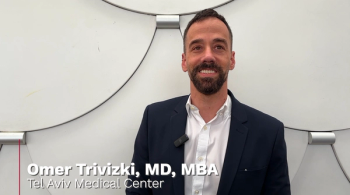
Omer Trivizki discusses promising results of VOY-101, a gene therapy for geographic atrophy, highlighting safety and next steps in ongoing research.
Extend the summer at EyeCon 2025—where clinical insight meets coastal vibes—September 26 and 27 at the Margaritaville Hollywood Beach Resort in Florida.
Advertisement
Advertisement
Survey reveals severe impact of Good Days underfunding on retina practices, with many patients experiencing vision loss due to delayed access to care.
Q&A: PER-001 showed improved structure and visual function in patients with diabetic retinopathy
Published: | Updated:
An intravitreal implant shows promise in enhancing visual function and retinal structure in diabetic retinopathy patients, according to recent research.
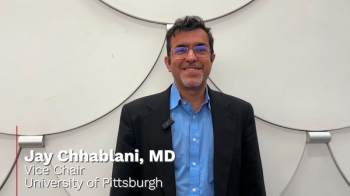
Jay Chhablani, MD, presented the phase 1/2 clinical trial data for OCU410, at the 2025 annual meeting of the American Society of Retina Specialists.
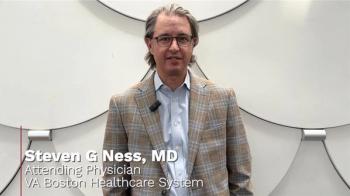
Steven D. Ness, MD, discusses his research on vitamin D's role in reducing complications after retinal surgery at ASRS 2025.
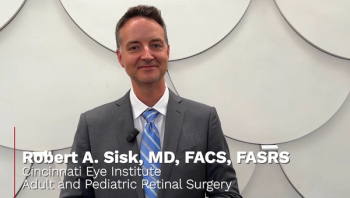
At ASRS 2025, Andrew G Lee, MD, gave key insight into the world of a neuro-ophthalmologist and why and when a retina specialist should consult a neuro-ophthalmologist

Yasha S. Modi, MD, discusses promising results from the VERONA study on EYP-1901, a potential treatment for diabetic macular edema.
The DRD Cure Accelerator, highlighted at the CCOI-Stanford Summit, is a global initiative advancing clinical research and collaborations to eliminate vision loss from diabetic retinal disease.

In preparation for the American Society of Retina Specialist (ASRS) annual meeting being held in Long Beach, California, Ophthalmology spoke with Gaurav Shah MD, FASRS, Program Chair of the 2025 event.


At the CCOI-Stanford Summit, Goldberg calls for collaborative trial models that could redefine efficiency and standardization in ophthalmology research.
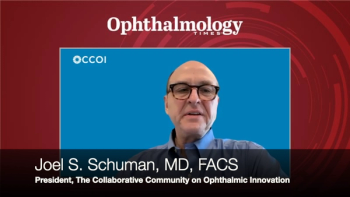
President Joel S. Schuman, MD, highlights the group’s mission and vision for the future—uniting 17 working groups and over 80 stakeholders.
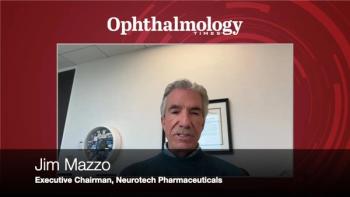
Jim Mazzo is among the presenters who will highlight the need to break silos and accelerate eye health solutions at the Collaborative Community on Ophthalmic Innovation (CCOI) meeting at Stanford University on July 23, 2025.
Advertisement
Advertisement
Trending on Eye Care Network - Ophthalmology Times
1
FDA approves phentolamine ophthalmic solution 0.75% (Ryzumvi) for presbyopia
2
Alvotech files first known aflibercept 8 mg biosimilar with EMA
3
FDA approves subcutaneous Enspryng for TED
4
Beyond slowing atrophy: Optogenetic therapy targets vision lost to GA
5