

"Techniques and technologies evolve in parallel, and the motivation should always be to improve lives," said Steve Charles, MD, founder, Charles Retina Institute, Germantown, TN.








"Techniques and technologies evolve in parallel, and the motivation should always be to improve lives," said Steve Charles, MD, founder, Charles Retina Institute, Germantown, TN.

A modified correcting applanation tonometry surface (CATS) prism reduces measurement errors due to corneal biomechanical parameters and improves the accuracy of IOP measurements compared with a standard Goldmann applanation tonometer (GAT) prism.

An investigational laser was singled out by Richard Packard, MD, is a session to highlight "exciting new devices" to help surgeons. The technology provides a fast, simple, and elegant technique for precise capsulotomy, he noted.
In eyes with keratoconus undergoing CXL, topography-guided photorefractive keratectomy (TG-PRK) provides superior refractive and functional outcomes compared with transepithelial phototherapeutic keratectomy (TE-PTK). Yet, there remains a role for PTK, said Simon P. Holland, MD.
Ophthalmologists know from large studies that the major driving factor for patient satisfaction is having a good postoperative refractive outcome. "That is especially so for patients receiving multifocal IOLs, toric lenses, or having clear lens exchange," said Oliver Findl, MD, MBA.
Instead of thinking about getting patients to see 20/20 uncorrected vision and out of the inconvenience of glasses or contact lenses, perhaps in the future we will be talking about getting them all to see 20/10 uncorrected and better than they could before with correction, said Daniel S. Durrie, MD. .

Injecting air into the lumen of the graft is an effective and efficient technique for dealing with the dreaded "taquito" graft configuration when performing Descemet's membrane endothelial keratoplasty (DMEK), said Neda Shamie, MD.

Delivering the Steinert Lecture during the ASCRS Refractive Day, Richard L. Lindstrom, MD, provided his thoughts on the current and forthcoming state of laser refractive surgery.
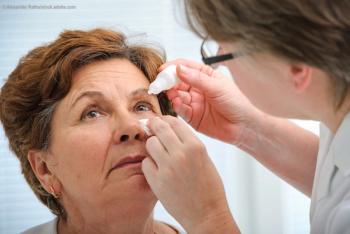
Results of the EAGLE study support clear-lens extraction as initial intervention for eyes with primary angle-closure glaucoma (PACG) or primary-angle closure (PAC) and high IOP, said David S. Friedman, MD, PhD, at the 2018 ASCRS Glaucoma Day.