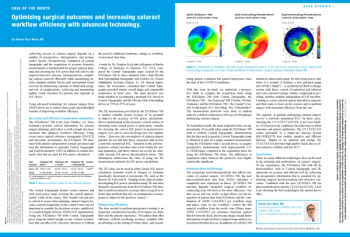
Cataract Cases


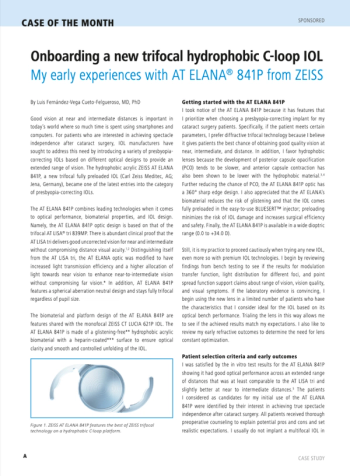
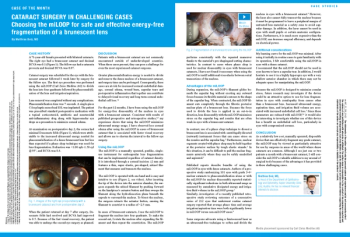
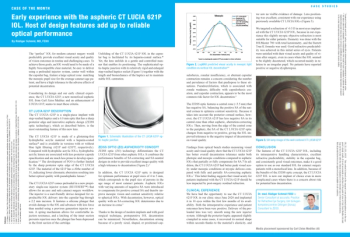
AT ELANA 841P from ZEISS is a fully preloaded lens built with leading technologies when it comes to optical performance, biomaterial properties, and IOL design. In this Case of the Month, Dr Luis Fernandez-Vega Cueto-Felgueroso explains why these features motivated him to trial the ZEISS AT ELANA 841P. He also shares his encouraging early outcomes using the AT ELANA 841P that have motivated him to expand its use.

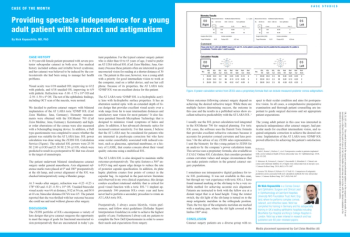
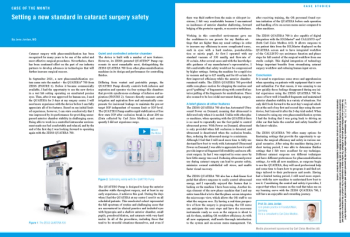
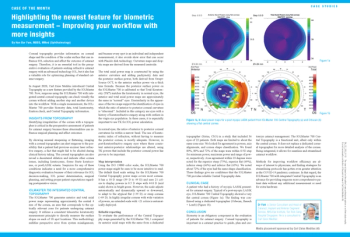
This article by Liem Trinh, MD highlights his experiences with the AT ELANA® 841P hydrophobic trifocal IOL and the ARTEVO® 750 and ARTEVO® 850 microscopes from ZEISS. Dr. Trinh discusses the benefits of the trifocal design of the AT ELANA 841P IOL and its ability to provide spectacle independence at all distances after cataract surgery. He also shares his positive experiences with the ARTEVO 850 microscope, which offers improved surgical visualization with RGB LED illumination and 3D viewing on a high dynamic range monitor. Additionally, Dr. Trinh discusses the potential benefits of integrated intraoperative optical coherence tomography (OCT) and the redesigned CALLISTO eye user interface.


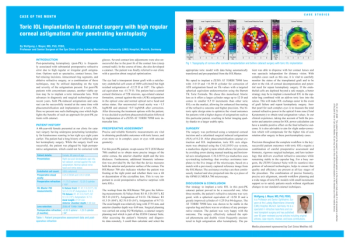
Advances in biometric technology and IOL calculation formulas have enabled refractive accuracy of cataract and clear lens exchange (CLE) surgery, but IOL power selection remains challenging in some cases. I have found that the ZEISS IOL Power Calculation Service (IPCS) is a valuable asset to help me in these uncertain situations.

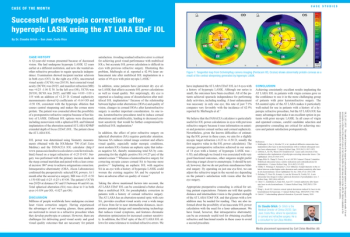
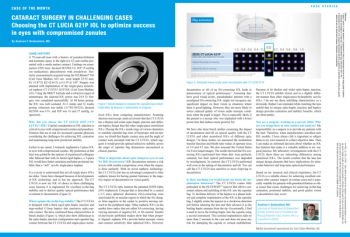
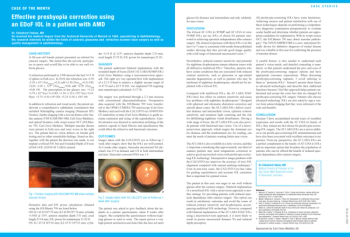
In this insightful analysis, Dr. Joong Hun Kim presents real-world clinical outcomes with bilateral implantation of ZEISS AT ELANA 841P. Dr. Kim recommends AT ELANA® 841P as an excellent option for patients undergoing cataract surgery as its fully trifocal optical design translates into a full range of vision. He also introduces the so-called ‘ELISA’ approach for patients requiring astigmatic correction in one eye only, combining AT ELANA 841P and ZEISS AT LISA tri toric 939MP. Early objective and subjective clinical data from this novel approach reveal promising visual outcomes and high patient satisfaction

Discover in this case how Dr. Tanit Wongwibulsin digitized his cataract surgery, enhancing efficiency and ensuring precise data management. This transformation allowed him to save time per procedure, nearly doubling his surgical volume. Additionally, the adoption of the digital workflow led to a substantial increase in cases involving premium IOLs.

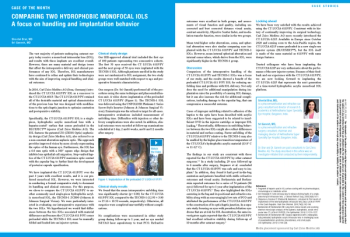
Choosing the right IOL for patients seeking spectacle independence is increasingly complex as novel optical designs enter the field. This comparative case report explores how a proven diffractive trifocal IOL (AT LISA tri 839MP) performs against a novel spiral optic IOL and what the real-world trade-offs mean for patient selection.