AVT29, filed as a line extension to Mynzepli, reaches EMA before its phase 3 comparative trial in DME reads out in mid-2027.

Margaret A. Chang, MD, MS, on MK-8748's dual Tie2/VEGF mechanism, what MALBEC's data must show to shift wet AMD care, and where DME and RVO fit next.
Anti-VEGF therapy is the backbone of care for retinal vascular disease, but a meaningful subset of patients continues to lose vision or accumulate fluid despite regular injections, and treatment burden remains a persistent barrier for many others. That unmet need has renewed interest in the angiopoietin/Tie2 pathway, a vascular stability mechanism distinct from VEGF signaling; direct activation of the Tie2 receptor can reduce vascular permeability and inflammation, offering a complementary route to disease control rather than merely blocking VEGF.
That rationale underlies MK-8748 (Tiespectus; Merck & Co), a bispecific antibody that directly agonizes Tie2 and inhibits VEGF.1 Two pivotal wet
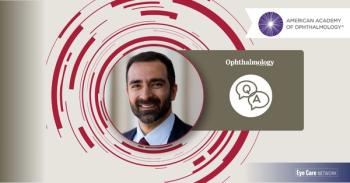
To discuss what this dual mechanism could mean for patients and what data would need to be shown to change practice, Modern Retina spoke with Margaret A. Chang, MD, MS, a senior partner at Retina Consultants Medical Group, part of Retina Consultants of America, in Sacramento, California.5 Chang serves as a principal investigator on multiple retinal clinical trials. She also sits on the steering committee of several phase 3 studies and holds a master’s degree in biostatistics, giving her particular insight into how trial end points translate into clinical decision-making. In the following Q&A, Chang discusses the biological rationale for pairing Tie2 agonism with VEGF inhibition, what a MALBEC readout would need to show on both vision and retreatment frequency to change patient management, what a positive wet AMD result would or would not suggest about extending the mechanism to other retinal vascular diseases, and which patient populations beyond wet AMD stand to benefit most from a dual-pathway approach.
Margaret A. Chang, MD, MS: Activating Tie2 directly has the added benefit of stabilizing retinal vasculature by decreasing vascular permeability and decreasing inflammation. As we all know, anti-VEGF agents work very well for our patients with retinal vascular disease, but there is a definite subset of the population in which VEGF inhibition alone is not enough to control disease activity or to allow extension of treatment intervals.
Chang: When comparing our current therapies, we often look at decreasing treatment burden. However, if there is a signal for improvement in visual outcome with a new therapy, patient management may significantly shift, even if retreatment frequency does not change.
Chang: Most new therapies for retinal vascular diseases start with trials for neovascular AMD. A bispecific agent such as this one that is a direct Tie2 agonist in addition to anti-VEGF would hopefully show even better efficacy in diseases with significant vascular permeability, such as DME and vein occlusion.
Chang: Diabetic macular edema and retinal vein occlusion come to mind, but it certainly is possible that other retinal vascular diseases, such as macular telangiectasia, or ischemic diseases such as diabetic retinopathy would also benefit.