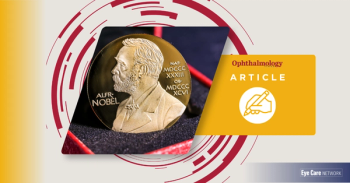
Three researchers share the prize for discovering channelrhodopsin, a light-sensitive protein now being tested to restore vision in retinal disease.

The over-the-counter lens is the first FDA-recognized device in its class, targeting light sensitivity in patients with episodic migraine aged 12 and older.
The U.S. FDA has granted De Novo marketing authorization to Avulux for its precision optical filter lens indicated to decrease the impact of light sensitivity in patients aged 12 years and older with episodic migraine, according to a press release from the company.¹ The decision creates the first FDA-recognized device classification for a lens targeting migraine-associated photophobia, a symptom affecting up to 90% of people with migraine,² according to the press release.¹ Available pharmacologic therapies do not directly target this symptom. The regulatory clearance is notable in that it establishes a formal classification pathway that did not previously exist, potentially enabling future optical device submissions in this clinical category under the 510(k) framework.
The FDA designates the De Novo pathway for novel, low-to-moderate risk medical devices that have no legally marketed predicate. Authorization under this pathway creates a new device classification and establishes special controls that define how the device may be marketed and used.
According to the Avulux press release, the lens is specified as a precision optical filter that blocks light at approximately 480 nm (high blue range) and 590 nm (red/amber range) while transmitting the remainder of the visible spectrum. The device is worn as conventional eyeglasses and is available with or without a corrective prescription. It is authorized for over-the-counter use and is not intended to replace pharmacologic migraine therapy. The press release states that the FDA review included randomized controlled trial data3,4 and real-world dispensing experience across more than 50,000 wearers.¹
"For a long time, light sensitivity was seen as just a symptom of migraine. That thinking has changed," said Charles Posternack, co-founder and CEO of Avulux. "There is growing recognition that light sensitivity is a serious medical concern in its own right. This authorization gives patients and providers a clear, FDA-recognized option designed specifically to manage the impact of light in those with migraine."¹
Migraine is a prevalent neurological disorder estimated to affect more than 1 billion people globally and over 45 million individuals in the United States, according to the press release.¹ Photophobia is among the most commonly reported associated symptoms, cited in up to 90% of patients with migraine.² Published research has identified specific wavelengths of visible light—particularly in the blue and amber ranges—as capable of exacerbating headache pain through activation of intrinsically photosensitive retinal ganglion cells (ipRGCs), which project to pain-processing regions via the trigeminal pathway.⁵ This mechanism provides the theoretical basis for wavelength-selective filtering as a nonpharmacologic intervention.
Migraine also carries a meaningful pediatric burden. A systematic review and meta-analysis estimated the prevalence of primary headache disorders, including migraine, at approximately 11% among children and adolescents, with prevalence increasing through adolescence.⁶ The Avulux authorization includes patients as young as 12, a population the press release notes is often underdiagnosed and undertreated.¹
The press release references 2 published studies in support of the FDA submission.¹ A randomized, double-blind trial published in the Journal of Clinical Neuroscience evaluated targeting of ipRGCs via the Avulux lens and reported reductions in headache pain and light sensitivity in patients with migraine.³ A second study, published as an abstract in Investigative Ophthalmology & Visual Science, reported that the Avulux lens increased visual photosensitivity discomfort thresholds in healthy volunteers.⁴ Peer-reviewed efficacy data in the migraine patient population, however, remain limited to the published randomized trial, and independent replication in larger or longer-duration clinical cohorts has not yet been reported.
The De Novo authorization establishes regulatory recognition of this device class but should not be interpreted as an endorsement of superiority over other nonpharmacologic strategies for photophobia management, such as FL-41 tinted lenses, which have been evaluated in prior literature. The current authorization pertains specifically to episodic migraine; applicability to chronic migraine or other photosensitivity conditions remains outside the authorized indication. Clinicians should note that the over-the-counter authorization means the device may be obtained without a physician prescription, though the press release emphasizes that it is intended to complement, not replace, prescribed migraine therapies.¹
The randomized trial evidence supporting this device is limited in published scope, and the absence of large multicenter phase 3 data means the magnitude of clinical benefit in real-world migraine populations requires further characterization. The device's role relative to existing standard-of-care pharmacologic options—including CGRP-pathway antagonists and triptans—remains to be defined in comparative or adjunctive study designs.