

Investigators conducted a retrospective clinical audit to determine why patients do not adhere to the guidelines among about 9,000 patients in a practice.
Investigators conducted a retrospective clinical audit to determine why patients do not adhere to the guidelines among about 9,000 patients in a practice.


Our top 10 print stories highlight the core content concepts we explored this year


This series features experts in ophthalmology sharing their thoughts on the one unsolved challenge they wish there was a solution for.

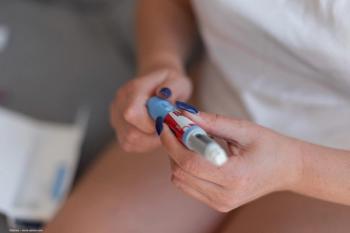
The Danish Medicines Agency requested the EMA's Pharmacovigilance Risk Assessment Committee review reports on the vision-threatening condition

The report details the results of preclinical discovery, engineering and characterization studies evaluating the safety, retinal cell transduction, transgene expression and clinical activity of proprietary evolved intravitreal vector R100 and 4D-150.


Curacle plans to finalize its development strategy, including phase 2b and 3 trials, through a Type C meeting with the US FDA in February of 2025.

The publication is entitled, “Design and Characterization of a Novel Intravitreal Dual-Transgene Genetic Medicine for Neovascular Retinopathies.”

Low-level light therapy for dry eye disease and chalazion

In the statement, the board calls attention to a proposal by a committee in the US House of Representatives that would shrink the National Institutes of Health’s (NIH) from 27 institutes into 15 institutes.

This series features experts in ophthalmology sharing their thoughts on the one unsolved challenge they wish there was a solution for.

The European Commission will assess the marketing authorisation for Eydenzelt (reference product Eylea)

According to Iridex Corp., the study confirms MicroPulse TLT's sustained safety and efficacy in managing glaucoma, reducing intraocular pressure and medication reliance with minimal complications over 5 years.

Event in San Francisco features a lineup of speakers, latest in glaucoma research and technology.

At the FLORetina Conference in Florence, Italy, John W. Kitchens, of Retina Associates of Kentucky, highlighted strategies to enhance efficiency in retina practices, addressing challenges like staff shortages and rising patient volumes. He emphasized streamlined workflows, advanced diagnostic tools, and enhanced patient communication to optimize care and improve outcomes.

In an interview with Ophthalmology Times, clinical trial investigator Zaina Al-Mohtaseb MD, noted the CLARA Phase 1/2 trial demonstrated the safety, efficacy, and simplicity of corneal endothelial cell injection therapy with a rho kinase inhibitor, offering a less invasive alternative to traditional corneal transplantation for treating corneal edema.

Espansione Group is known for photobiomodulation (PBM) technology – the Light Modulation Low-level Light Therapy (LLLT) along with the Intense Pulsed Light (IPL) technology.

THRIVE-2 met all primary and secondary endpoints at the 15-week primary analysis timepoint after 5 infusions of veligrotug.

According to the company, its Phase 1/2 CLARA trial of AURN001 for corneal edema demonstrated significant dose-dependent efficacy, especially in the high-dose group, with favorable safety and tolerability profiles.

Sophisticated programmes require an evolving mindset

QUASAR is a global, double-masked, active-controlled phase 3 trial evaluating the efficacy and safety of EYLEA HD, compared to EYLEA, in patients with RVO, including those with central, branch and hemiretinal vein occlusions.

This series features experts in ophthalmology sharing their thoughts on the one unsolved challenge they wish there was a solution for.

The PFS is approved for treatment of neovascular age-related macular degeneration, diabetic macular edema and macular edema following retinal vein occlusion.

Espansione Group's Light Modulation Low-level Light Therapy (LLLT) is used in ophthalmology and dermatology

The company is advancing its Phase I/II trial and exploring accelerated approval pathways in the US and Europe.

Research data published earlier this year could help clinicians gain a better understanding of what to look for in a specular microscope, and how to interpret inter- and intradevice repeatability results in a way that benefits their existing practice framework.

A global survey explores the impact of geographic atrophy (GA) on quality of life, revealing similar challenges for individuals with unilateral and bilateral GA. Researchers also highlight the need for improved education, support, and treatment options.