

Shifting from a regulatory role to driving innovation directly, Eydelman discusses how the Collaborative Community on Ophthalmic Innovation is reshaping the field, streamlining outdated processes, and advancing patient-centered solutions worldwide.
Shifting from a regulatory role to driving innovation directly, Eydelman discusses how the Collaborative Community on Ophthalmic Innovation is reshaping the field, streamlining outdated processes, and advancing patient-centered solutions worldwide.


At ARVO 2025, in Salt Lake City, Utah, C Michael Samson, MD, MBA, gave insight into his data on immune cell profiling in birdshot retinochoroidopathy using single-cell RNA sequencing.

The bill, which passed on May 1, allows for West Virginian ODs to provide certain in-office procedures such as laser treatments

SYL1801 is a treatment for neovascular macular degeneration administered via eye drops.

A machine learning model incorporating treated astigmatism and nuanced inputs is advancing the precision and personalization of arcuate keratotomy planning

Rishi Singh, MD, discusses faricimab's real-world effectiveness in treating diabetic macular edema, highlighting improved vision and reduced treatment frequency.

AAVantgarde Bio reveals promising safety and efficacy data for AAV-based therapies targeting Usher syndrome and Stargardt disease at ARVO 2025.


LumiThera's Valeda system offers groundbreaking non-invasive treatment for dry AMD, showing extended vision improvement and safety over 4.5 years.


Investigators sought to understand the diagnostic path, symptoms, quality of life impact and coping mechanisms of patients with GA in western Europe and the United States

Kapil Mishra, MD, discusses an overview of radiation retinopathy and its challenges in treating uveal melanoma from his presentation "Radiation Retinopathy: Future Strategies,"

NCX 470, Nicox’s lead clinical product candidate, is a novel NO-donating bimatoprost eye drop with a dual mechanism of action (nitric oxide and prostaglandin analogue).

A recent analysis reveals a strong link between photoreceptor health and visual function in geographic atrophy, emphasizing the importance of EZ integrity.

At ARVO 2025, in Salt Lake City, Utah, Diana Do, MD, gave an update on the LIGHTSITE III study of photobiomodulation for dry age-related macular degeneration.

Giullia Coradetti, MD, offered insight into her research on a post-hoc analysis based on the GATHER 2 clinical trial data for geographic atrophy and age-related macular degeneration.

Duke professor Sharon Fekrat, MD, discusses AI-driven ophthalmology with smartphone diagnostics and robotic procedures, emphasizing global collaboration and innovative medical research.
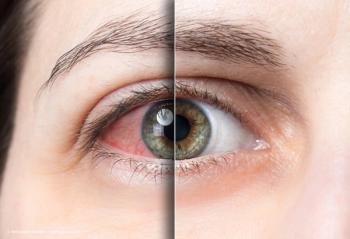

A recent analysis reveals that ellipsoidal zone-retinal pigment epithelial thickness predicts future visual loss in geographic atrophy patients, highlighting early intervention opportunities.

Christina Prescott, MD, talks about the rate of recurrence of stromal keratitis in the Zoster Eye Disease Study, both in the placebo and in the treatment group.

A recent study reveals how geographic atrophy affects patients' vision and quality of life, highlighting their coping strategies and need for better resources.

Palatin Technologies reveals groundbreaking preclinical results on melanocortin agonists, showcasing their potential to combat diabetic retinopathy and preserve vision.

Ellen Koo, MD, presented data from first in-human clinical trials, looking at the results from magnetic cell therapy and reports on the efficacy and safety in the patients.

Alfredo Sadun, MD, PhD, details a fascinating outcome from a gene therapy in development for Leber hereditary optic neuropathy.
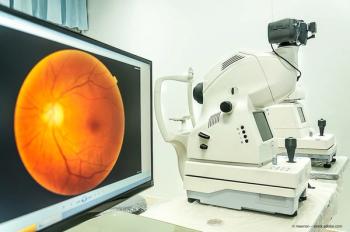
Perfluorohexyloctane demonstrated rapid symptom relief in patients with dry eye, with effects reported as early as 5 minutes after dosing.

New research reveals how low blood sugar can damage the retina in diabetes, highlighting potential treatments targeting specific proteins to prevent vision loss.
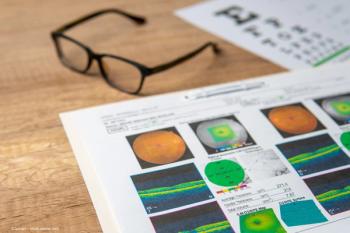
The biomarkers are especially crucial for patients with lupus nephritis.

Post hoc analysis of GATHER1 and GATHER2 showed that reduced EZ-RPE central subfield thickness is a strong predictor of greater future vision loss.