

A pilot study shows that analyzing how the cornea moves under air-puff stimulation may improve early keratoconus detection.
A pilot study shows that analyzing how the cornea moves under air-puff stimulation may improve early keratoconus detection.

The resubmission follows a successful appeal by the company with the Office of New Drugs (OND).

Genetic testing transforms inherited eye disease care, but expert interpretation matters—learn why false negatives and new gene therapies reshape retina practice.

Researchers from Johnson & Johnson Vision and Aier Eye Hospital present 24-month prospective data showing that Chinese children wearing Abiliti™ 1-Day contact lenses experienced approximately half the axial elongation and myopia progression of a matched spectacle-wearing control group.

Knowing pregnancy-related risks enhances patient safety.
SOL-1 results show intravitreal axitinib hydrogel delivered superior vision maintenance and anatomic outcomes through 52 weeks.
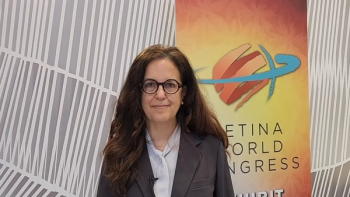
Sharon Fekrat, MD, FACS, FASRS, reviews the science behind dopamine signaling in the retina and its potential role in the progression of age-related macular degeneration.

Dimitra Skondra, MD, PhD, FASRS, shares her perspective on the evolving treatment landscape for dry age-related macular degeneration and the key questions facing the field.
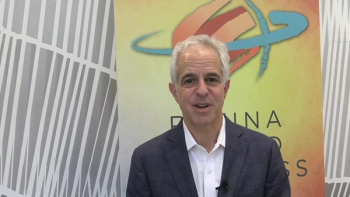
Carl D. Regillo, MD, FACS, reviews long-term efficacy and safety findings from the Port Delivery System clinical trial program.
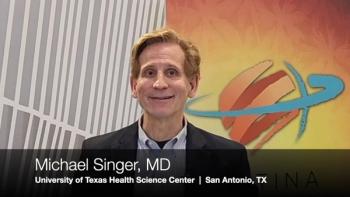
Michael Singer, MD, discusses the role of steroids, biomarkers, and second-generation therapies in diabetic macular edema management.

Aixa Alarcon, PhD, and colleagues reported natural image analysis may better predict real-world visual performance of premium intraocular lenses than traditional single-frequency MTF testing, while also capturing the impact of dysphotopsias and residual astigmatism.

The 17th European Glaucoma Society (EGS) Congress—being held in Brussels, Belgium, from 30 May to 2 June 2026—brings together glaucoma specialists across plenary sessions, hands-on surgical dry labs, national society symposia and cross-specialty debates.

A modular AI system comprising six transformer models achieves near-expert concordance with an ASUWOG-aligned composite inflammation score

A retrospective study from a UK tertiary centre reports satisfactory visual and topographic outcomes in patients monitored and treated by optometrists and nurse practitioners.

In this interview from the 2026 Retina World Congress, Katherine Talcott, MD underscores that retinal vein occlusions (RVOs) should prompt retina specialists to look beyond the eye and ensure patients are connected to primary care and cardiology. She highlights the importance of systemic risk factor management and interdisciplinary coordination as essential components of comprehensive RVO care.
The incision-free, image-guided femtosecond laser system targets the trabecular meshwork to reduce IOP without entering the eye. Prof. Gus Gazzard discusses the technology, the patient experience and the potential for earlier interventional glaucoma treatment

Therini Bio begins a phase 1b DME trial of THN391, an intravitreal antibody targeting fibrin-driven retinal inflammation.

The next-generation FSYX ocular pressure adjusting pump adds wireless connectivity to transmit patient usage data to prescribing practices.

Findings from an 856-patient analysis suggest that evaluating GA topography beyond foveal involvement may better capture patient-reported functional impairment.

Off-label use of laboratory-grade dye preparation found to harbor Sarocladium kiliense beyond the sterilizing capacity of standard filtration.
The FDA's OND found substantial evidence of effectiveness for bevacizumab-vikg in nAMD, clearing the way for a BLA resubmission in June 2026 and a decision expected within 60 days.

Learning Brazilian Portuguese boosts brain resilience and may delay dementia symptoms, but a humorous lesson highlights the realities of health care paperwork and waiting rooms.

The device, described in a new study, uses a technique called temporal interference-based transcorneal electrical stimulation, or TI-TES.

The FDA's OND found substantial evidence of effectiveness for bevacizumab-vikg in nAMD, clearing the way for a BLA resubmission in June 2026 and a decision expected within 60 days.

Multimodal imaging, OCT biomarkers, and the case for early diagnosis as treatment options emerge for macular telangiectasia.

NUS researchers report that plant-based photosynthetic nanoparticles restored corneal NADPH levels and reversed damage within 5 days in preclinical dry eye.

Oral QA102 shows imaging signals slowing drusen and GA progression in intermediate dry AMD at ARVO 2026, despite missing its primary end point.

Bausch + Lomb's PreserVision AREDS3 combines the established AREDS2 micronutrient formula with a B-vitamin complex.

Avacincaptad pegol may help preserve driving-related vision in geographic atrophy, but post hoc data did not reach statistical significance.

Ashkan Abbey, MD, reviews findings from the DAVIO2 and VERONA clinical trials for the bioerodible intravitreal insert.