

The CNPV program was announced by the FDA in June 2025 and offers companies the opportunity to reduce standard application review times from 10–12 months to just 1–2 months.
The CNPV program was announced by the FDA in June 2025 and offers companies the opportunity to reduce standard application review times from 10–12 months to just 1–2 months.

Punctal occlusion may reduce reactions without worsening symptoms

The novel therapeutic for keratoconus does not require corneal epithelium removal and is slated to launch commercially in early 2026.

Sunir J. Garg, MD, explores the nuances of endophthalmitis, distinguishing between infectious and non-infectious responses for effective patient management.

Research reveals significant vision improvements and extended treatment intervals with aflibercept 8 mg for age-related macular degeneration and diabetic edema patients.

According to the company, FALCON aimed to provide “a better understanding of how autosomal dominant optic atrophy (ADOA) disease parameters change over time to inform potential future interventional clinical trials.”

Phase 2 STARLIGHT study participants, particularly those with the macular phenotype, experienced meaningful gains in visual acuity at 48 weeks.

The trial evaluated the safety, efficacy, and tolerability of AURN001 in patients with corneal edema secondary to corneal endothelial dysfunction.

The topical therapy offers a less invasive approach to corneal cross-linking, with commercial availability anticipated in early 2026.

The incision-free therapeutic for keratoconus is expected to be commercially available in early 2026, according to the company.

Bedrood describes improved visualization of the ciliary body, efficient setup, and favorable postoperative outcomes.

Telemedicine, mobile clinics, and policy reform offer a road map to equitable care.

The investigators noted that this report is the first about subretinal drusenoid deposits in Black and Hispanic patients with age-related macular degeneration.
Innovations in selective laser trabeculoplasty and laser cyclophotocoagulation focus on procedural efficiency, patient comfort, and evolving first-line treatment strategies.
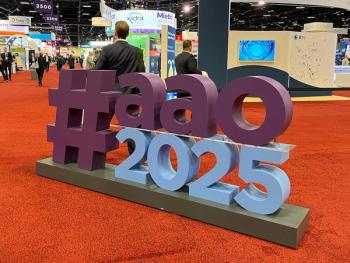
The annual scientific meeting of the American Academy of Ophthalmology highlighted research in retina, refractive surgery, and accessible care.

John P. Berdahl, MD, discusses advanced lens options for patients with pseudoexfoliation, highlighting considerations for successful longterm outcomes.


While the injuries associated with other similar sports, such as tennis, badminton, and racquetball have been investigated in many studies, no epidemiologic studies have specifically focused on the incidence of ocular injuries that occur in pickleball

Continued research shows that earlier treatment significantly enhances tissue preservation in patients with geographic atrophy, emphasizing the importance of timely intervention.
In the Phase 2 TEASE 2 trial, gildeuretinol was well tolerated and showed promising trends in slowing ellipsoid zone loss and preserving low-luminance visual acuity in patients with Stargardt disease.

A study shows enhanced safety and efficacy in epi-on cross-linking for keratoconus, utilizing oxygen-rich boost goggles during treatment.

A new study reveals enhanced safety and efficacy in epi-on cross-linking for keratoconus, utilizing oxygen-rich boost goggles during treatment.

The second day of the annual scientific meeting of the American Academy of Ophthalmology highlighted advancements in AI, surgery technology, and money-saving solutions.
Data suggests the candidate can reduce the number of injections and treatment burden for patients

Dr. Singh reported that when technicians understand why they are performing a diagnostic test, they perform better and think critically in patient care situations.

Catch up on this week's highlights in retina.

The first day of the American Academy of Ophthalmology meeting in Orlando, Florida featured presentations centered on eye injuries and data insights.

In this murine model of glaucoma, SPG302 was administered daily to 3-month-old mice for 8 weeks.

Dr Khanani shared his first-time results talk during an AAO specialty day

The 18-month extension of the GATHER2 trial indicated continued benefit for patients receiving avacincaptad pegol, with efficacy gains increasing over time.