

Ehsan Sadri, MD, FACS, and William Trattler, MD, highlight some of the pending FDA approvals and PDUFA dates in the anterior segment sector and what these products will mean for ophthalmologists and their patients.
Ehsan Sadri, MD, FACS, and William Trattler, MD, highlight some of the pending FDA approvals and PDUFA dates in the anterior segment sector and what these products will mean for ophthalmologists and their patients.

The partnership will offer specialty physician practices across retina and other specialties access to SamaCare's platform.

GAL-101 is a Phase 2/3-ready small molecule used to treat ophthalmic indications with high unmet medical need.

According to researchers at UCLA, “dormant” cone photoreceptors might continue to drive retinal activity for vision.

Ophthalmologist looks ahead amid company’s advances over past 18 months.

Regenerative technologies are providing an influx of options.

According to a team of researchers at UCLA, the “dormant” cone photoreceptors might actually continue to drive retinal activity for vision.

The company’s market tracker enables comprehensive brand-level market analysis and direct access to real-world data from the IRIS Registry.
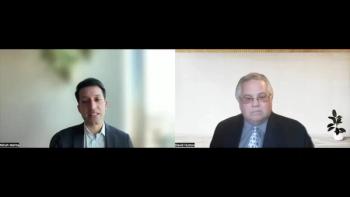
Nitish Mehta, MD discusses the latest trends in Artificial Intelligence and Machine Learning technology in retinal imaging and its uses for ophthalmologists.

The study of UBX1325 is in patients with wet age-related macular degeneration (AMD) who were not achieving optimum benefit with their ongoing anti-VEGF therapy.

The Phase 1/2 Clinical Trial is for the treatment of retinitis pigmentosa and Leber congenital amaurosis.

Ophthalmologists have discussions about driving with glaucoma patients.

It is important for patients to understand what digital eye strain is and its causes.

Patient centricity an important driver in topical development.

The FDA has approved enrolling pediatric patients in the ongoing OCU400 Phase 1/2 trial who have: 1) RP associated with NR2E3 and RHO mutations and 2) LCA associated with CEP290 gene mutations.

Representatives from Magellan Rx Management provided a detailed overview of current treatment options in ophthalmology and the impact that biosimilars could have.

According to the company, UBX1325 monotherapy did not achieve non-inferiority through 24 weeks due, in part, to an unexpected 3.5 letter gain in the anti-VEGF control arm.

According to researchers, using nanoparticles to encapsulate eye medication decreased graft rejection while requiring fewer and smaller doses.

According to researchers at the Max Planck Institute, the Kynurenine pathway is not only important for eye pigment formation, it also plays a role in maintaining retinal health.

Tips to help eye care providers navigate the maze of insurance issues.

Deep learning analysis of fundus photographs has the potential to assess neurologic dysfunction in individuals with Parkinson’s disease.

The various aspects of home monitoring for patients with age-related macular degeneration are discussed in this point/counterpoint by Prof. Rufino Silva, University of Coimbra / Coimbra Hospital and University Centre, Portugal, and Univ.-Prof. Dr. med. Robert P. Finger, PhD, Department of Ophthalmology, University of Bonn, Germany, during the 14th annual Congress on Controversies in Ophthalmology in Lisbon, Portugal

The various aspects of home monitoring for patients with age-related macular degeneration are discussed in this point/counterpoint by Prof. Rufino Silva, University of Coimbra / Coimbra Hospital and University Centre, Portugal, and Univ.-Prof. Dr. med. Robert P. Finger, PhD, Department of Ophthalmology, University of Bonn, Germany, during the 14th annual Congress on Controversies in Ophthalmology in Lisbon, Portugal.

Pedro Fonseca, MD, Coimbra Hospital and University Centre, Portugal, and Andrew G. Lee, MD, Blanton Eye Institute, Houston Methodist, Texas, United States, discuss the various pros and cons of offering teprotumumab for all patients with thyroid eye disease.

Pedro Fonseca, MD, Coimbra Hospital and University Centre, Portugal, and Andrew G. Lee, MD, Blanton Eye Institute, Houston Methodist, Texas, USA, discuss the various pros and cons of offering teprotumumab for all patients with thyroid eye disease.

Patients treated with azithromycin did not have a higher incidence of gastrointestinal adverse events.

Learning more about the early AD stages, when brain damage is limited, should allow early and more efficacious treatment, and improvements in imaging may be able to pick up changes earlier.

According to researchers at the Max Planck Institute, the Kynurenine pathway is not only important for eye pigment formation, it also plays a role in maintaining retinal health.

In a keynote lecture at the 14th Annual Congress on Controversies in Ophthalmology in Lisbon, Hendrik Scholl, MD, co-founder and director of the Institute of Molecular and Clinical Ophthalmology Basel, discussed its mission to unravel the mysteries of vision and human eye disease.

In a keynote lecture at the 14th Annual Congress on Controversies in Ophthalmology in Lisbon, Hendrik Scholl, MD, co-founder and director of the Institute of Molecular and Clinical Ophthalmology Basel, discussed its mission to unravel the mysteries of vision and human eye disease.