
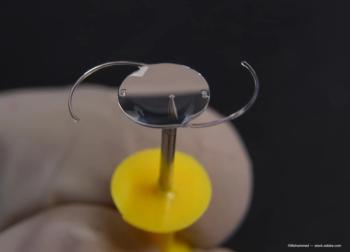
Eyes implanted with the lens demonstrated greater astigmatic tolerance.
Eyes implanted with the lens demonstrated greater astigmatic tolerance.
Eyebiotech noted its AMARONE trial will evaluate the safety and preliminary efficacy of intravitreal EYE103.

Paracentral acute middle maculopathy can develop after excessive intake of caffeine and alcohol according to Obadah Moushmoush, MD.

Paracentral acute middle maculopathy can develop after excessive intake of caffeine and alcohol according to Obadah Moushmoush, MD.

Omnigen® may be an alternative treatment option for patients with a persistent corneal epithelial defect. The product provides a convenient and effective treatment that can be administered in an outpatient setting.

Omnigen® may be an alternative treatment option for patients with a persistent corneal epithelial defect. The product provides a convenient and effective treatment that can be administered in an outpatient setting.
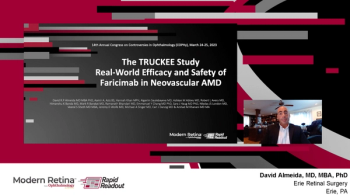
As more countries receive approval for the use of faricimab, patients are going to continue to have good visual outcomes

Results of the Alcon Eye on Cataract Survey highlight misconceptions about cataract surgery, revealing the need to educate the 50+ population on the procedure and treatment options.

Researchers are involved in the development of Eye2Gene, an AI system capable of identifying the genetic cause of IRDs from retinal scans.

The agreement includes rights to develop, manufacture and commercialize NOV03 in Japan for the treatment of dry eye disease.

Scientists hope to develop novel AI solutions for the prediction of DPN using corneal OCT images.

This two-in-one option, PreserVision AREDS 2 Formula eye vitamins plus CoQ10 combines the exact nutrient formula recommended by the National Eye Institute (NEI) to help reduce the risk of moderate to advanced Age-related Macular Degeneration (AMD) progression.

The 12-month data demonstrated maintenance of controlled wet AMD subjects comparable to aflibercept injections every eight weeks with a single administration of OTX-TKI.

A vitreoretinal surgeon, Hariprasad joined the University of Chicago in 2005, and has been serving as interim chairman since 2020.

Scientists hope to develop of novel AI solutions for the prediction of DPN using corneal OCT images.

SBI-100 is a cannabinoid receptor type 1 (CB1R) agonist administered topically onto the eye to reduce IOP and treat glaucoma.
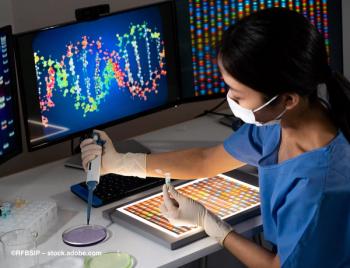
The new company debuted with £96 million in funding to target retinal diseases.

The EACCME accreditation is renewed through 2025.

The trial is evaluating Oxurion’s novel plasma kallikrein (PKal) inhibitor THR-149 as a potential treatment for DME patients who respond suboptimally to anti-VEGF therapy.

Investigators have enrolled the 112 patients in the KALAHARI phase 2, part B clinical trial for diabetic macular edema (DME). This is above the originally planned total of 108 patients.

The company’s pipeline includes treatments for XLRP, AMD, and cone-rod dystrophy (CRD).

The trial is evaluating Oxurion’s novel plasma kallikrein (PKal) inhibitor THR-149 as a potential treatment for DME patients who respond suboptimally to anti-VEGF therapy.

EverPatch is described by the company as the world's first non-degradable, synthetic tissue substitute for ophthalmic surgery.

Senescent cells accumulate in areas of disease activity in DME and wet age-related macular degeneration and release mediators that drive the pathology. UBX1325 seems to prevent that disease activity.
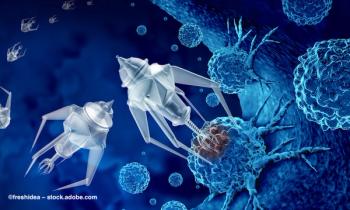
RAFARM and BioNanoSim have entered into an agreement to create the company.

OTX-TKI is Ocular Therapeutix’s axitinib intravitreal implant that is being developed for the treatment of diabetic retinopathy, wet AMD and other retinal diseases.

Patients who are non-responders to anti-vascular endothelial growth factor (VEGF) therapy may benefit from intravitreal dexamethasone.
Ramin Tadayoni, MD, PhD, considers factors for choosing the right metrics and avoiding bias in clinical trials to prevent waste.

Arshad M. Khanani, MD, MA, MASRS, shares long-term data outcomes of patients treated with the port delivery system for neovascular AMD.

Tarek S. Hassan, MD, FASRS, provides an update on glycoimmunology as a next-generation treatment paradigm for geographic atrophy.