

A single injection of UBX1325 led to a statistically significant and clinically meaningful improvement in Best Corrected Visual Acuity (BCVA) of +6.2 ETDRS letters from baseline at 48 weeks.

A single injection of UBX1325 led to a statistically significant and clinically meaningful improvement in Best Corrected Visual Acuity (BCVA) of +6.2 ETDRS letters from baseline at 48 weeks.

VLTR-557, Valitor's long-acting anti-VEGF biologic in development for durable wet age-related macular degeneration (AMD) treatment, showed that a single intravitreal (ITV) injection has potential to maintain clinical efficacy for more than six months.

Stoke Therapeutics, Inc. received authorization to initiate a UK-based Phase 1/2 study of STK-002, a treatment of autosomal dominant optic atrophy (ADOA), for which there is currently no approved treatments.

Atsena Therapeutics announced positive 6-month safety and efficacy data from the ongoing Phase I/II clinical trial of ATSN-101, a gene therapy for the treatment of GUCY2D-associated Leber congenital amaurosis (LCA1).

Investigators found that Photobiomodulation may be a valid therapeutic option to treat large soft drusen and drusenoid pigment epithelial detachments in dry AMD and may slow the natural disease course.
Ophthalmology Times® spoke with Carl Danzig, MD, FASRS, at the 2023 ARVO annual meeting to learn more about the post hoc analysis for the GATHER trials and the new data on the correlation between vision loss and GA growth.

At the 2023 ARVO annual meeting in New Orleans, our on-site team caught up with T. Y. Alvin Liu, MD, to discuss predictive AI and its application in ophthalmology and screening of the eyes.

Deborah Ferrington, PhD, spoke with on our on-site team at the 2023 ARVO annual meeting in New Orleans about her presentation on using human donor tissue to identify the mechanism responsible for the death of the retinal pigment epithelium (RPE).

Eyevensys reported data showing the efficacy and durability of EYS809, a dual-gene plasmid in development for the treatment of wet age-related macular degeneration (AMD).

At ARVO in New Orleans, Luxa Biotechnology shared an update on the progress of a Phase 1/2a clinical trial evaluating transplantation of RPESC-RPE-4W to treat dry age-related macular degeneration (AMD).

Researchers found in their analysis that visual impairment is associated with hallucinations, depression, agitation, and psychosis in patients with dementia, although, aging and comorbidities, among other factors, may be involved.

Amir H. Kashani, MD, PhD, joined us to share insights from his presentation at the 2023 ARVO meeting on optical coherence tomography and the assessment of cognitive impairment in Alzheimer's Disease and other related dementias.

Apellis Pharmaceuticals Inc. delivered an oral presentation at the ARVO Annual Meeting in New Orleans announcing their post hoc analyses from the Phase 3 OAKS and DERBY studies evaluating pegcetacoplan injection (Syfovre) for the treatment of geographic atrophy (GA).
Adverum Biotechnologies Inc. shared nonclinical data at ARVO 2023 in New Orleans that staggered, bilateral administration of Ixo-vec in NHPs was well tolerated with encouraging therapeutic activity and no signals of increased inflammation.
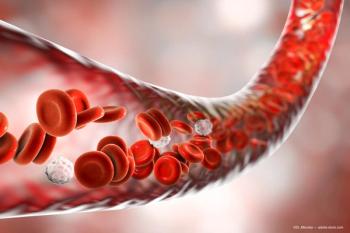
The team of Japanese researchers found that the choroidal MBR in the nasal region is correlated with systemic arterial stiffness and is significantly lower in patients with coronary artery multivessel disease.

Hydrogen-rich water may have a place in treatment of retinal degeneration. The team of investigators found that the hydrogen-rich water significantly improved the retinal blood flow (RBF) dysregulation in type 2 diabetic mice.
Thomas V. Johnson, MD, PhD recaps the research presentation "Retinal Engineering and RGC Replacement: Enhancing Integration of Transplanted RGCs at ARVO 2023.

The results indicated that SB15 had similar efficacy, safety, immunogenicity, and pharmacokinetics compared to aflibercept out to week 56 of the phase III trial.
David Szanto, a medical student at Stony Brook, and working with the Department of Neurology at the Icahn School of Medicine at Mount Sinai, describes how an algorithm finds recurring patterns in the visual fields and the ganglion cell-inner plexiform layer thicknesses, and helps clinicians understand how prevalent those patterns are throughout the entire data.
In a mouse model of glaucoma, defective calcium clearance was seen as a characteristic feature of early damage to the retinal ganglion cells (RGC).

A team of researchers used gene expression, epigenetic, and gene regulation analyses to discover genes, pathways, and regulatory features relevant to age-related macular degeneration (AMD).

RetinAI announced their new partnership with Boehringer Ingelheim with the goal to improve patient outcomes in geographic atrophy (GA) by combining their respective expertise in artificial intelligence and retinal disease research.

Palatin Technologies, Inc. announced manuscript publication that summarizes data demonstrating the effects of PL8331 in two mouse models of retinal disease, experimental autoimmune uveoretinitis and diabetic retinopathy.

AVA-Net, a deep learning network, differentiated the changes in blood flow in healthy eyes compared with eyes of patients with diabetes with and without mild diabetic retinopathy.

Clearside Biomedical plans to open enrollment for their Phase 2b clinical trial of CLS-AX this quarter. Topline results are expected by the Q3 of 2024.

Complement Therapeutics GmbH secured financing to continue the development and complete a Phase Ib clinical proof of concept of its lead product CTx001, an AAV gene therapy for the treatment of GA secondary to dry-AMD.

Dr Ong and colleagues undertook a retrospective study of patients who underwent primary repair of uncomplicated RRDs at the Wilmer Eye Institute to examine the baseline, surgical, and postoperative characteristics that affect best-corrected VA (BCVA) outcomes.
Aviceda Therapeutics announced that the FDA has cleared the Investigational New Drug application for AVD-104, enabling the company to proceed with initiation of Phase 2 clinical trials.

New GA Won't Wait campaign partners Apellis Pharmaceuticals Inc. with actor Henry Winkler. The goal of this campaign is to raise awareness and educate older adults and their families about geographic atrophy (GA).
A large cohort study found no association between the first messenger RNA COVID-19 vaccinations and acute retinal vein occlusions.