

Findings from an 856-patient analysis suggest that evaluating GA topography beyond foveal involvement may better capture patient-reported functional impairment.

Findings from an 856-patient analysis suggest that evaluating GA topography beyond foveal involvement may better capture patient-reported functional impairment.

The FDA's OND found substantial evidence of effectiveness for bevacizumab-vikg in nAMD, clearing the way for a BLA resubmission in June 2026 and a decision expected within 60 days.

The device, described in a new study, uses a technique called temporal interference-based transcorneal electrical stimulation, or TI-TES.

Multimodal imaging, OCT biomarkers, and the case for early diagnosis as treatment options emerge for macular telangiectasia.

Oral QA102 shows imaging signals slowing drusen and GA progression in intermediate dry AMD at ARVO 2026, despite missing its primary end point.

At ARVO 2026, Michael Ip, MD, presented findings from a large-scale analysis of OCT biomarkers in patients with diabetic macular edema (DME), leveraging the robust DRCR Retina Network Protocol T dataset.

Avacincaptad pegol may help preserve driving-related vision in geographic atrophy, but post hoc data did not reach statistical significance.

Swiss regulator backs tinlarebant for Stargardt as DRAGON phase 3 shows slower retinal atrophy, bringing first treatment closer to patients.
Ashkan Abbey, MD, reviews findings from the DAVIO2 and VERONA clinical trials for the bioerodible intravitreal insert.

Biogen buys Apellis, taking over Syfovre for geographic atrophy—what it means for GA care, trial data, safety signals, and future formulations.

Wireless brain implant taps visual cortex to deliver artificial sight, marking third successful surgery and recruiting volunteers for trials.

Siegfried G. Priglinger, MD, FEBO, weighs in on the emerging rationale for gas-free, position-free macular hole surgery using an ILM flap.
Patricio G. Schlottmann, MD, examines why injection frequency drives treatment failure in wet AMD and the particular challenges facing patients in Latin America.

Victor M. Villegas, MD, discusses supraorbital vibration as an adjunct to topical anesthesia in a high-volume retina practice.
Posture, operating room setup, and small workflow adjustments can reduce cumulative neck and back strain over time.
Jay Chhablani, MD, on multimodal imaging, OCT biomarkers, and the importance of early diagnosis as treatment options emerge

Matias Iglicki, MD, PhD, discusses why internal limiting membrane peeling deserves greater consideration in carefully selected patients with DME.

Charlie Zhang, MD, reflects on the rising incidence, diagnostic challenges, and multidisciplinary management of immune checkpoint inhibitor–associated uveitis.

Data presented at ARVO 2026 show that high-dose gene therapy boosts central retinal sensitivity in X-linked retinitis pigmentosa, with the phase 3 VISTA study fully enrolled.

In the latest episode of The Retina TL;DR with Dr. Weng, host Christina Y. Weng, MD, MBA, FASRS, talks with Dr. Murdock about how the rise of "Ozempic face" has placed aesthetic injectables at the intersection of oculoplastics and retina.

New pathways are reshaping the management of retinal disease.

Phase 3 data show brolucizumab outperforms laser for PDR vision preservation, with fewer adverse events—while monitoring inflammation risk.
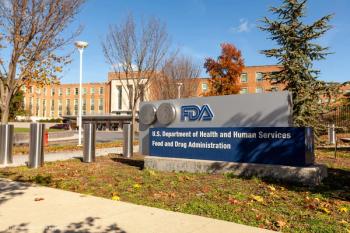
According to the company, the NDA submission is supported by data from the phase 3 DRAGON trial.

SOL-1 data show AXPAXLI extends wet AMD control, delaying fluid rebound and reducing rescue injections while sustaining vision through 52 weeks.

From role models to open doors, Christina Y. Weng, MD, MBA, FASRS, shares insights on career development, women in ophthalmology, evolving training models, and her work as protocol chair for the DRCR Retina Network’s Protocol AO study.

The company noted it expects topline results in June 2026.

Early phase II results show topotecan episcleral chemoplaque offers accessible, localized retinoblastoma treatment with mixed responses, aiming to expand global eye-sparing care.

In the latest episode of The Retina TL;DR with Dr. Weng, host Christina Y. Weng, MD, MBA, FASRS, talks with Drs. Do, Lad, and Munk about the LIGHTSITE III trial data behind photobiomodulation and what it means for retina practice.

The trial will evaluate EC-104 fluocinolone acetonide (FA) extended release for the treatment of diabetic macular edema (DME).

Explore latest RVO care: faricimab, Eylea HD, and biosimilars that cut injection burden and protect vision from macular edema.