
















identifeye HEALTH unveils a retinal screening platform, enhancing accessibility and efficiency in patient care through innovative technology and AI integration.
identifeye HEALTH unveils a retinal screening platform, enhancing accessibility and efficiency in patient care through innovative technology and AI integration.


Patients weigh in on the value of provider communication.

Topcon Healthcare enhances its connected care model by acquiring IRIS, integrating AI for improved diabetic eye disease screening and patient coordination.
The platform, developed by University College London and Heidelberg Engineering, demonstrated accuracy and precision in early tests.

RetinalGeniX partners with Labcorp to enhance genetic testing and retinal imaging, aiming for early disease detection and improved patient care.

How artificial intelligence could enhance clinical trials.

Patients express mixed feelings about AI in healthcare, favoring its use for documentation and administrative tasks while demanding transparency and safety standards.

This partnership aims to address care gaps by identifying untreated and undertreated patients at scale.

Machine learning algorithms enhance retinopathy of prematurity screening using smartphone images, expanding access in low-resource settings and easing pediatric ophthalmologist workloads.

Topcon Healthcare launches IDHea, an innovative platform enhancing AI research and ocular data access to improve clinical outcomes in healthcare.

Novel color created, olo, beyond previous human perception.

The partnership will use ocular imaging to build an AI foundation model and identify new genetic targets for degenerative diseases
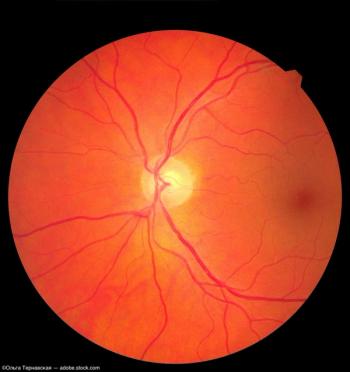
This database could enhance the workflow of eye care professionals with its in-depth reference data for retinal layer thickness and optic nerve head metrics.

This device is designed to assist healthcare professionals in analyzing fundus images for the early detection of key retinal conditions.
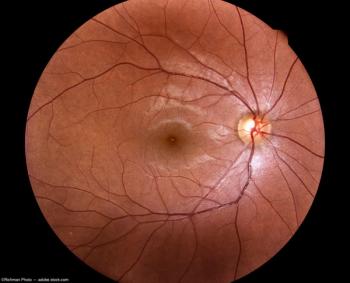
The imaging system is designed to enable secure, real-time remote monitoring around the clock, from virtually any location.

This research project, titled, “A Generalizable Deep Learning Platform for Unifying Quantification of Experimental Autoimmune Uveitis.”

The UK-based company will debut the tool, called Dr.Noon CVD, at two conferences in March

The 15th annual meeting, taking from March 24–28 in Snowmass, Colorado, will deliver high-impact discussions on macular disease, artificial intelligence in ophthalmology, and breakthrough therapies—plus opportunities for networking on and off the slopes.
A recent study of AEYE-DS AI technology used in conjunction with the Topcon NW500 resulted in exceptional clinical diagnostic efficacy.

A look at the current state of AI in diabetic eye disease and where the future may take us.

The Sentinel Camera aims to address critical gaps in retinal disease screening by offering a portable device that captures high-quality images that require no dilation of the eye.

The NeurEYE research team will use millions of eye scans from Scottish optometrists to create the data set.

Cost among other factors may deter patients from screening, especially in rural and low-resource settings.