

Oral gildeuretinol demonstrated a clinically meaningful reduction in the GA lesion growth rate at 24 months in the SAGA study.

Oral gildeuretinol demonstrated a clinically meaningful reduction in the GA lesion growth rate at 24 months in the SAGA study.
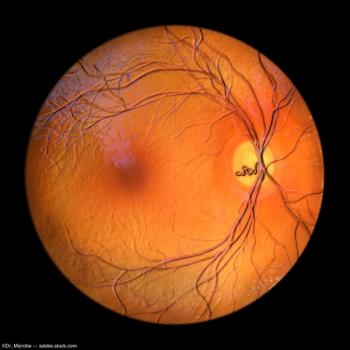
The research team used spectral-domain OCT and OCT angiography imaging to study the changes in the retinal microvasculature in patients

Dr Margaret A. Chang shares data on the port delivery system with ranibizumab, and her strategy for making the most of conferences

4D Molecular Therapeutics has announced data based on the longest interim follow-up from Phase 1/2 PRISM clinical trial and 4FRONT Phase 3 study design.

Opthea Limited has made changes to the company’s executive leadership in its and notable hires in senior roles.


The announcement marks the second FDA designation for ATSN-201, which previously received Rare Pediatric Disease designation.

The acquisition strengthens the company’s rare disease segment, and adds 2 durable commercial assets, Iluvien and Yutiq with significant growth potential, expanding ANI’s foothold in strategic therapeutic area of ophthalmology.

Gene therapy offers a promising alternative by potentially providing long-lasting effects from a single treatment.

Retina is a rapidly advancing field with promising research, technology, and treatment areas. Two stand out as particularly exciting.


Researchers from NYU Langone published a study reporting on the eye's functioning, without sight but offering hope for the future.

According to the organization, the map and report provide public, professionals and decisionmakers with data on children’s vision issues at the county and state level.

According to research conducted by investigators at the Perelman School of Medicine at the University of Pennsylvania School of Medicine, patients with a rare inherited disease affecting their sight experienced quick vision improvements that sustained for the full year-long study.

Lynn Hassman, MD, PhD, has received the Philip and Elaine Ellis New Investigator in Ophthalmology Research Award, and will focus on seeking treatment options for uveitis patients.

Businesses in the retina care space tease new technologies and cutting-edge therapeutics

Focus on collaboration, career development, and innovation

Sujay Jadhav, CEO of Verana Health, a digital health company dedicated to revolutionizing patient care and clinical research through real-world data (RWD), provides an overview of new FDA guidance.

Research by investigators at Trinity College in Dublin shows how the gene therapy conferred significant benefit in animal models, and in human cells derived from people with glaucoma.

As part of the Barcelona meeting, retina specialists can recognise the awareness day early

The contract research organization and technology solution is for the execution of ophthalmology clinical trials.

APP13007, according to the company, is the first product developed using Formosa’s proprietary APNT nanoparticle formulation platform.

BI 771716, with technology licensed from CDR-Life, is a highly specific antibody fragment, possibly enabling an optimized penetration through all retinal layers to the most critical target site driving GA disease pathology.

MK-3000, formally known as EYE103, is an investigational, potentially first-in-class tetravalent, tri-specific antibody that acts as an agonist of the Wnt signaling pathway.

Prevent Blindness is planning a series of events and program partnerships leading up to World Sight Day on Oct. 10, 2024.

The one-time intravitreally delivered gene therapy is for the treatment of retinitis pigmentosa (RP).

This certification covers AI based regulatory requirements for the company's platform for AI imaging and diagnostic tools.

Data from this trial will be reported ahead of AAO 2024 in Chicago, Illinois.

The 4-year study is set to involve up to 20 patients and is a part of the Foundation's Uni-Rare natural history study.

InMed Pharmaceuticals has been issued 3 US patents, one of which is for an ocular drug delivery formulation for potential use in AMD.