Viewing

News

The increasing prevalence of diabetes, which implies a rise in the number of cases of diabetic retinopathy, suggests that ophthalmologists need to ensure their knowledge of this disease is up-to-date. Hazy memories of a long-ago medical school lecture from an endocrinologist or the guidelines in an outdated textbook are inadequate given changes in the understanding of the pathogenesis, diagnosis, and especially the treatment of diabetes.
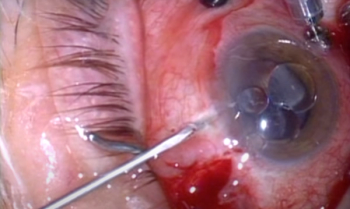

A digitally assisted vitreoretinal surgery system offers enhanced visualization for surgeons and observers, better ergonomics for greater surgeon comfort, and may improve patient safety by allowing use of lower endoillumination levels.

A real-world safety study of fluocinolone acetonide implant (Iluvien, Alimera Sciences) in patients with chronic DME (328 eyes from 292 patients) showed that 81.6% of patients did not require initiation of IOP-lowering therapy during the study and 60% of patients included in this registry study gained vision after injection of Iluvien that was sustained over the study period.

By shrinking the core technology of optical coherence tomography to the size of a coin-and reducing its cost-a team of European scientists hopes to improve early diagnosis and screening of retinal diseases.

Silicone oil complications mostly manageable

Complications of silicone oil occur when it is inadvertently placed in anatomic areas other than the vitreous cavity, migrates, or emulsifies. Methods for avoiding these issues and their management are discussed in this article.

The Comparison of Age-related Macular Degeneration Treatment Trial (CATT) follow-up study found that the initial gains in visual acuity achieved with two anti-vascular endothelial growth factor drugs were lower than those achieved at the end of the 2-year CATT study.

A new handheld pediatric vision scanner can detect amblyopia and strabismus with over 90% accuracy. The device can be used to screen children too young to read or recognize letters as well as those of school age since the only requirements are to sit still for a few seconds and look at a smiley-face target in the machine.

Retinal tumors have taken on a new importance because of links to systemic disease, according to Carol Shields, MD. Through these links, specialists are improving the diagnosis and treatment of retinal tumors. Dr. Shields highlighted astrocytic hamartoma, retinoblastoma, and retinal capillary hemangiomoblastoma.

Some laser pointers available for less than €20 exceed the legal limits on their power by as much as 127 fold, according to Australian researchers. They have called on regulators to consider a ban on green laser pointers.

Oxidative stress stemming from a growing accumulation of visual cycle adducts may play an important role in the pathogenesis of AMD, suggest new findings.

Intas Pharmaceuticals of Ahmedabad, India, seems to have overcome the manufacturing problems that led to ocular inflammation in 10% of the patients injected with the first three batches of razumab, a biosimilar for ranibizumab, according to two ophthalmologists who have administered the drug.

As a physician passionate about treating and helping patients with retinal disease, I continuously seek out and study new treatment modalities. It can be a very scary time for patients when faced with retinal conditions, such as macular degeneration, retinal detachments, and diabetic macular edema (DME).

Non-invasive photobiomodulation may help dry age-related macular degeneration by causing regression of drusen and improving retinal function with benefits in visual acuity and contrast sensitivity.

The first clinical trial of lentiviral gene therapy in ophthalmology met its primary objective, demonstrating safety and tolerability of subretinal administration of a lentiviral vector expressing anti-angiogenic proteins in patients with advanced exudative age-related macular degeneration.

The first randomized, controlled phase III gene therapy trial that is investigating treatment with adeno-associated viral vector delivery of human RPE65 in patients with RPE65 mutation-associated inherited retinal dystrophies is discussed.