
By shrinking the core technology of optical coherence tomography to the size of a coin-and reducing its cost-a team of European scientists hopes to improve early diagnosis and screening of retinal diseases.

By shrinking the core technology of optical coherence tomography to the size of a coin-and reducing its cost-a team of European scientists hopes to improve early diagnosis and screening of retinal diseases.
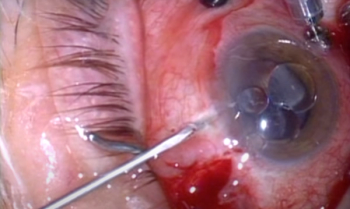
Complications of silicone oil occur when it is inadvertently placed in anatomic areas other than the vitreous cavity, migrates, or emulsifies. Methods for avoiding these issues and their management are discussed in this article.
An oral anti-VEGF/PDGF inhibitor had no dose-limiting toxicity and improved visual acuity and OCT findings in patients with exudative age-related macular degeneration in a phase I study.

Retina surgeons discuss the need for face-down positioning after macular hole surgery. The interpretation of what constitutes “face-down” is key to their messages.
When followed over time, about 75% of patients in the RIDE/RISE trials who had the highest risk of progression to proliferative diabetic retinopathy benefited from ranibizumab with “robust” regression of diabetic retinopathy severity levels.
The Comparison of Age-related Macular Degeneration Treatment Trial (CATT) follow-up study found that the initial gains in visual acuity achieved with two anti-vascular endothelial growth factor drugs were lower than those achieved at the end of the 2-year CATT study.
Minimally invasive vitrectomy surgery with 27-gauge equipment is improving with the development of new technology that is increasing efficiency and expanding functionality.
A new handheld pediatric vision scanner can detect amblyopia and strabismus with over 90% accuracy. The device can be used to screen children too young to read or recognize letters as well as those of school age since the only requirements are to sit still for a few seconds and look at a smiley-face target in the machine.
Retinal tumors have taken on a new importance because of links to systemic disease, according to Carol Shields, MD. Through these links, specialists are improving the diagnosis and treatment of retinal tumors. Dr. Shields highlighted astrocytic hamartoma, retinoblastoma, and retinal capillary hemangiomoblastoma.
Some laser pointers available for less than €20 exceed the legal limits on their power by as much as 127 fold, according to Australian researchers. They have called on regulators to consider a ban on green laser pointers.
The transcription factor XBP1 appears to have an expanding role in endothelial cell survival and retinal vascular degeneration as it relates to aging and diabetes.
Oxidative stress stemming from a growing accumulation of visual cycle adducts may play an important role in the pathogenesis of AMD, suggest new findings.
Retinal changes might serve as a marker for Parkinson’s disease, an experiment in mice suggests. And the therapy also points to a potential treatment.
Intas Pharmaceuticals of Ahmedabad, India, seems to have overcome the manufacturing problems that led to ocular inflammation in 10% of the patients injected with the first three batches of razumab, a biosimilar for ranibizumab, according to two ophthalmologists who have administered the drug.
As a physician passionate about treating and helping patients with retinal disease, I continuously seek out and study new treatment modalities. It can be a very scary time for patients when faced with retinal conditions, such as macular degeneration, retinal detachments, and diabetic macular edema (DME).
Home monitoring of patients with age-related macular degeneration results in earlier detection of choroidal neovascularization with the ForeseeHome device resulted and increased preservation of vision.
Surgery might not be the go-to option for suprachoroidal hemorrhages and detachments–they may resolve on their own. But when needed, a less invasive procedure can produce a quality outcome.
Spectral-domain optical coherence tomography facilitates detailed evaluation of foveal disorders even in the very earliest disease stages.
Wide-field imaging has become an integral tool in the diagnosis and management of patients with retinal disease.
Non-invasive photobiomodulation may help dry age-related macular degeneration by causing regression of drusen and improving retinal function with benefits in visual acuity and contrast sensitivity.
J. Michael Jumper, MD, a retina specialist, described how retina treatments relate to glaucoma–not only injections, but also vitrectomy and laser treatments can trigger glaucoma.
A new analysis of an old study suggests that early response to agents that block vascular endothelial growth factor can predict longer-term improvement in visual acuity in patients with DME.
The first clinical trial of lentiviral gene therapy in ophthalmology met its primary objective, demonstrating safety and tolerability of subretinal administration of a lentiviral vector expressing anti-angiogenic proteins in patients with advanced exudative age-related macular degeneration.
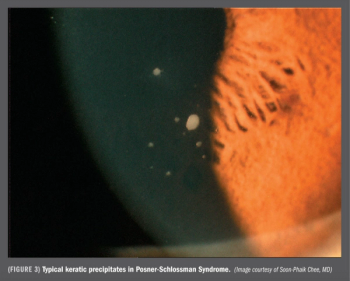
Evidence suggests more ophthalmologists should perform aqueous sampling and viral testing in hypertensive anterior uveitis cases.
The first randomized, controlled phase III gene therapy trial that is investigating treatment with adeno-associated viral vector delivery of human RPE65 in patients with RPE65 mutation-associated inherited retinal dystrophies is discussed.
Sonepcizumab alone or in combination with anti-VEGF does not provide any short-term benefit to the visual acuity in patients with wet AMD, who were considered to be subresponders to anti-VEGF therapy. However, a combination of therapies may have different results.
Lesions appear in both outer and inner retinal layers in the early onset of glaucoma, with the most pathological change in neurophysiological processes affecting the photoreceptors cells of the outer layer. Such findings could aid in early diagnosis of the disease.
Clinicians should recognize the symptoms of West Nile virus, Dengue fever, and Chikungunya that are spread by mosquitos and can have ocular manifestations.
Single-spot lasers used in photocoagulation usually deliver about 100 milliseconds of laser energy in a single burn. Although effective, they can cause peripheral visual field loss affecting the patient’s ability to drive.
In DME patients with worse baseline visual acuity, aflibercept and ranibizumab provided more of a quality-of-life improvement-yet aflibercept had an associated higher cost.