
“There is a compelling need to explore gene therapy in the eye,” according to Paul A. Sieving, MD, PhD.

“There is a compelling need to explore gene therapy in the eye,” according to Paul A. Sieving, MD, PhD.

A dye made from the açai fruit (Euterpe oleracea) is safe for use in human eyes and effective for identifying the posterior hyaloid and internal limiting membrane (ILM) during vitreoretinal surgery, according to phase I preliminary study results.


Recognition of this problem resulted in an innovative approach for closing persistent macular holes after the primary surgery has failed by creating a separate paracentral retinotomy in the nasal macula. Michael S. Tsipursky, MD, described the rationale for trying this treatment approach. “

In the current era where pharmacologic therapy is the preferred treatment for macular edema secondary to retinal vein occlusion (RVO), there is still a role for laser, according to Francesco Bandello, MD.

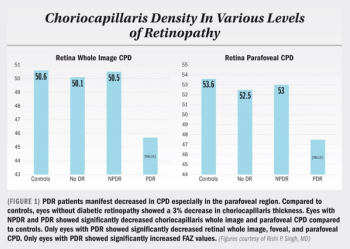
Optical coherence tomography angiography (OCTA) is a promising new approach for visualizing retinal vascular pathology in eyes with diabetic eye disease that can be expected to have even greater utility in the future pending further enhancements.

FLACS is related to an increase of anterior chamber prostaglandin and cytokines, resulting in intra-operative miosis. This can be prevented by pre-operative non-steroidal anti-inflammatory drug application. As a result of methodological problems, several studies on the association between femtosecond laser-assisted cataract surgery and cystoid macular oedema are inconclusive.

Scleral buckles and vitrectomy are the two main procedures used today to treat retinal detachments, with many surgeons performing a combination of the two.

Findings from preclinical studies show that a novel intravitreal depot of an anti-angiogenic drug releases the medication over a period of at least 6 months, is well-tolerated, and prevents VEGF-induced retinal vascular leakage.

Ongoing research for the treatment of uveal melanoma is providing hope that the future may bring new approaches for improving the safety of local therapy–along with modalities that will increase survival by reducing metastatic risk.

In complicated retinal detachment cases where the retina fails to reattach after completing the usual steps, retinectomy is a better technique than relaxing retinotomy–and the retinectomy is best done incrementally under air, said Steve Charles, MD.

The dry form of age-related macular degeneration (AMD) is the most common type of the disease, but successful treatments have been elusive in patients, resulting in disease progress and visual loss.

Idiopathic macular telangiectasia (MacTel) is bilateral condition characterised by ectatic capillaries of the macula and atrophy of the neurosensory retina. Familiarity with the distinctive intraretinal cavitation on SD-OCT in type 2, the most common type, is key for correct diagnosis.

The presence of vitreomacular adhesion (VMA) is associated with poorer, short-term anatomic, and functional outcomes in eyes with diabetic macular edema (DME) receiving anti-VEGF therapy, according to Márcio B. Nehemy, MD, PhD.

Future increases in imaging speed will improve performance and functionality for OCT and OCT angiography (OCTA), said James Fujimoto, PhD.

Findings from studies investigating intravitreal corticosteroids for treatment of diabetic macular edema (DME) provide information about their efficacy and safety, including some understanding of how they compare with anti-VEGF therapy.

Wide-field retinal imaging can be performed using a commercially available swept-source optical coherence tomography (SS-OCT) platform (DRI OCT Triton, Topcon) and only the internal fixation light for patient navigation provided detailed images of both normal and pathologic peripheral retinal findings.

A new hypersonic liquefaction vitrectomy system, called Vitesse PPVX (Bausch + Lomb), offers several advantages over currently available vitrector technology. The device received FDA 510k approval in April 2017.

Adaptive optics could allow clinicians to monitor the progression of retinal diseases cell-by-cell, according to Jacque Duncan, MD.

Accumulating evidence is cause for concern and underscoring the need for more research evaluating the safety of anti-VEGF injections for ROP, according to Robert L. Avery, MD.

The importance of novel therapies for ocular disease is a given. However, as most novel therapies are financed by the private sector, it is fortunate that investors find ophthalmology a worthwhile investment.

Anti-vascular endothelial growth factor (VEGF) remains the gold standard therapy for diabetic retinopathy, but “when treating diabetic macular edema (DME), “about half of the patients treated with VEGF inhibitors do not respond to therapy,” said Tine Van Bergen, PhD, a scientist with ThromboGenics, Leuven, Belgium.

After 12 months of treatment with intravitreal aflibercept injections, both treatment-naïve and pre-treated patients demonstrated visual acuity gains. Visual acuity improvement was higher in treatment-naïve patients.

A newly approved system (3D OCT-1 Maestro, Topcon) combines a high-resolution, color, non-mydriatric retinal camera with the latest spectral-domain optical coherence tomography (OCT) technology, and stands out for its versatility as well as its quality and ease of use.

Intravitreal sirolimus 400 mcg (Ospiria, Santen) demonstrated positive results in pivotal trials investigating it as a treatment for non-infectious uveitis of the posterior segment. A New Drug Application is under FDA review.

The Ebola virus may leave a retinal scar specific to the disease, according to researchers.“The distribution of these retinal scars or lesions provides the first observational evidence that the virus enters the eye via the optic nerve to reach the retina in a similar way to West Nile virus,” said Dr Paul Steptoe of the Royal Liverpool Hospital, in a press release.

Despite the failure of 2 clinical trials involving a combination therapy of platelet-derived growth factor (PDGF) inhibitor and anti-vascular endothelial growth factor (anti-VEGF) therapy, a third phase III study continues.

After 5 years of follow-up in the Comparison of Age-Related Macular Degeneration Treatments Trials (CATT), the visual acuity gains achieved during the first 2 years of anti-VEGF treatment were not maintained, the choroidal neovascular lesions continued to evolve with evidence of persistent activity in some eyes, and there was increased retinal thinning and geographic atrophy (GA).

Advancements in retinoblastoma have occurred in the areas of treatment, genetic testing, and diagnostic imaging.

Vitreoretinal lymphomas are both deceptive and deadly. While there are only about 350 cases reported annually in the United States, median survival is less than 5 years, said Rajesh C. Rao, MD.