





























The clinical trial is examining the efficacy of two doses of UBX1325 compared to every other month treatment with aflibercept through 24 weeks.
The clinical trial is examining the efficacy of two doses of UBX1325 compared to every other month treatment with aflibercept through 24 weeks.
Faricimab simultaneously targets and inhibits two disease pathways involving Ang-2 and VEGF-A linked to a number of vision-threatening retinal conditions.

According to Rishi P. Singh, MD, family history and lifestyle are key in the development of geographic atrophy.

According to the company, the NDA submission for Nyxol eye drops in first indication is on track for late 2022.

Scientist have proposed several methods for converting stem cells into RPE, but there is still a gap in our knowledge of how cells respond to these stimuli over time.

During the 22nd European Society of Retina Specialists Congress in Hamburg, Germany., investigators noted that Yusar and colleagues from the Vitreoretinal Services, Centre for Sight, Delhi, India.

GATHER2 met its prespecified primary endpoint of mean rate of growth (slope) in GA area at 12 months with statistical significance and a favorable safety profile. With this data in hand, Iveric Bio is working to submit a New Drug Application for Zimura to the FDA by the end of the first quarter of next year.
According to a presentation by the company at the 22nd EURETINA World Congress in Hamburg, Germany, the dataset shows that OCS-01 eye drops were more effective than vehicle in reducing central macular thickness and improving visual acuity in patients with DME as per the pre-defined criteria for statistical superiority in the study protocol.

According to a university news release, its CellSight teams clinched top two of three awards in National Eye Institute competition.

A study detailed at the 22nd EURETINA Congress in Hamburg, Germany, documented a spectrum of manifestations following COVID-19 infections in an otherwise immunocompetent patient presenting at a tertiary care center.

At the 22nd EURETINA World Congress in Hamburg, Germany,Isabelle Audo, MD, reported that voretigene neparvovec used to treat patients with a RPE65-related inherited retinal dystrophy, showed good safety and efficacy at the 1-year time point of the LIGHT Study.
ONS-5010 is an investigational ophthalmic formulation of bevacizumab under development to be administered as an intravitreal injection for the treatment of wet AMD and other retinal diseases.
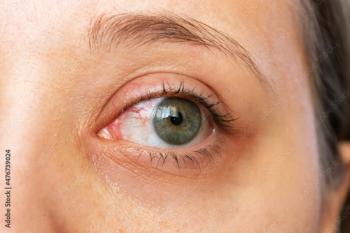
Researchers at the University of Bonn are evaluating a new imaging technique for the diagnosis of posterior uveitis.

When paired with SD-OCT, the device also can be used to evaluate photoreceptors.

Carl D. Regillo, MD, and Jennifer I. Lim, MD, emphasize the high regulatory standards of equivalence and safety of biosimilars in considering the role they will play in the evolving treatment landscape for retinal disorders.
Carl D. Regillo, MD, and Jennifer I. Lim, MD, talk about the potential cost savings as well as other real-world implications associated with the use of biosimilars in clinical practice.

Researchers in Trinity’s School of Genetics and Microbiology developed a new gene therapy, ophNdi1, that is the first of its kind to directly target mitochondrial function in cells that are malfunctioning in AMD.

A test to detect and quantify TDP-43 deposits in the retina provides this capability for the first time and can be performed using commercially available and widely utilized diagnostic cameras.
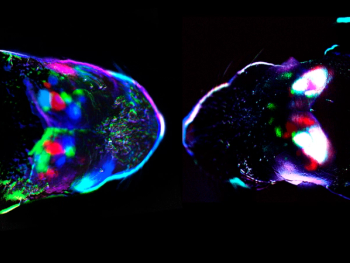
In embryonic stages, tactile stimuli simultaneously activate tactile and visual neural pathways. Shortly after birth, both pathways reorganize to allow separate processing of touch and vision. The change of pathway is facilitated by the activity waves of the retina, which act as railroads that direct the stimuli of each sensory modality to the corresponding cortex, so that we can perceive them separately.

Carl D. Regillo, MD, and Jennifer I. Lim, MD, caution against the ophthalmic use of biosimilar products approved for systemic use. They also review how indications for biosimilars are granted upon approval.
Carl D. Regillo, MD, and Jennifer I. Lim, MD, review clinical trial data for biosimilar products, with interpretation of safety data when comparing to the biologic reference products.

APOE4 gene associated with Alzheimer’s disease risk was found to protect mice from glaucoma. Research team also prevented retinal ganglion cell death by blocking the APOE signaling pathway, pointing to a potential treatment strategy for glaucoma.

According to Johns Hopkins Medicine researchers, as little as $65 per year appears to influence practitioners, making them up to twice as likely to prescribe the companies’ brand name eyedrops for glaucoma instead of cheaper generic versions.

Researchers at the Medical University of Vienna are focusing on how the retina can be used as a prognostic marker. Analyses revealed that retinal layer thinning as a result of an MS relapse predicts the severity of future relapses and the likelihood of disability.
Carl D. Regillo, MD, and Jennifer I. Lim, MD, discuss how evolving understanding regarding bioequivalence and the safety of biosimilars may lead to their wider use in the treatment of retinal disorders.