































Researchers introduce a multistage dual-branch network to improve accuracy and efficiency
Researchers introduce a multistage dual-branch network to improve accuracy and efficiency

The funding will help fund phase 1 and phase 2 proof-of-concept studies for lead candidates CTX203 and CTX114.

Investigators advised clinicians of the potential for dystrophies that mimic age-related macular degeneration and other atrophic macular pathologies to be incorrectly diagnosed, which can impact treatment.

The investigators retrospectively evaluated 126 consecutive treatment-naïve nAMD patients (126 eyes) who received a loading dose of a minimum of three monthly intravitreal aflibercept injections that was followed by a TAE.

Survey examines experiences and perceptions of patients living with GA.

The state-of-the-art facility more than doubles the institute’s footprint, enhancing patient care, research, and education.

The approval follows a refiling after the FDA issued a Complete Response Letter due to language on the amended label.
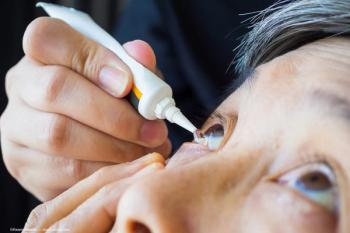
The gel addresses necrotic retinal cell death in dry age-related macular degeneration and geographic atrophy without requiring injections.

Among these eyes, 18.9% of eyes developed nAMD within 36 months.

The approval of Syfovre makes it the first and only approved treatment for GA in Australia.

Whitecap is currently developing 2 therapies for potential use in glaucoma and geographic atrophy.

The financing will go toward its ongoing phase 2b/3 and planned pivotal phase 3 clinical trial for AVD-104.

The trial is evaluating GAL-101 eye drops in patients with geographic atrophy, an advanced form of dry AMD.

This year was brimming with advancements in eye care.

A global survey explores the impact of geographic atrophy (GA) on quality of life, revealing similar challenges for individuals with unilateral and bilateral GA. Researchers also highlight the need for improved education, support, and treatment options.

Tenpoint Therapeutics and Visus Therapeutics have merged to focus on aging-related ocular conditions, with key products including BRIMOCHOL PF for presbyopia and therapies for cataracts and geographic atrophy.

A look at the latest advances from flash photography to AI-driven OCT

Prevent Blindness announces its fourth annual Geographic Atrophy Awareness Week, December 2 to 8, 2024. The organization offers free educational resources, including videos and guides, and supports GA patients through programs like Living Well With Low Vision.

Astellas said in a press release that the FDA comments in the CRL relate to proposed labeling language, not safety.

Key findings include reduced lesion growth, retinal tissue preservation, and improved visual function, demonstrating significant potential for the treatment option.

OCT-based AI analysis brings changes in GA and therapeutic responses into sharp focus.
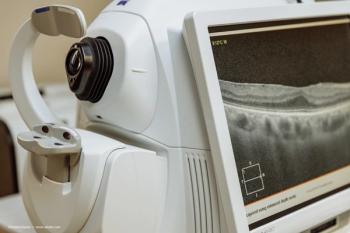
The investigators undertook a study in which they retrospectively evaluated the presence and amount of small HRF in the eyes of patients with different macular atrophic phenotypes.

The agency confirmed its June 2024 negative opinion after Apellis requested re-examination of EMA's initial opinion.


Oral gildeuretinol demonstrated a clinically meaningful reduction in the geographic atrophy lesion growth rate at 24 months, supporting additional clinical development. SAGA topline data has been accepted as a late breaker at the 128th annual meeting of the American Academy of Ophthalmology, being held October 18-21 in Chicago.